On a snowy Christmas Eve in 1985, Dr. Michael Weitzman ’68 visited a four-year-old patient on a pediatric hospital ward. The child had been on a respiratory ventilator and hospitalized his entire life. Weitzman had brought him a gift: a copy of Good Night Moon. The doctor watched a tear slide down the boy’s cheek.
“What’s wrong?” he asked.
“I’ve never seen the moon,” his patient responded.
The child had never been outside because Medicaid, at the time, did not provide insurance coverage for children with complex medical conditions like his outside of a hospital setting.
Despite the head nurse’s concerns, Weitzman and the child’s mother took his patient to the hospital parking lot, where he saw the moon for the first time.
“I told the head nurse that it would be great if hospital security called the police,” says Weitzman. “It’d be great if the head of general pediatrics and the director of Maternal and Child Health of the City of Boston got arrested for showing a child the moon—what an effective strategy it would be for changing the hearts and minds of folks and influencing public policy.”
No police were called or arrests made that night, but Weitzman’s actions led to the Secretary of the United States Department of Health and Human Services waiving federal Medicaid regulations. His actions contributed to changes nationwide that ultimately allowed children on respirators and with many other complex medical conditions to go home rather than spend their lives in hospitals.
That evening was one of many times Weitzman, in a career spanning half a century, bucked tradition and innovated to improve the health and well-being of children. He would go on to hold positions of leadership at three medical schools (Boston University, the University of Rochester, and the New York University Grossman School of Medicine) as a professor of pediatrics, psychiatry, environmental health, and global public health; hold faculty positions at four schools of public health (Harvard, Boston University, NYU, and SUNY Albany); publish more than 250 scientific research papers; and serve as a scientific adviser to the Centers for Disease Control (CDC), Environmental Protection Agency (EPA), Food and Drug Administration, and the Department of Justice.
Surrounded by Love
Born shortly after the end of World War II and raised in working-class Brooklyn, Weitzman grew up in a close-knit home in a diverse immigrant neighborhood that included several Holocaust survivors. His mother was the youngest of five sisters, the only one of her siblings born in the United States, and for whom English was a first language. His father was a taxi driver, and his uncles were butchers, dry cleaners, and cabbies. He was the first on either side of the family to go to college.
His family—who saw America as the country that had saved them all—surrounded him with love. He remembers caring for his blind aunt, Ruthie, bringing her dinner and fetching groceries. Trips to the library for her ignited his early interest in music and literature.
Bob Dylan, a Beard, and Early Days
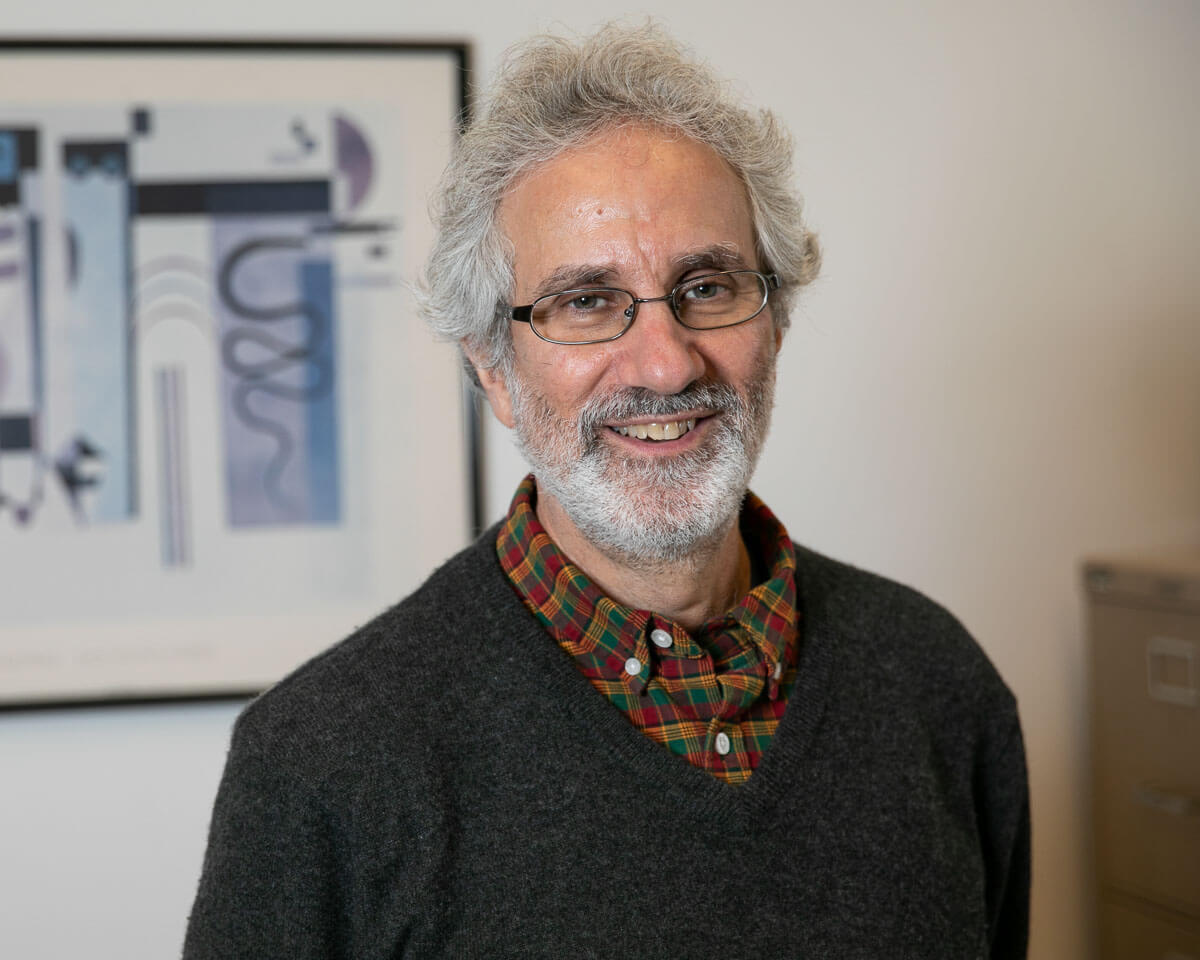
In high school, Weitzman found a lifetime muse in Bob Dylan after hearing “Blowin’ in the Wind” on the beach in nearby Coney Island. He already had a keen interest in biology and developed a deep interest in Freud, psychology, and social justice issues. He enrolled in Brooklyn College with the idea that he would go into medicine and devote himself to a career in social psychiatry.
This was the mid-1960s—the height of the war on poverty, the Civil Rights Movement, the Women’s Movement, and the war in Vietnam. There was unrest and protest on campuses countrywide, and Weitzman remembers many hours spent heatedly debating issues of racial justice and student activism on the Quad. He grew a beard—a bold statement for a young man in 1964. After earning a Bachelor of Arts in biology, he took his muse, his beard, and ideas of social psychiatry to SUNY Upstate Medical University.
“My beard, consciously or unconsciously, said that while I might be there to learn a set of skills as a doctor, I didn’t fit the model of a typical medical student,” says Weitzman. Initially, his interests (and his beard) were not warmly embraced.
“I was discouraged from thinking about psychiatry as a means of benefiting or shaping the greater society. It was to be seen exclusively as a clinical specialty,” he says.
Disillusioned, he turned his attention elsewhere and took an elective with Dr. George (Sandy) Lamb, an expert in pediatric infectious diseases. Lamb noticed his student’s natural rapport with children when he saw him playing with a young patient. “You love children, and children love you,” Lamb said and urged him to consider a career in pediatrics, a field he had not even thought of pursuing.
Around the same time, Weitzman found another source of lifelong inspiration and guidance at Upstate in Dr. Julius (Julie) Richmond, the then chair of pediatrics. Richmond had formerly served as undersecretary of health under President Lyndon Johnson, and he was the cofounder of the Head Start Program, the free early-education program for low-income children from birth to age five years.
Richmond believed that if pediatricians better understood and focused their efforts on the social determinants of children’s health and development by working with professionals outside of the medical field and immunized as many children as they could, it would not only have a profound impact, but it would be the most important and fulfilling work they could ever do as physicians.
Weitzman would soon have a chance to take up Richmond’s call to action.
It’s Showtime, Kid
At Upstate, the new chair of pediatrics, Dr. Frank Oksi, became another inspiration and mentor. On Weitzman’s third day as an intern, Oski approached him and said, “A lot of people think that you are the real thing. Do you want to find out if you are? It’s showtime, kid.”
It had recently been discovered that large numbers of children—mostly of color—who had been exposed to lead in paint, primarily in old housing in impoverished neighborhoods, were becoming ill, sometimes going blind or deaf or even dying. The federal government began to fund local childhood lead-poisoning programs at this time.
Working with social workers, developmental psychologists, schools, and clinical laboratories, the pediatric intern helped create the first lead-poisoning treatment program in New York State. Oski had turned him on to the importance of research and writing.
Throughout his career, Weitzman’s leadership led to treatment programs and guidelines, and a lifetime of research, child advocacy, and consultation with the CDC and the EPA on lead exposure. His work influenced home investigations, lead-paint abatements, and lead dust standards set by the EPA and the U.S. Department of Housing and Urban Development.
Holding Big Tobacco Accountable
After his education and training in Syracuse, Weitzman moved to Boston, first to the Harvard School of Public Health and Boston Children’s Hospital, then to Boston University and Boston City Hospital. In 1988, he found his next cause.
As the director of general pediatrics at the Boston University School of Medicine, Weitzman noticed a large number of children from Black communities being hospitalized with asthma. Working with others at Boston University and Harvard, he found two things that are now common knowledge. One was that there are great disparities in asthma, with Black children having it more often than White children. The other was that exposure to prenatal tobacco smoke or childhood secondhand smoke was a major factor in causing asthma and countless other harmful effects. Tobacco smoke, Americans learned, was not just a problem for adults.
Weitzman’s findings contributed to the landmark federal racketeering case against Big Tobacco in 2005 in which he testified as an expert witness on behalf of the U.S. Department of Justice. This case ultimately played a critical role in tobacco companies being held accountable for smoking-related illnesses involving children.
Breaking Ground
Weitzman broke ground with one of the first studies on paternal depression’s impact on children. While maternal depression had been widely studied, paternal depression had been overlooked. His research revealed that in households where the father was depressed, more than a quarter of those children had mental health problems, and that mothers were far more likely to be depressed as well.
Surprisingly, “It turned out that in a home where people smoked, the chances of both maternal and paternal depression were higher. Smokers and nonsmokers alike were far more likely to be depressed,” says Weitzman.
His findings also linked tobacco exposure to increased instances of tooth decay, metabolic syndrome, and a rise in hearing loss among young people. As cigarette smoking has declined in the recent past, hookah (waterpipe) smoking and e-cigarette vaping have become epidemic, and Weitzman turned his attention to the harmful effects of hookah smoke and e-cigarette vape exposure on air quality in hookah bars and homes and multiple aspects of children’s health.
Credit Where Credit Is Due
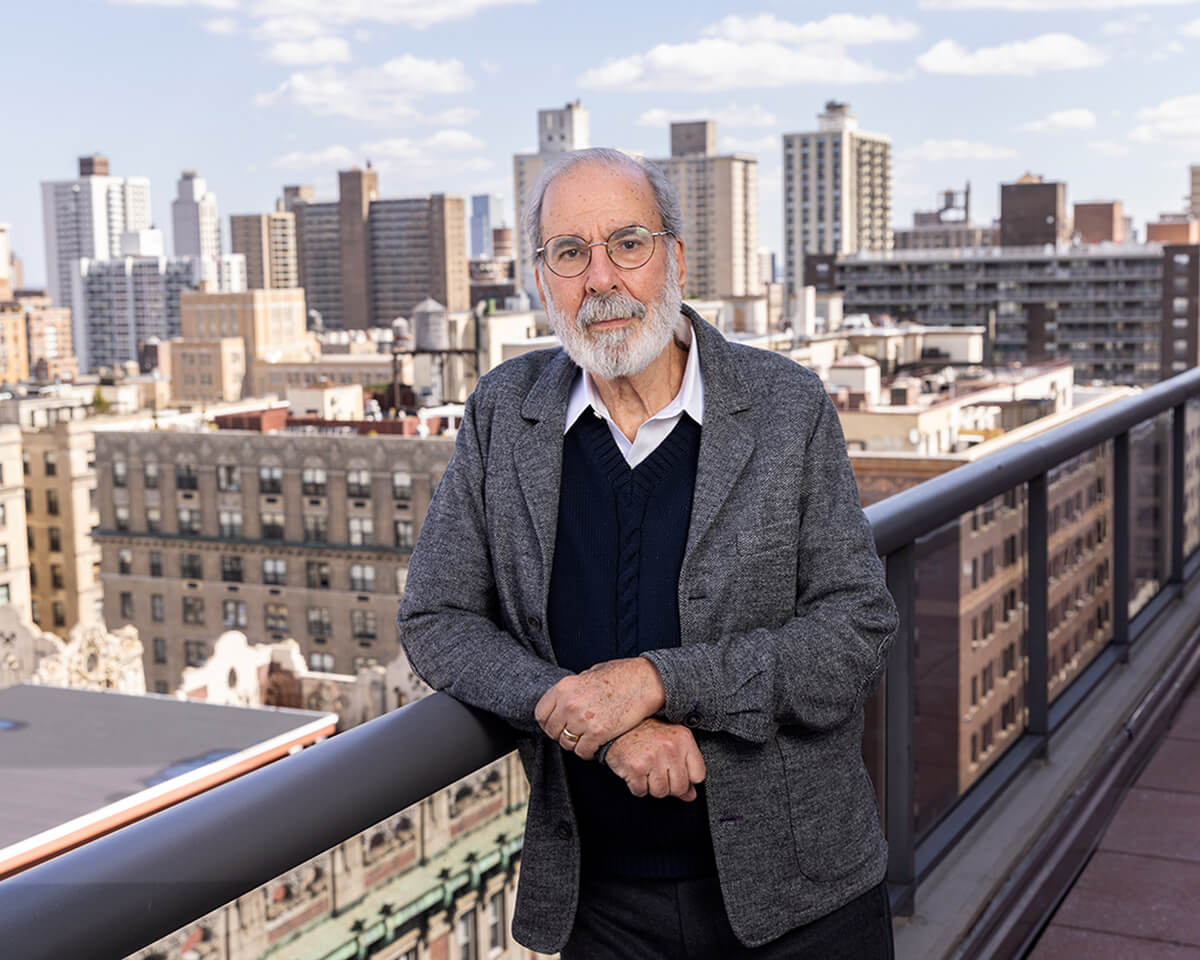
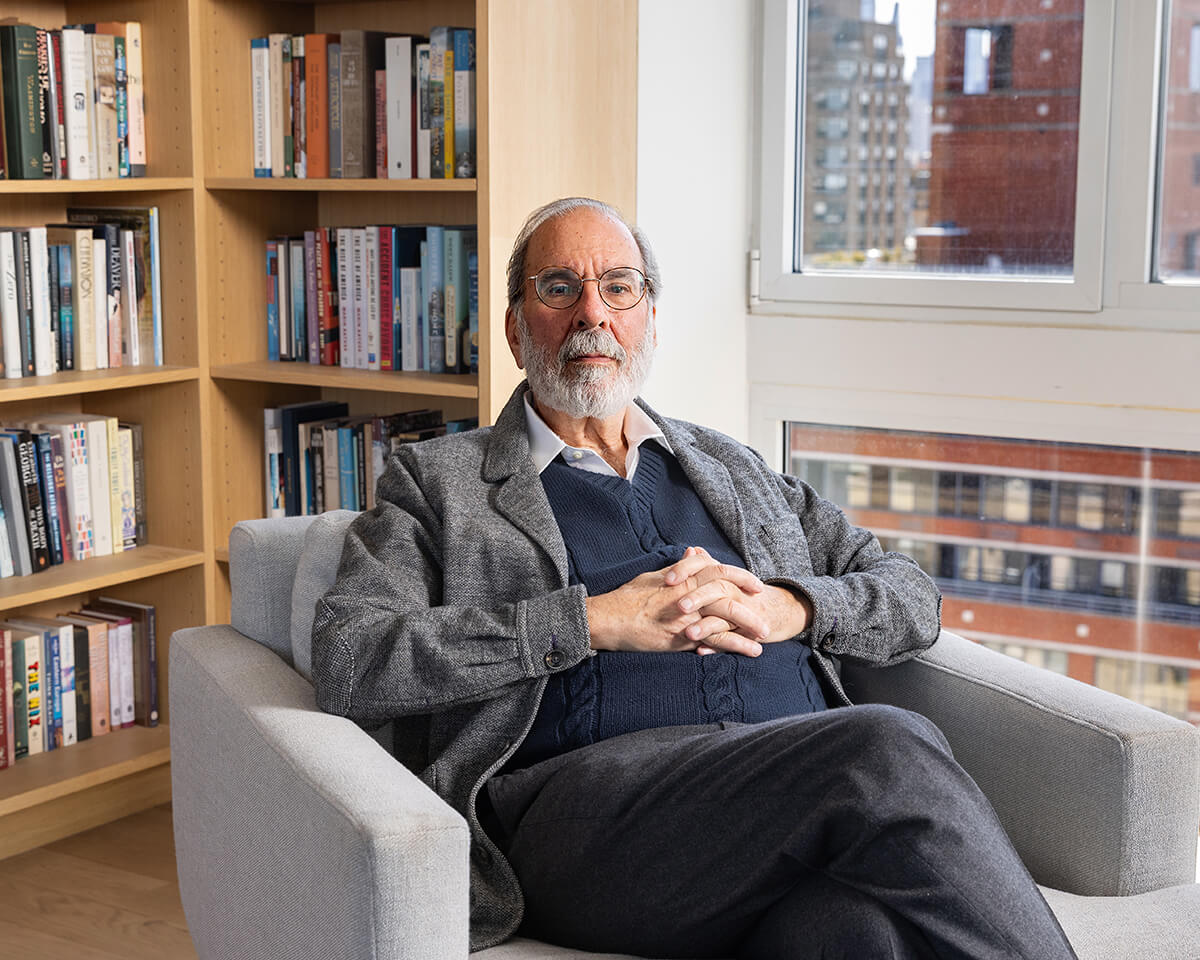
Dr. Michael Weitzman ’68 at his home in Manhattan.
Through his passionate commitment to understanding these connections, Weitzman has played a vital role in shaping public awareness and interventions aimed at protecting future generations. In 2005, Weitzman became the first recipient of the U.S. EPA Child Environmental Advocate Award, and in 2017, he was awarded the John Howland Award, the highest honor bestowed by the American Pediatric Society. He has also won numerous other awards for mentoring, research, and child advocacy activities.
“I’ve gotten a lot of credit for the work I do, deservedly or not. But I’ve done nothing without my family—my family of origin who gave me my jump-start, and my wife, who has picked me up countless times when I’ve come home bloodied and disappointed.”
Along with his family, Weitzman invokes the names of the men he calls giants of their generation who were critical to his success: Lamb, Oksi, Richmond, and Dr. Robert Haggerty, who was chair of Maternal and Child Health at the Harvard School of Public Health when he was a student there.
He also credits his roots as the child of immigrants.
“The hunger for achievement and creativity that fuels success in this country comes from the kids of people who have risked their lives and have, like my parents, worked around the clock so that their kids could be part of this American Dream,” says Weitzman. “To me, the American Dream is to do whatever turns you on as long as you can survive doing it. The dream is even far better if it contributes to better lives of others”
Still, he also points out that nothing he accomplished would have been possible without the students he taught and learned from. “They have been and continue to be my greatest inspiration, and perhaps my greatest contribution to the future.”
And to today’s students looking for their purpose, he says, “Tell my story to the students that I once was one of them. And it all started at Brooklyn College. Well, it probably started with Aunt Ruthie, but Brooklyn College launched me.”