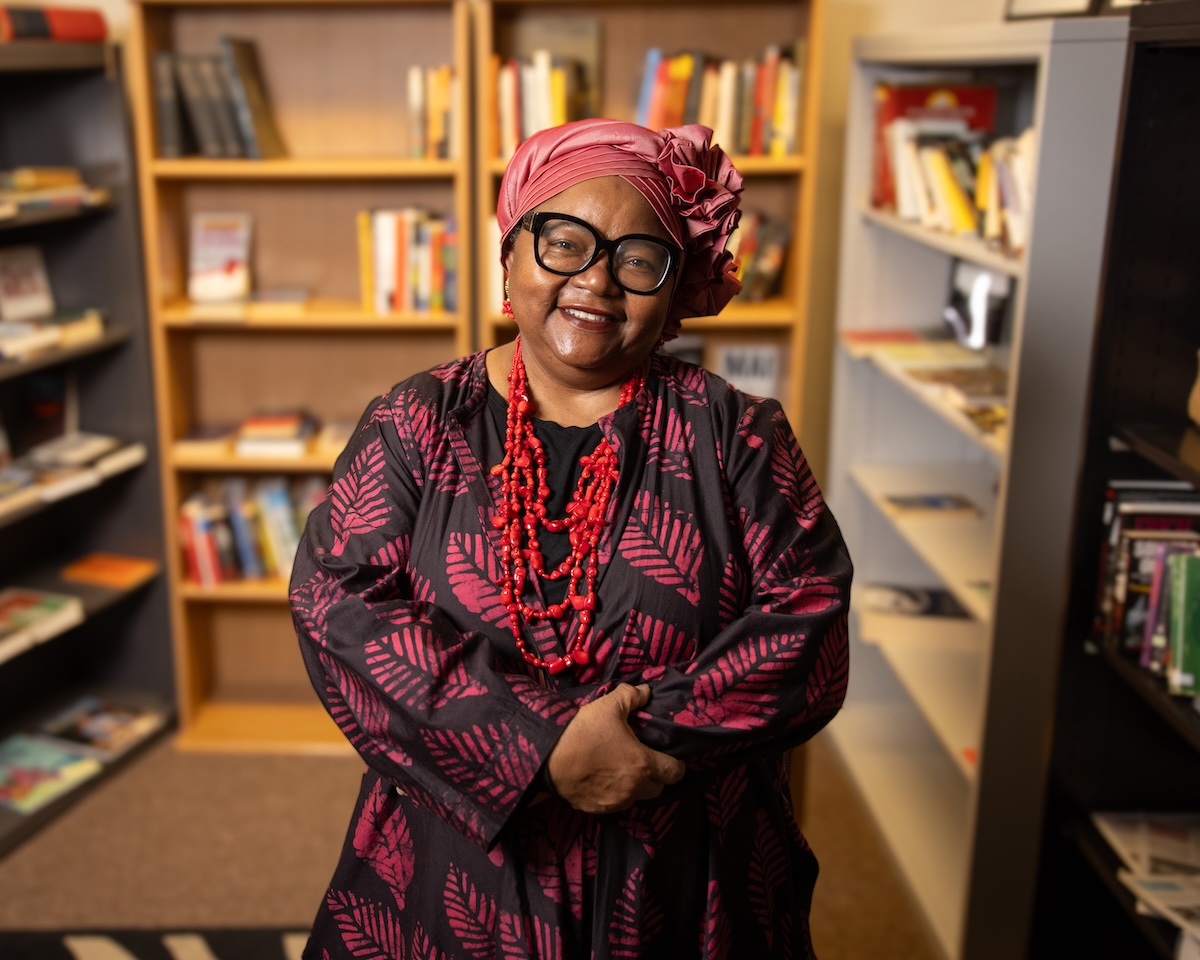

In the summer of 2024, education major Jaela Williams ’25 was in Amsterdam conducting research for her senior project—the development of a comprehensive K-12 sexuality education curriculum. While working with her adviser, Sociology Professor Naomi Braine, Williams had decided that the curriculum could benefit from research into consent.
For Braine, teaching about consent is a vital issue within sexual education at all levels.
“It is often a neglected area of the curriculum in part because it is actually quite complex and teachers don’t have the tools to help students understand,” said Braine. “Jaela’s research enabled her to address consent at different age-appropriate levels and incorporate teaching strategies into her curriculum materials.”
Williams was interested in the way consent changes when commerce is involved, and if sex workers are truly able to give an “enthusiastic yes,” beyond the accepted model of “enthusiastic consent,” a modern and empowering approach to understanding sexual consent. Unlike older models that focused only on the absence of a “no,” this model emphasizes a clear, active, and positive expression of agreement.
“I wanted to meet with PROUD, a Dutch sex worker union, to interview someone about their experience in a country where sex work is legalized and regulated,” she says. “I would then use my findings to center sex workers’ experiences specifically in consent lessons in the curriculum.”
Unable to speak with the union, Williams interviewed a sex worker and returned home with new insights and a plan to continue her research and earn her master’s in sociology at the University of Amsterdam. But along with her application, Williams needed to fund her time abroad due to student visa restrictions. So she applied for a Fulbright scholarship—overseen by the U.S. Department of State—to study abroad. Although she was accepted to the university in January, Williams only recently learned that she had been awarded the scholarship, which will provide her with a monthly stipend while she is abroad.
Williams notes that the kind of research she is doing requires an understanding that regardless of the protections and the regulations afforded sex workers in the Netherlands, the work is still stigmatized. “Nevertheless, those protections were super important to make my research ethical. I think sex work, in general, is just very complicated, and you have to be very careful when you’re doing research.”
With her yearlong sojourn beginning at the end of August, Williams insists that access to interdisciplinary studies at Brooklyn College has been key.
“I was able to minor in women’s and gender studies and sociology and realized that sociology was what I was looking for the whole time,” says Williams. “I’m interested in identity studies and education. Sociology is the place where these interests meet and a field in which I feel I can make an impact.”