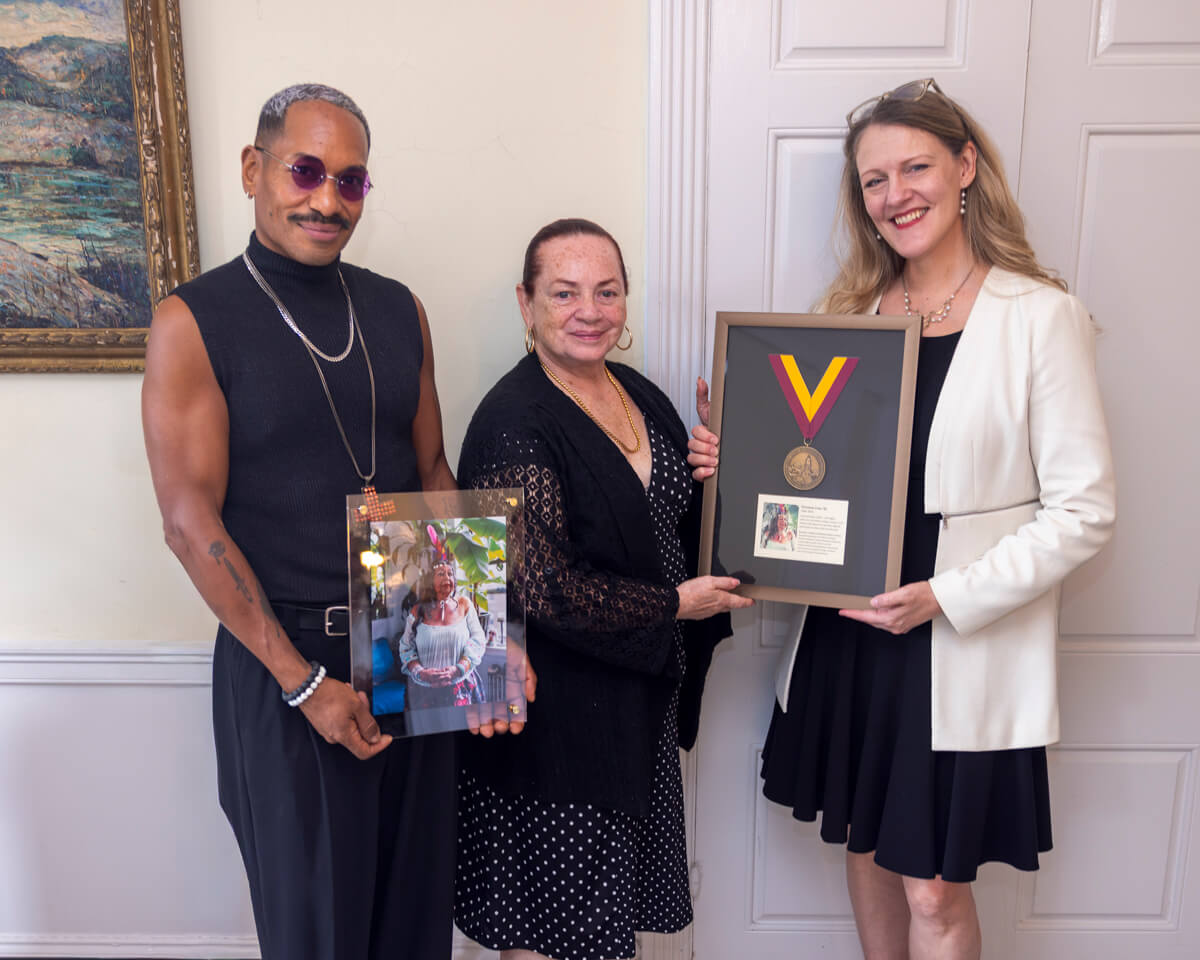
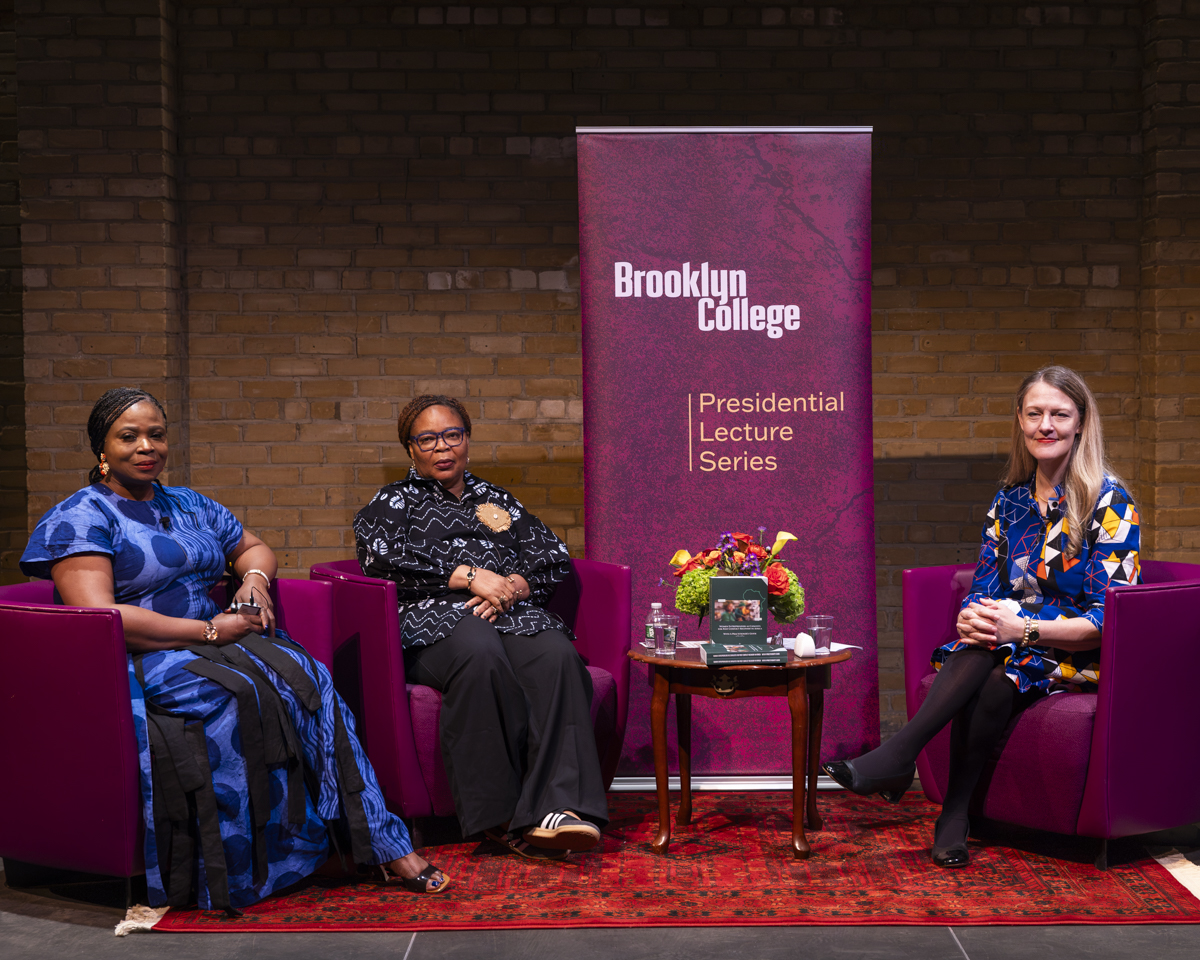
With world leaders gathering in New York City for the United Nations General Assembly, Brooklyn College welcomed Nobel Peace Prize recipient and Founding Executive Director of the CUNY Institute on Gender, Law, and Transformative Peace Leymah Gbowee and women’s economic empowerment advocate Thelma Ekiyor to the Claire Tow Theater on September 22 for a conversation about leadership, activism, and the work of building stronger communities.
The event, part of the Presidential Lecture Series, featured a discussion moderated by Brooklyn College President Michelle J. Anderson. The panel explored the role grassroots movements play in advancing peace, the importance of investing in women and communities, and the responsibilities of leaders in times of crisis and change.
“At Brooklyn College, we believe education can be a catalyst for civic engagement and social change,” Anderson said. “Leymah Gbowee and Thelma Ekiyor have demonstrated how determined individuals can transform communities and nations, and their stories remind us that leadership begins with individual and collective acts of courage.”
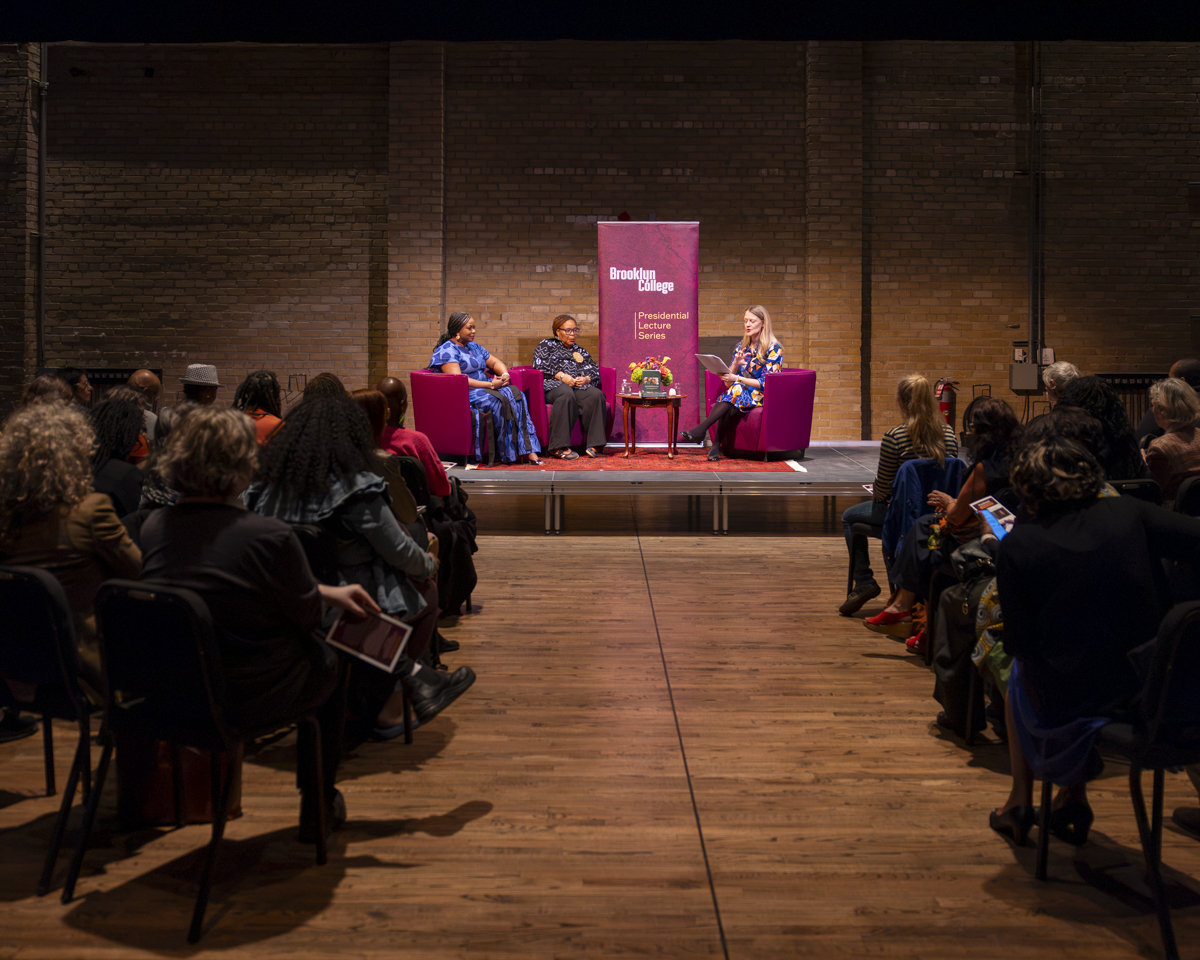
(Left to right) Thelma Ekiyor, Leymah Gbowee, and Brooklyn College President Michelle J. Anderson engage attendees in a conversation on leadership, peacebuilding, and social change in the Claire Tow Theater.
Drawing on nearly 30 years of friendship and collaboration, Gbowee and Ekiyor reflected on their work across West Africa and the partnerships that shaped it. Together, they helped establish the Women’s Peacebuilding Network, which has trained more than 150,000 women and strengthened community leadership throughout the region. One theme surfaced repeatedly throughout the conversation: Successful movements rely on many kinds of leaders. Gbowee, whose organizing efforts helped bring an end to Liberia’s civil war, spoke about the importance of recognizing the people whose work often takes place behind the scenes.
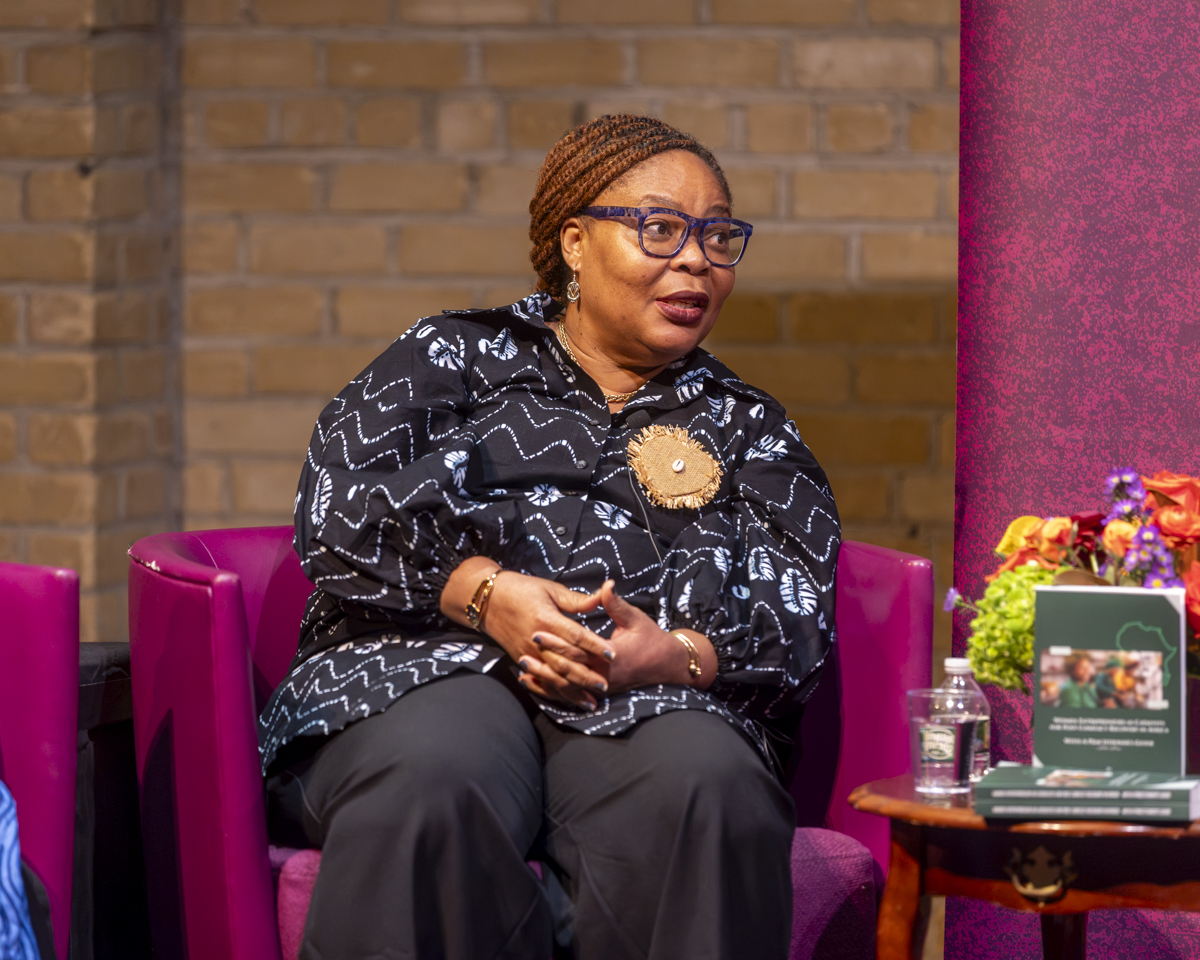
Leymah Gbowee.
“It’s always good to give credit where credit is due,” Gbowee said, describing her partnership with Ekiyor as “a beautiful journey.” She credited Ekiyor’s research, scholarship, and strategic thinking with helping strengthen their shared work and recalled one lesson that has stayed with her over the years: Trust your convictions, even when others disagree.
Ekiyor said meaningful progress depends on bringing different voices and skill sets together, from scholars and researchers to advocates and community organizers. She also discussed her recent work studying women entrepreneurs in post-conflict societies, drawing on examples from Liberia, Sierra Leone, and Rwanda. The discussion coincided with the U.S. launch of Ekiyor’s new book, Women Entrepreneurs as Catalysts for Post-Conflict Recovery in Africa With a Practitioner’s Guide. Ekiyor argued that supporting women-owned businesses is not only an economic investment but also an investment in long-term stability, helping create opportunities that strengthen communities and reduce the risk of future conflict.
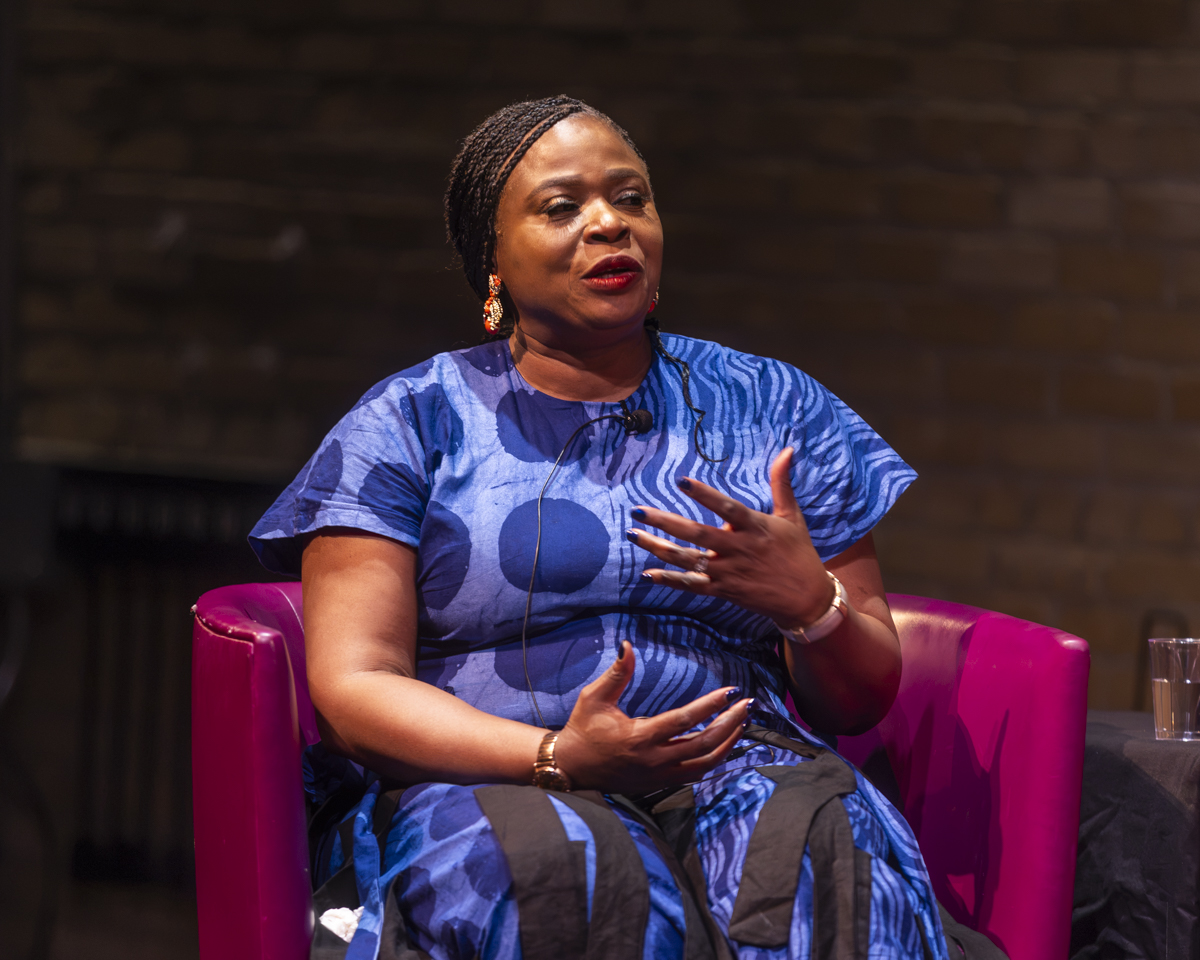
Thelma Ekiyor.
Both speakers challenged the assumption that women are merely victims of war and instability. Instead, they pointed to the central role women play in rebuilding communities, advancing peace, and creating economic opportunity.
Gbowee reflected on the grassroots movement that mobilized women across Liberia to demand an end to years of violence. Organizing in places of worship, markets, and neighborhoods, women pushed political leaders and negotiators toward peace and helped hold them accountable to their commitments.
Their efforts, she said, contributed to a more stable future for Liberia and helped clear a path for the election of Africa’s first female president.
“Peace is the only thing we have,” Gbowee said. “Every woman in Liberia understands that if our peace is threatened, we must rise again.”
Speaking to students, faculty, staff, and community members in attendance and taking questions from the audience, both Gbowee and Ekiyor emphasized the importance of education, civic engagement, and mentorship. While acknowledging the challenges facing communities around the world, they encouraged the audience to see themselves as participants in creating change, reminding them that lasting progress often begins with local action and a commitment to serving others.