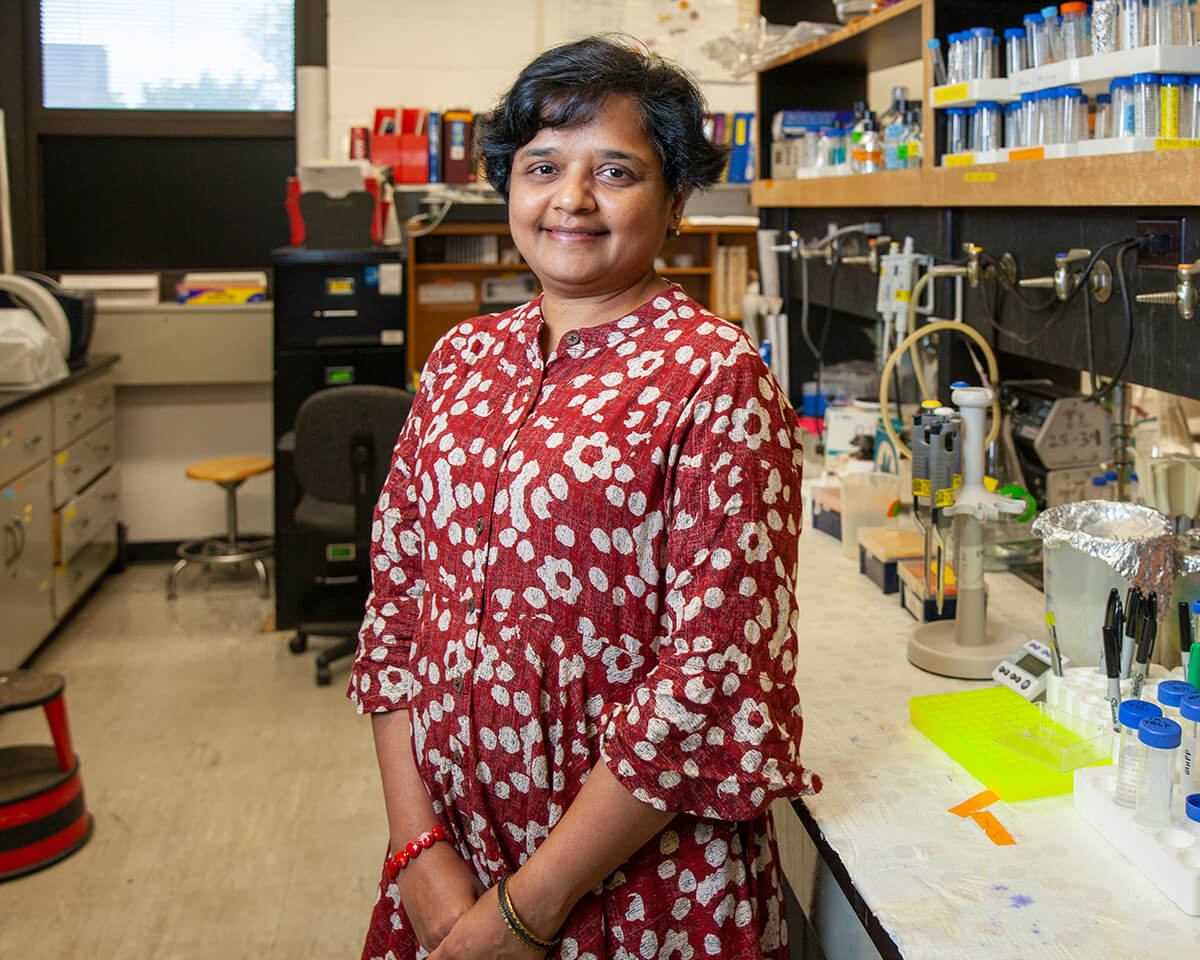

Guillermo Gerona-Navarro, associate professor of chemistry at Brooklyn College and the CUNY Graduate Center, has received a four-year, $618,000 award from the National Institute of General Medical Sciences at the National Institutes of Health for his project, “Development and Mechanistic Validation of Next-Generation Allosteric PRC2 Inhibitors for Cancer Epigenetics.”
The grant continues work launched under Gerona-Navarro’s previous NIH SCORE award (SC1GM136635, 2020–24, $1.57 million), which supported the discovery of the lead compounds now being advanced.
Targeting Cancer Through Epigenetics
Gerona-Navarro’s laboratory works in cancer epigenetics, the study of how changes in gene regulation, rather than changes to the DNA sequence itself, can drive disease. His team focuses on PRC2, a protein complex that silences genes. When PRC2 becomes overactive, it can shut down the genes that normally protect against cancer, contributing to lymphoma, breast, prostate, and brain cancers, among others.
Two PRC2-targeting drugs have reached the market, but both work by blocking the enzyme’s active site, and tumors frequently develop resistance to them. Gerona-Navarro’s team has taken a different approach: engineered peptides that bind elsewhere on the enzyme and shut it down indirectly. Because these compounds work through a distinct mechanism, they may remain effective where existing drugs fail, or be combined with them to delay resistance.
Training the Next Generation of Scientists
The NIH award highlights Brooklyn College’s growing role in advancing fundamental biomedical research with the potential for real-world clinical impact. Through innovative approaches to drug discovery, Gerona-Navarro’s work aims to deepen scientific understanding of how cancer develops while laying the groundwork for future treatments that could benefit patients facing some of the most challenging forms of the disease.
Student involvement is central to the project. Gerona-Navarro has mentored 41 undergraduates at Brooklyn College, several of whom have co-authored peer-reviewed publications, and currently supervises three doctoral candidates. The new award will extend those opportunities, giving students hands-on experience spanning computational design, synthetic chemistry, and cancer cell biology, helping train the next generation of scientists while contributing to national efforts to combat cancer through cutting-edge biomedical innovation.