
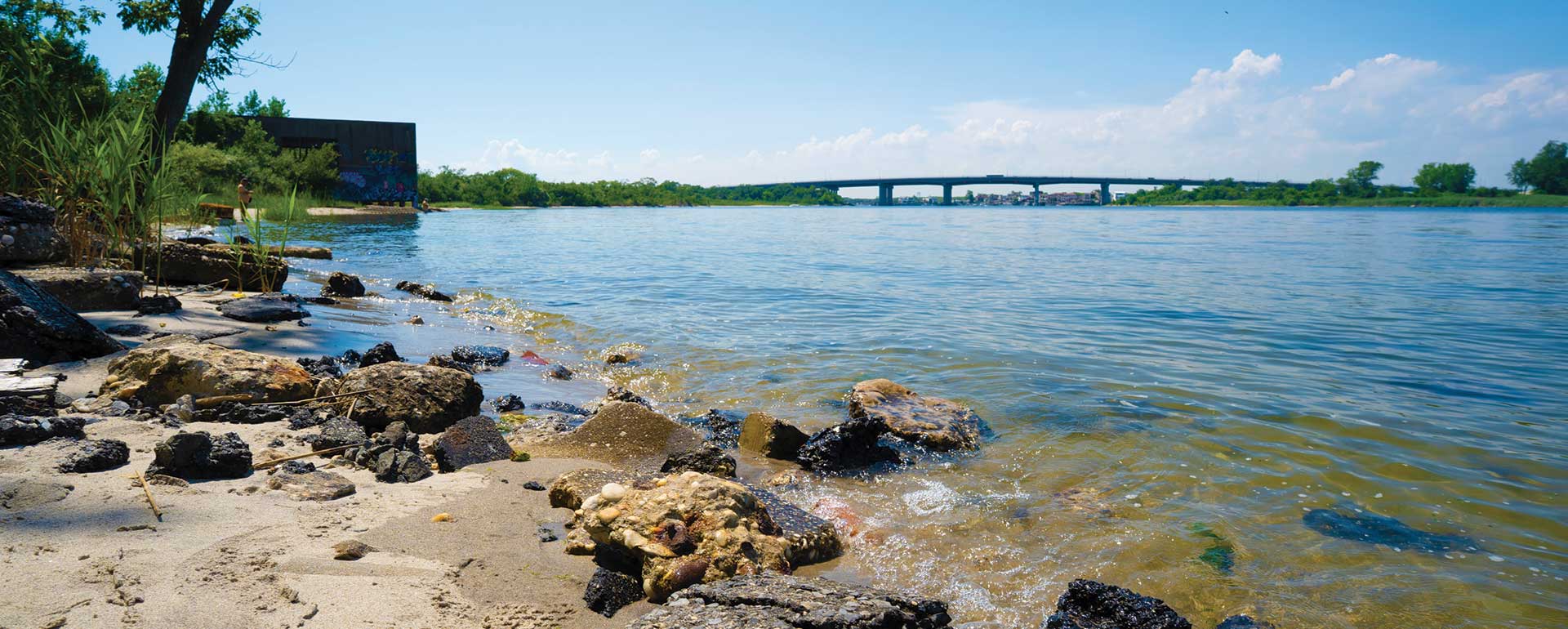
How Brooklyn College scientists are shaping the future of Jamaica Bay.

At Brooklyn’s edge, where salt marshes meet city infrastructure, Brooklyn College researchers are helping define what resilience looks like in a changing climate.

The Science and Resilience Institute at Jamaica Bay (SRIJB), a CUNY-wide institute led by Brooklyn College and directed by Brett Branco, associate professor of earth and environmental sciences, is advancing some of the nation’s most ambitious urban ecological restoration efforts. Supported by significant public investment, the institute is expanding its work at a critical moment for the region’s coastline.
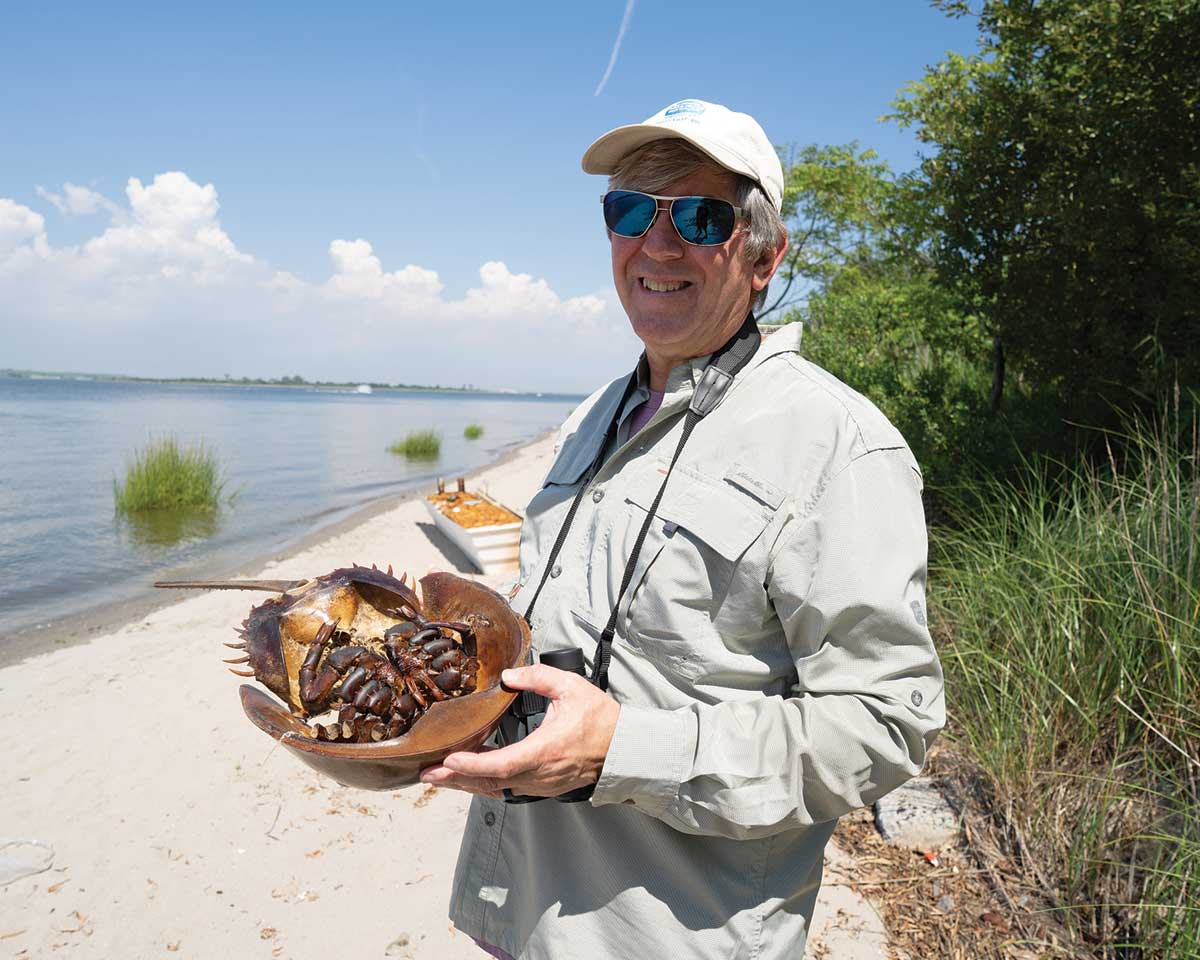

BC–Mag–14.1–Brett-on-beach–1200×960
Professor and Executive Director of the Science and Resilience Institute at Jamaica Bay Brett Branco on the shore of Jamaica Bay.

Serving the Public Good

Jamaica Bay is one of the East Coast’s most important estuaries, encompassing 26 square miles and supporting hundreds of species of birds, fish, and plants. Yet it faces growing threats from sea-level rise, stronger storms, and decades of environmental stress. To address these challenges, SRIJB brings together scientists, students, community organizations, and government agencies to study the bay’s ecology and develop solutions that strengthen both ecosystems and surrounding neighborhoods.

“Jamaica Bay faces unique challenges because it is an extremely valuable ecological system embedded within a densely populated and urbanized watershed,” said Branco. “We aim to serve the public good through research, education, and engagement while training the next generation in sustainability, resilience, and stewardship.”


“We aim to serve the public good through research, education, and engagement while training the next generation in sustainability, resilience, and stewardship.”

Brett Branco · Science and Resilience Institute at Jamaica Bay

Helping Communities Adapt to Climate Change

A key focus of the institute’s work is Floyd Bennett Field, the historic airfield on the bay’s southeastern edge and part of Gateway National Recreation Area. As both a cultural landmark and environmental resource, the site provides opportunities to test restoration strategies and nature-based flood solutions that can help communities adapt to climate change. SRIJB collaborates there with the Jamaica Bay-Rockaway Parks Conservancy, public agencies, nonprofits, and industry partners to restore wetlands, monitor water quality, and study approaches such as living shorelines that reduce flood risk while protecting wildlife habitat.

Central to this effort is the transformation of Hangar 4 into a resilience innovation hub. Backed by $12.5 million in capital funding from New York City and New York State, the facility will support research, workforce training, student learning, and public engagement while strengthening connections between communities and the shoreline they depend on.

From Local to Global Impact

The investment will also create new opportunities for Brooklyn College students. Expanded field research, sustainability projects, and workforce development programs will give students hands-on experience while preparing for careers in environmental science, climate resilience, and environmental stewardship.

The institute’s work extends beyond New York. Jamaica Bay serves as a model for how major coastal cities can restore ecosystems while adapting to climate change, demonstrating how nature-based solutions can protect both communities and biodiversity. Through international partnerships and knowledge-sharing initiatives, SRIJB contributes to lessons that can inform coastal cities worldwide as they confront rising seas, flooding, and environmental degradation.

BC Magazine · Fall 2026 | Volume 14 | Number 1