Linguistics
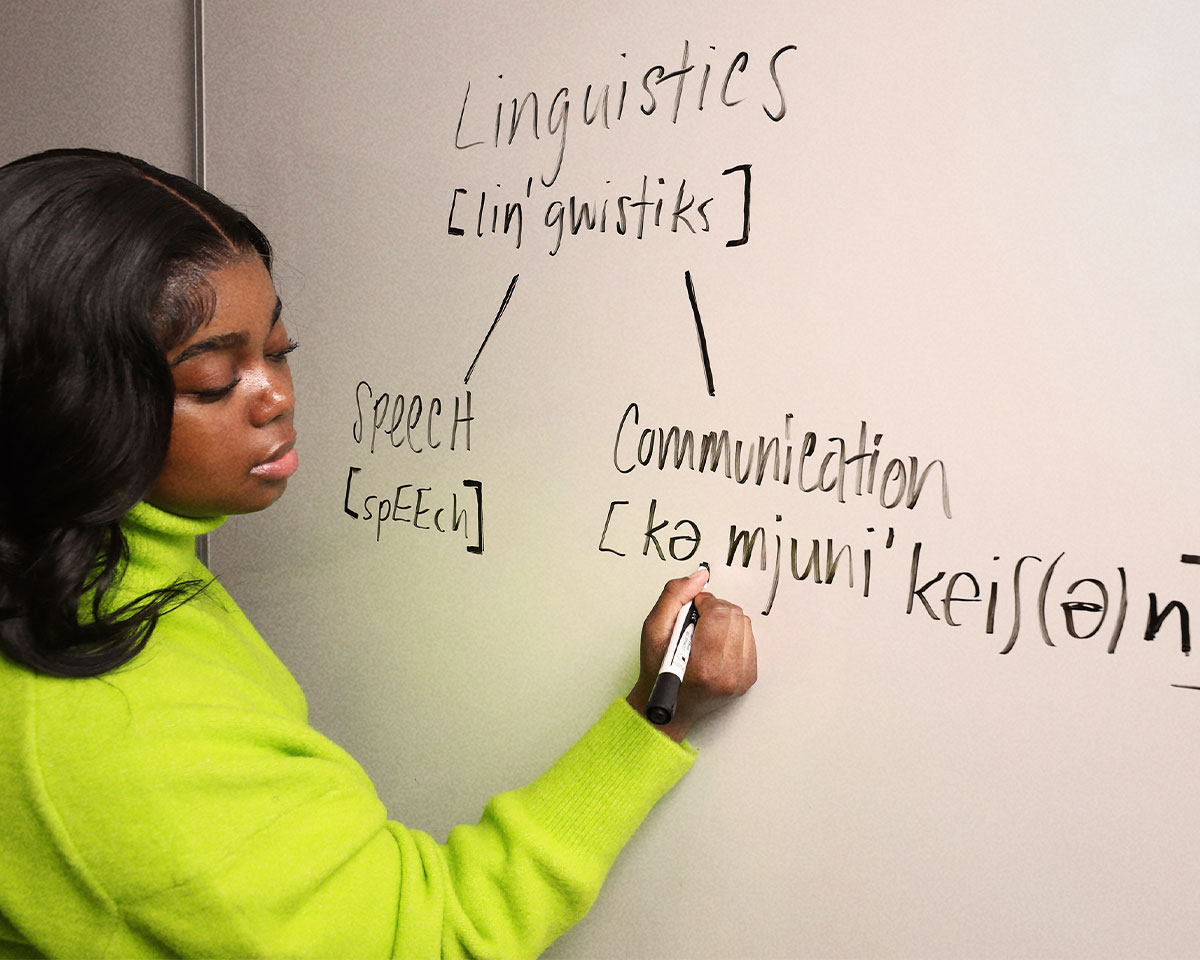
Explore the science behind how we speak, think, and connect. Our linguistics program offers a flexible major, minor, or second major option—perfect for pairing with any field. Gain skills in analysis, problem-solving, and communication that open doors to graduate study and careers worldwide.
What You’ll Learn
We provide a strong foundation in contemporary linguistics, starting with the nature and structure of language and moving into core areas:
- Phonology: Sounds of language
- Morphology: Structure of words
- Syntax: Structure of phrases and sentences
- Semantics: Structure of meaning
You’ll explore how language:
- Is acquired in childhood
- Functions in communication and society
- Is processed by the brain and computers
- Evolves over time
Our courses also cover related fields such as:
- First and second language acquisition
- Cognitive science
- Philosophy of language
- Psycholinguistics and sociolinguistics
- Historical linguistics and language typology
- Pidgins and creoles
- Natural language processing
Because we’re housed in the English Department, you’ll also discover the deep connections between language and literature, including how linguistics informs literary criticism.
Why Add Linguistics as a Second Major or Minor?
Pairing linguistics with another field:
- Strengthens your position for graduate studies and professional careers.
- Enhances your problem-solving skills, which employers and graduate programs increasingly value.
- Benefits you even if your career isn’t language-related—business and industry recognize the analytical skills linguistics majors bring.

CAREER AND GRADUATE PATHWAYS
What You Can Do With a Degree in Linguistics
Our program prepares students for graduate studies and careers in:
- Education: Teaching, curriculum development, language assessment
- Translation and Interpretation
- Computational Linguistics and Speech Technology
- International Business
- Law: Immigration, international business
- Publishing: Writing, editing, lexicography
- Foreign Service and Government Careers
Contact Information
Program Director: Jonathan Nissenbaum
1209 Ingersoll Hall
P: 718.951.5000 ext. 6631
F: 718.951.4136