
Finance, M.S. (Online)
Murray Koppelman School of Business
Program Overview
This 100% asynchronous online finance degree equips you with what you need to excel in the financial industry. Dive into essential finance courses that blend theory with real-world practice, all designed to be completed within one year. With one of the most competitive tuition rates in New York, you will gain a valuable, industry-aligned education that prepares you for a professional or management role in finance. Offered through the prestigious Murray Koppelman School of Business—the only business school in Brooklyn accredited by the Association to Advance Collegiate Schools of Business (AACSB)—this program will position you for success in the field. This same program is also offered in an in-person format.

Program Details
The program information listed here reflects the approved curriculum for the 2026–27 academic year per the Brooklyn College Bulletin. Bulletins from past academic years can be found here.
Program Requirements (30 Credits)
NYSED Program Code: 44866
The Master of Science in Finance program aims to prepare students for successful careers in the rapidly evolving finance industry, where success increasingly depends on advances in financial technology. The demand for highly skilled finance professionals has grown significantly over the past five years and is expected to continue rising. This trend is driven by the growing need among businesses, financial institutions, and regulatory bodies to manage risk effectively, analyze complex financial problems, and make data-informed investment and financial decisions.
Five Areas
- Financial Management
- Quantitative and Statistical Methods in Finance
- Financial Data Analytics
- Financial Markets
- Investment and Valuation
Core Courses
- FINC 7200X Quantitative Methods in Finance
- FINC 7201X Statistical Methods and Empirical Finance
- FINC 7210X Financial Data Science
- FINC 7211X Financial Modeling
- FINC 7216X Managerial Finance
- FINC 7250X Financial Markets, Institution Regulation, and Ethics
- FINC 7300X Investment and Portfolio Management
Electives
Student Learning Outcomes
- Apply core financial theories, models, and analytical tools to develop integrated and innovative strategies that address current and emerging financial challenges.
- Integrate and apply quantitative methods to analyze and solve complex financial problems using statistical, econometric, and machine learning techniques.
- Evaluate the financial performance and risk profiles of firms and portfolios in both local and global contexts to inform strategic decision-making.
- Conduct valuation and investment analysis for a range of financial assets, including equities, fixed income securities, and alternative investments.
- Measure, model, and manage market, credit, and operational risks using advanced quantitative tools.
- Apply data analytics concepts, methods, and techniques to solve a wide range of finance problems or investment decisions.
- Demonstrate effective written communication and presentation skills essential for professional success in the financial industry.
- Recognize and address ethical challenges in financial decision-making, developing justifiable and responsible solutions.
- Apply theoretical and practical methods to stay current with rapid advancements in portfolio management, investment analytics, and asset valuation (Investment Management and Asset Valuation) or to address complex computational and risk management problems in quantitative finance (Quantitative Finance and Risk Management).
Admissions Requirements
Admission to this program is designed to be inclusive while maintaining high academic standards. Applicants must hold a bachelor’s degree from an accredited institution and demonstrate strong academic performance, particularly in quantitative subjects such as mathematics and statistics. While professional experience in finance or related fields is preferred, it is not mandatory.
Application Deadlines
- Fall Application Deadline: June 15. Applications after this date may be accepted on a rolling basis until all places are filled.
- Spring Application Deadline: December 15. Applications after this date may be accepted on a rolling basis until all places are filled.
Supporting Documents for Matriculation
Submit the following documents to the Office of Graduate Admissions:
- Transcripts from all colleges and universities attended. Applicants who earned a bachelor’s degree outside the United States need to submit a course-by-course international transcript evaluation. See Graduate Admissions for more information.
- Two letters of recommendation
- Current résumé or CV
- Statement of purpose essay
Required Tests
- While the GRE, GMAT, GMAT Focus, or Executive Assessment is optional for domestic students, international applicants are encouraged to submit these scores as part of their application package.
- F-1 or J-1 international students must submit English Proficiency Exam. TOEFL—100, IELTS—7, PTE—70, Duolingo—120.
- Note: English proficiency exam is not required for U.S. permanent residents or citizens, regardless of whether their degrees were earned in non–English-speaking countries.
More Information
Refer to the instructions at Graduate Admissions.
Funding and Financial Aid
Currently, this program does not provide full-tuition scholarships or living stipends. Nevertheless, master’s students may be eligible for a range of funding opportunities to help defray the cost of attendance. For additional information, please visit the scholarships office.
Scholarships and Fellowships from External Organizations
A wide range of competitive scholarships, fellowships, and grants-in-aid are available from outside organizations and agencies. Many scholarships for master’s students are reserved for members of specific populations. Examples include:
- American Association of University Women Career Development Grants
Who is eligible: U.S. citizens or permanent residents whose last degree was received before June 30, 2015; primary consideration is given to women of color and women pursuing their first advanced degree or credentials in nontraditional fields. - American Association of University Women International Fellowships
Who is eligible: Non-U.S. citizens or permanent residents. - Japanese American Citizens League (JACL) National Scholarship Program
Who is eligible: Active National JACL members - Korean American Scholarship Foundation
Who is eligible: Qualified Korean American students (including international students from Korea) who are enrolled in a full time program in the U.S during the scholarship application year - The NY Grace LeGendre Endowment Fund, Inc
Who is eligible: Women who are United States citizens, resident in New York State, have a bachelor’s degree, and are currently enrolled (and have already completed at least one semester) in an advanced graduate degree program at an accredited New York State college or university, show evidence of scholastic ability and a need for financial assistance, and will complete their studies no later than 2026. Address questions about the Fellowship program to Eugenia Barnaba, Chair, NY Grace LeGendre Endowment Fellowship Committee, email . - Paul and Daisy Soros Fellowship for New Americans
Who is eligible: Immigrants and children of immigrants in the U.S. - The Tang Scholarship
Who is eligible: Gay, lesbian, bisexual, and transgender Asian and Pacific Islanders (API) from the Bay Area
Additional Scholarship Search Resources
You can find additional external scholarship opportunities through websites and search engines such as:
Federal Aid: Loans and Work-Study Opportunities
Master’s students who submit the Free Application for Federal Student Aid (FAFSA) may be considered for federal financial assistance. Eligible students may qualify for Federal Direct Unsubsidized Loans, Federal Direct PLUS Loans, and/or Federal Work-Study (FWS), with the latter being a commonly utilized option among graduate students. For additional information, please contact the Federal Work-Study Office.
Please note that international students are not eligible for U.S. federal financial aid.
Contact
Seungho Baek, Program Director/Graduate Deputy
501 Whitehead Hall
E:
P: 718.951.5000, ext. 5012
Or contact:
Office of Graduate Admissions
222 West Quad Center
2900 Bedford Avenue, Brooklyn, NY 11210
E:
P: 718.951.4536
Office Hours
Mondays–Fridays, 9 a.m.–5 p.m.
Schedule an appointment with a graduate admissions counselor.
Related Program
Our Finance, M.S. program is also offered in person at Brooklyn College’s Graduate Center for Worker Education, located at 25 Broadway in Manhattan, in the heart of the global financial markets. This location provides students with a unique opportunity to immerse themselves in a dynamic learning environment that reflects the energy and relevance of New York City’s financial district, including opportunities to interact with professionals and experts from Wall Street.
Specializations
Quantitative Finance and Risk Management
This specialization provides students with advanced analytical, quantitative, and computational skills essential for modern finance.
Students learn to model financial markets, value securities and derivatives, and measure and manage various forms of risk, including market, credit, and operational risk.
The curriculum emphasizes programming, data analytics, and financial modeling using tools such as Python and R.
Students also gain expertise in portfolio optimization, regulatory frameworks, and ethical decision-making.
Graduates are well-prepared for careers as quantitative analysts, risk managers, portfolio strategists, and financial engineers in investment firms, banks, fintech companies, and regulatory institutions.
Required Courses
- FINC 7241X Derivative Pricing and Risk Management
- FINC 7243X Structured Fixed Income Management
- FINC 7251X Financial Market Microstructure
Investment Management and Asset Valuation
This specialization prepares students to analyze, value, and manage financial assets in dynamic global markets.
Students learn fundamental and advanced valuation techniques (i.e., Value Investing) for equities, fixed income securities, and alternative investments.
The curriculum emphasizes portfolio construction, performance evaluation, and strategic asset allocation under varying market conditions.
Through data-driven analysis and case studies, students develop strong quantitative, qualitative, and decision-making skills.
The program also covers ethical and regulatory aspects of investment management.
Graduates are equipped for careers as investment analysts, portfolio managers, financial advisors, and research analysts in asset management and investment institutions.
Required Courses
- FINC 7241X Derivative Pricing and Risk Management
- FINC 7242X Security Valuation and Value Investing
- FINC 7243X Structured Fixed Income Management
Declaring a Specialization
To declare a specialization, students must complete the required courses and associated capstone projects to earn the concentration, allowing them to align their studies with their career goals.
Capstone Projects
In the final semester, students complete a capstone project that synthesizes their academic learning. Projects may involve risk assessment, investment analysis, or applied research, often conducted in collaboration with industry partners. This experience enables students to demonstrate mastery of program outcomes in a practical setting.
Capstone projects, integrated into upper-level courses, provide applied research experiences that strengthen students’ quantitative and analytical skills for solving real-world financial challenges.
FINC 7242X and FINC 7251X incorporate capstone projects supervised by full-time finance faculty. Each course includes an applied project or research component requiring students to integrate quantitative and analytical techniques to address real-world financial problems. Both courses culminate in a formal presentation and a thesis-style report that simulate professional financial analysis and policy evaluation.
For the specialization in Quantitative Finance and Risk Management, students are required to take FINC 7251X and complete the capstone project in that course.
For the specialization in Investment Management and Asset Valuation, students must take FINC 7242X and complete the capstone project in that course.
The Support You’ll Find
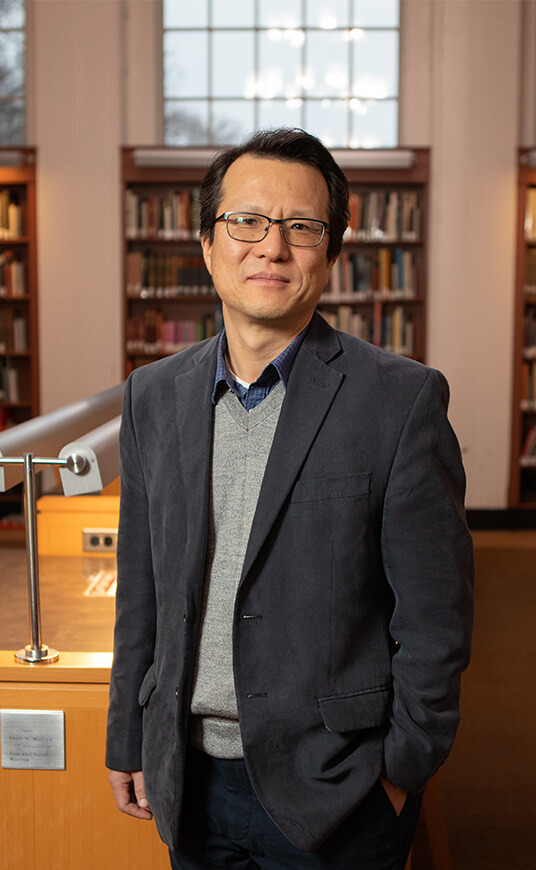
Our faculty members in the Finance Department offer incomparable expertise and tremendous talent, and each brings a unique perspective to their teaching and mentoring in and out of the classroom.






Internships and Employers
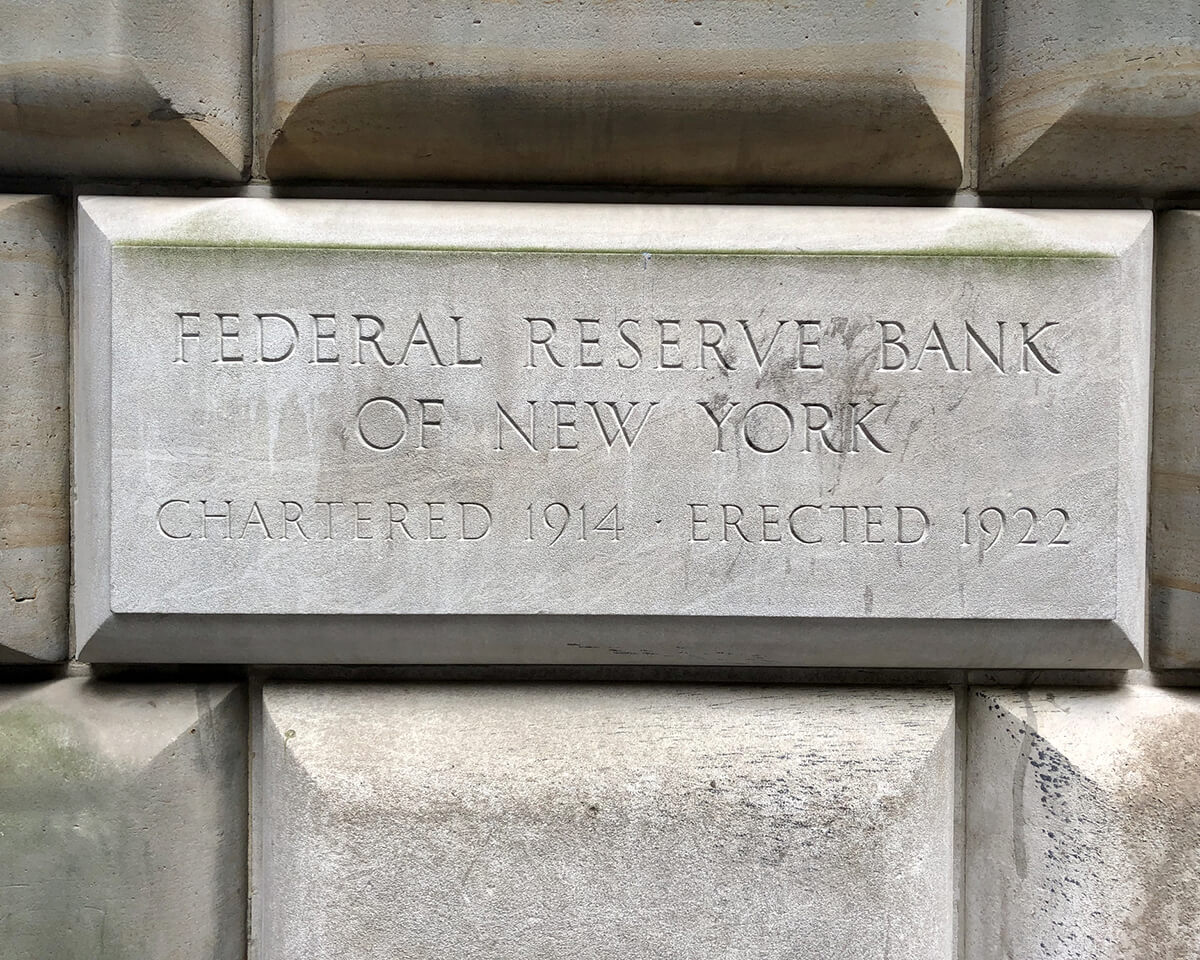
Through professional networking opportunities and events, the Magner Career Center gives students in the Finance, M.S. program access to career opportunities at a wide variety of employers. The program’s location in Manhattan provides proximity to major financial institutions and a vibrant job market. Overall, this program fosters professional growth and economic mobility, enabling graduates to thrive in competitive finance careers.