Speech-Language Pathology, M.S.
School of Humanities and Social Sciences
Program Overview
Brooklyn College’s highly regarded program for the Master of Science in speech-language pathology is offered through the Department of Communication Arts, Sciences, and Disorders. Academic, clinical, and research opportunities covering the range of disorders that occur throughout the lifespan are provided in state-of-the-art classrooms, clinical suites, and laboratories.

Program Details
The program information listed here reflects the approved curriculum for the 2026–27 academic year per the Brooklyn College Bulletin. Bulletins from past academic years can be found here.
Program Description
NYSED Program Code: 77738
This Master of Science degree program prepares students for careers as speech-language pathologists in community speech, language, and hearing centers, hospitals, school settings, rehabilitative agencies, and private practice. Academic, clinical, and research opportunities covering the range of disorders that occur throughout the lifespan are provided in state-of-the-art classrooms, clinical suites, and laboratories.
Accreditation Information
Brooklyn College’s highly regarded program for the Master of Science in speech-language pathology is offered through the Department of Communication Arts, Sciences, and Disorders, and prepares students for careers as speech-language pathologists in community speech, language, and hearing centers; hospitals; school systems; rehabilitative agencies; and private practices.
The Master of Science (M.S.) education program in speech-language pathology (residential) at Brooklyn College is accredited by the Council on Academic Accreditation in Audiology and Speech-Language Pathology (CAA) of the American Speech-Language-Hearing Association, 2200 Research Boulevard #310, Rockville, Maryland 20850, 800.498.2071 or 301.296.5700.
Graduates are eligible to apply for New York State licensure and ASHA certification in speech-language pathology. Students who complete additional required courses in education and clinical practicum in educational settings are also eligible to apply for certification as teachers of students with speech and language disabilities (TSSLD) by the New York State Education Department.
The program provides students with opportunities for intensive academic study of communication sciences and therapeutic methodologies. A wide range of professional and educational service agencies, on and off the campus, serve as clinical practicum sites. Through coursework and practicum assignments each student is able to develop a sound conceptual framework in the field of communication sciences and disorders.
Requirements for a Master of Science degree in speech-language pathology include successful completion of 59 to 71 credits and 400 hours of clinical practicum. Students have the opportunity to take course work leading to the NYS Teacher of Students with Speech and Language Disabilities (TSSLD) certificate. Students must maintain a minimum grade point average of 3.00 and pass the comprehensive examination to graduate.
Program Requirements (59–78 Credits)
There are two options within the master’s program in speech-language pathology. Students entering the master’s program can complete the master’s degree in speech-language pathology, Option A (see below); or students can apply to complete a master’s degree in speech-language pathology with a specialization in early intervention, Option B (see below).
Grading Policy
Students must successfully complete all academic and clinical courses with a grade of B- or higher. A grade of B- or higher in the course presumes that the student has satisfactorily completed all of the formative and summative assessment activities of the course, and thus, the fulfillment of all learner outcomes, unless otherwise stipulated by the instructor.
A grade of C+ in a course presumes that not all formative and summative assessment activities have been satisfactorily completed and will result in a Performance Improvement Plan (PIP, see below). The satisfactory completion of the PIP presumes that a student has fulfilled all learner outcomes for the course but will not result in a change of course grade. If a student fails to satisfactorily complete the PIP on or before the date assigned by the instructor, the student will be required to re-take the course.
Students who earn a grade of C or below, in an academic or clinical course, will be required to re-take the course.
Students are permitted a maximum of two PIPs in didactic and/or clinical courses. An additional PIP will result in program dismissal. Students who are required to repeat two didactic and/or clinical courses (as a result of a grade of C or below and/or failed PIP) will be dismissed from the program. Students who are required to repeat one course and complete two PIPs, in didactic and/or clinical courses, will be dismissed from the program.
Certification of Clinical Competency
Only students who complete the degree requirements, including the Praxis Examination in Speech-Language Pathology, are eligible for certification of clinical competency by the American Speech-Language-Hearing Association. Students who intend to apply for New York State teacher certification as “Teachers of Students With Speech and Language Disabilities (TSSLD),” must present coursework as described in option (b) or (c) of the matriculation requirements for the M.S. in education, teacher of students with speech and language disabilities, or must complete an additional three graduate credits in the School of Education as follows: SEED 7500X.
Additionally, those students must complete Communication Arts, Sciences, and Disorders 7551X and CBSE 7672T and 7677T. In order to be eligible for teacher certification, students must also pass exams and complete workshops as stipulated by the New York State Department of Education.
Sample Course Sequence
Student Learning Outcomes
Students will:
- Demonstrate evidence-based knowledge and clinical education skills culminating in the M.S. in speech-language pathology; meet the current professional standards for clinical certification and NYS licensure.
- Demonstrate knowledge and skills in the prevention, diagnosis, and treatment of communication disorders across the lifespan.
- Identify the precipitating and maintaining factors related to a range of speech, language, communication, hearing, and swallowing disorders.
- Engage in a variety of clinical practicum experiences to meet the needs of a diverse community, state, and nation in a variety of settings across the life span.
- Demonstrate scientific and scholarly inquiry in the processes of human communication and related disorders of speech, language, swallowing, cognition, and hearing; develop a greater understanding of current research-based assessment and intervention procedures and principles in the field of in speech-language pathology.
Option A: Master’s Degree (59–71 Credits)
The degree requires 59 to 71 credits.
Students must pass a departmental comprehensive examination and must take and report their scores on the Praxis Examination in Speech-Language Pathology. Information about requirements for the comprehensive examination is in the section “Academic Regulations and Procedures.” Courses in the Department of Communication Arts, Sciences, and Disorders offered toward the degree must be 7000-level courses. The program of study must be approved by an adviser in the student’s major area of concentration. Students must also complete requirements in communication, arts, sciences, and disorders as follows: Communication Arts, Sciences, and Disorders 7107X, 7128X, 7211X, 7313X, 7321X, 7323X, 7325X, 7326X, 7327X, 7331X, 7333X, 7336X, 7337X, and U7441X; and not more than 11 credits in clinical practicum, for a minimum of 400 clock hours. A maximum 11 credits in courses in clinical practicum (Communication Arts, Sciences, and Disorders 7395X, 7396X, 7397X, 7398X, 7399X and 7691X), and/or 14 credits with special problems (Communication Arts, Sciences, and Disorders 7296X), and courses taken on a tutorial basis may be counted toward the degree. The remaining credits required for the degree must be chosen in consultation with an adviser in the major area of concentration. Courses in speech, language, and hearing science may be incorporated on an elective basis.
Option B: Master’s Degree With a Specialization in Early Intervention (64–78 Credits)
The master’s degree in speech-language pathology with a specialization in early intervention requires 64 to 78 credits.
Completion of a master’s degree in speech-language pathology with additional required coursework in the early intervention specialization. Year 1: ECAE 7675T; Year 2:, CASD 7443X, 7445X, 7446X. In order to qualify for the specialization in early intervention, students are required to complete an application and an interview once accepted into the master’s program. The program of study must be approved by the deputy chairperson.
Admissions Requirements
- Fall Application Deadline: February 1
- Spring Application Deadline: The program does not accept applications for spring.
The Speech-Language Pathology M.S. program does not accept nondegree applications.
Supporting Documents for Matriculation
Submit the following documents to the Office of Graduate Admissions:
- Transcripts from all colleges and universities attended. Applicants who earned a bachelor’s degree outside the United States need to submit a course-by-course international transcript evaluation. See Graduate Admissions for more information.
- Two letters of recommendation, one must be academic, attesting to the applicant’s capacity to successfully complete graduate study. Letters from professionals who the applicant has observed or shadowed will not be accepted. Recommendations should not be dated more than 18 months prior to the date of the application deadline.
- Statement of Purpose addressing your interest in the program, discipline, and future goals. Consider personal experiences that lead you to the profession of speech-language pathology and/or your qualifications for graduate study in this field. Two-page maximum, double-spaced, one-inch margins, 11- or 12-point font.
- Résumé, including employment history, professional background and skills, volunteerism, extra-curricular activities (maximum two pages)
- Supplemental Admissions Form (PDF)
Applicants must have completed at least five pre-requisite courses prior to applying. Selected applicants will be invited to attend an interview. All six required pre-requisite courses and all ASHA coursework must be completed prior to admitting in fall.
Required Tests
- GRE
- F-1 or J-1 international students must submit English Proficiency Exam. TOEFL—79, IELTS—6.5, PTE—58–63, Duolingo—105–160.
I-20 Submission Deadlines
F-1 students who are not currently in the country should submit their I-20 by the following date to allow sufficient time for visa processing and to meet the semester start date.
- July 15 for fall admission
More Information
Refer to the instructions at Graduate Admissions.
Mission Statement
The program in speech-language pathology is designed to engage students from diverse backgrounds in scientific and scholarly inquiry in the processes of human communication and related disorders of speech, language, swallowing, and hearing. The program is committed to providing students with the most current research-based academic and clinical education, and to stimulate ongoing pursuit of knowledge and skills in the prevention, diagnosis, and treatment of communication disorders. As an academic and clinical discipline, the program seeks to maintain the highest professional standards of research, teaching, and service delivery, and to promote free exchange of ideas, ethical decision-making, and the sense of personal and social responsibility.
As part of the Department of Communication Arts, Sciences, and Disorders, we guide our students to be exemplary communicators, to understand the foundations of human communication, to recognize disorder, and to distinguish disorder from difference.
Our mission includes research and service to the college and community that expands the horizons of our knowledge and facilitates successful communication.
Long-Term Strategic Plan (2026–29)
Goal 1: Fulfill each of the standards of accreditation of the American Speech-Language Hearing Association’s (ASHA) Council on Academic Accreditation (CAA).
Action items: Conduct annual review of current curriculum, didactic and clinical, to ensure the program is aligned with the mission statement and the current strategic plan goals and fulfill each of the CAA accreditation standards and prepare students to be eligible for NYS licensure in SLP and ASHA certification.
Progress update (January 2026): In addition to a complete annual review, the assessment process resulted in a revised and updated course and clinical sequence specific to the Specialization in Early Intervention. A greater focus on inequities of health and person- and family-centered practice have been provided across didactic and simulated clinical experiences.
Goal 2: Encourage curricular innovations in both didactic and clinical coursework to expand student knowledge and skills consistent with the program mission and best practices in communication sciences and disorders.
Action item: Expand opportunities to support student-clinician decision-making. Encourage professional development among the graduate cohort.
Progress update (January 2026): The use of simulation and experiential learning has been introduced into additional didactic and clinical courses, specifically CASD 7321 and 7295. Additionally, all students participated in the CUNY-wide inter-professional case simulations during their first and second years of study, working collaboratively with students from various allied health degree programs. Students enrolled in CASD 7442 participated in two inter-professional simulations and debriefs with students from the Hunter Nursing Program. These activities allow students to engage in clinical decision making, applying theoretical knowledge, with clients as partners in a low-stakes setting.
Goal 3: Promote diversity and a culture of inclusion; recruit and train a diverse body of high-quality students and support the development of clinicians and researchers who are culturally competent and understanding of patient- and family-centered practices, so they may serve the field of communication sciences and disorders.
Action items: Develop mechanisms for faculty and students to develop clinical skills to support person- and family-centered practice. Provide students supports to ensure successful program completion.
Progress update (January 2026): A review of coursework supporting updates to the bilingual extension is ongoing. A pilot mentoring program was initiated within the Early Intervention Specialization and an annual meeting of current and past students, faculty, and supervisors was planned and hosted to deepen the mentoring relationship. Additionally, an inter-professional event was planned, with faculty from the Early Childhood Art Education Department to guide students as they progress through the academic program and plan for their professional future. The program supported another student who was selected to participate in the ASHA Leadership program.
Goal 4: Expand service to the community and college through ethical and equitable evidence-based practice.
Action items: Increase clinical awareness of services across campus and surrounding communities.
Progress update (January 2026): The graduate program continues to expand clinical training opportunities. A clinical faculty member secured a clinical training grant through the SPEAK Out Foundation allowing all students to receive program training at no cost and the program introduced two additional faculty members to the CUNY inter-professional learning group.
Goal 5: Identify opportunities to expand financial support through public and private funding to support various academic and clinical training initiatives and, faculty and student research endeavors.
Action items: Work with Brooklyn College Foundation in engagement efforts.
Progress update (January 2026): Continued efforts in alumni fundraising included programmatic meetings with Brooklyn College Foundation office personnel to support existing graduate scholarships as well as various clinical training initiatives. The program continues to maintain relationships with donors. Efforts also included pursuit of external funding initiatives to provide additional student tuition scholarships as well as support various academic and clinical training initiatives. All students who applied for tuition funding through the NYC DOE scholarship program were awarded full funding. The program was awarded continued funding from the NYC DOH to expand upon the academic partnership within the Early Intervention Specialization.
Program Outcome Data
- Speech-Language Pathology, M.S. Student Outcome Data (PDF), including completion rates and employment rates.
Contact
Speech-Language Pathology Program
Sharon Beaumont-Bowman
4400 Boylan Hall
E:
P: 718.951.5186
Or contact:
Office of Graduate Admissions
222 West Quad Center
2900 Bedford Avenue, Brooklyn, NY 11210
E:
P: 718.951.4536
Office Hours
Mondays–Fridays, 9 a.m.–5 p.m.
Schedule an appointment with a graduate admissions counselor.
The Support You’ll Find
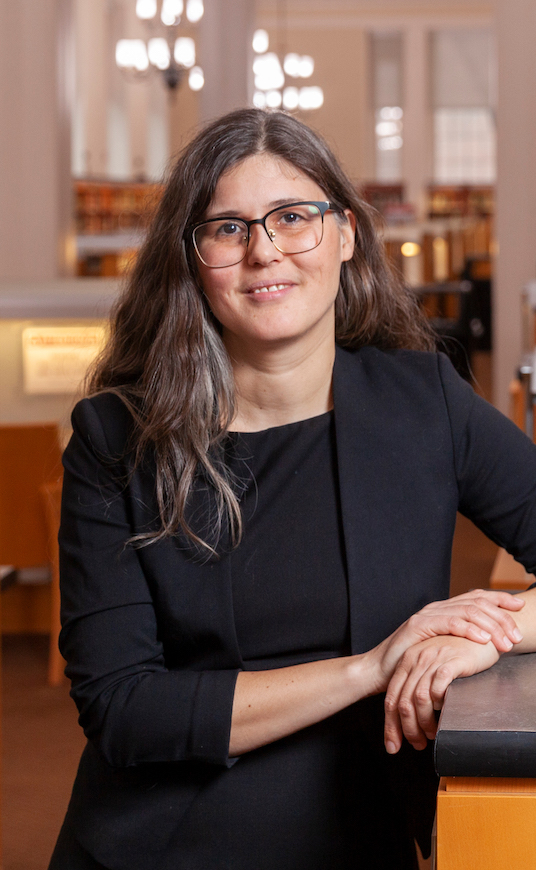
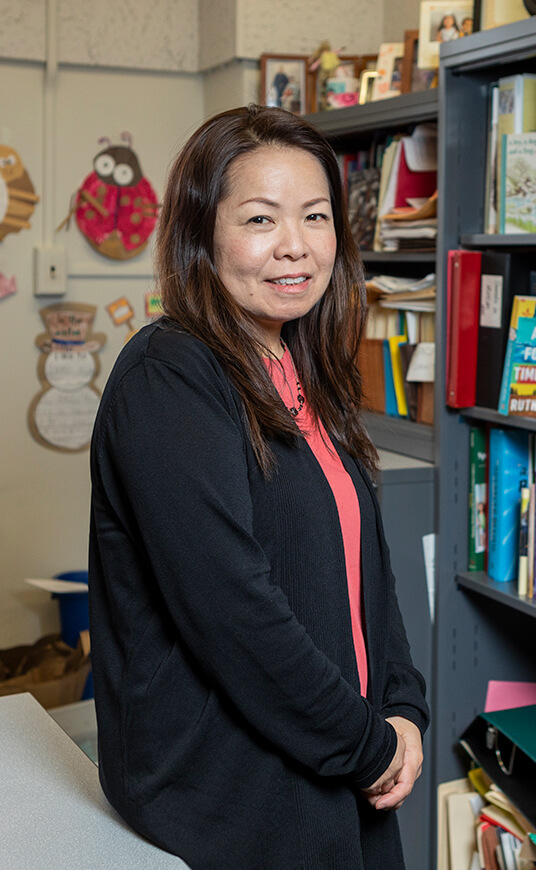
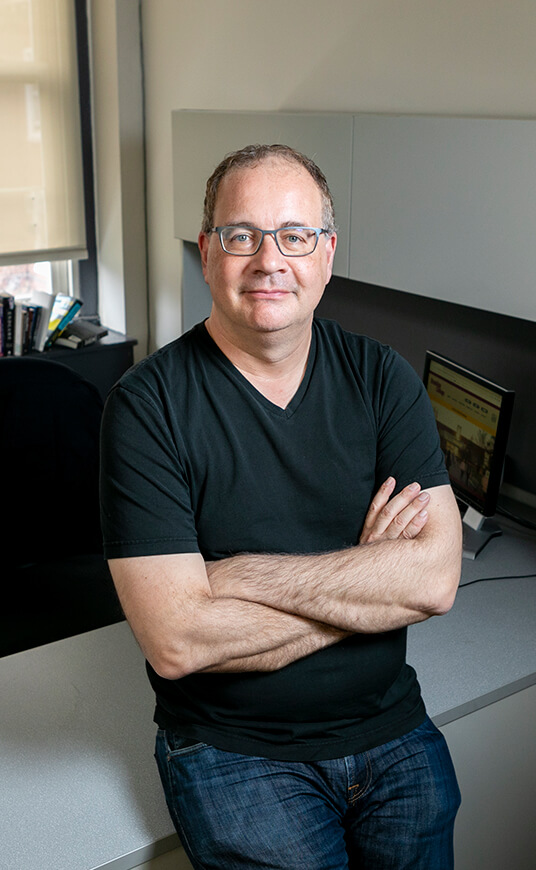
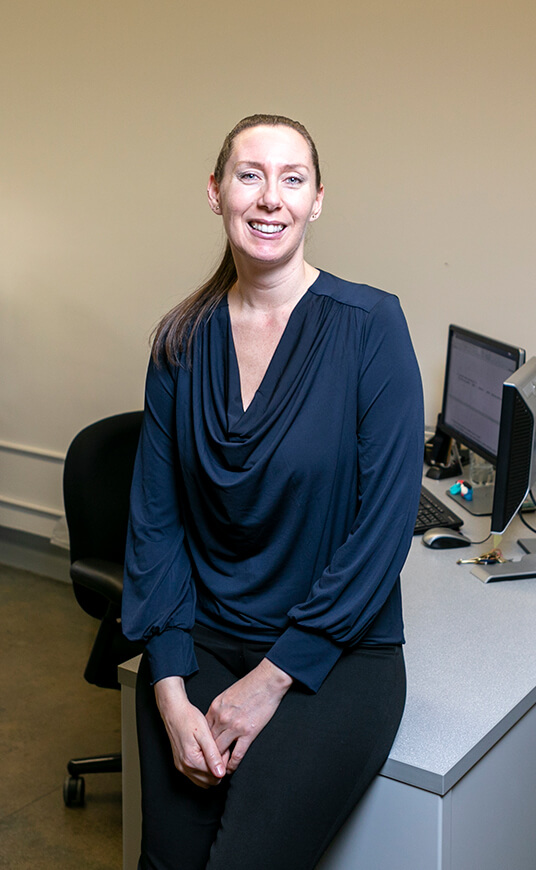
Brooklyn College is an integral part of the cultural and artistic energy of New York City. Our faculty members in the Department of Communication Arts, Sciences, and Disorders offer incomparable expertise and tremendous talent, and each brings a unique perspective to their teaching and mentoring in and out of the classroom.
Internships and Employers
The Speech-Language Pathology, M.S. program maintains affiliations with dozens of schools, medical centers, and related internship locations where students obtain experiential learning to fulfill degree requirements. Brooklyn College speech-language pathology alumni have found employment with many organizations, including:
- Columbia University
- New York Center for Infants and Toddlers, Inc.
- New York City Department of Education