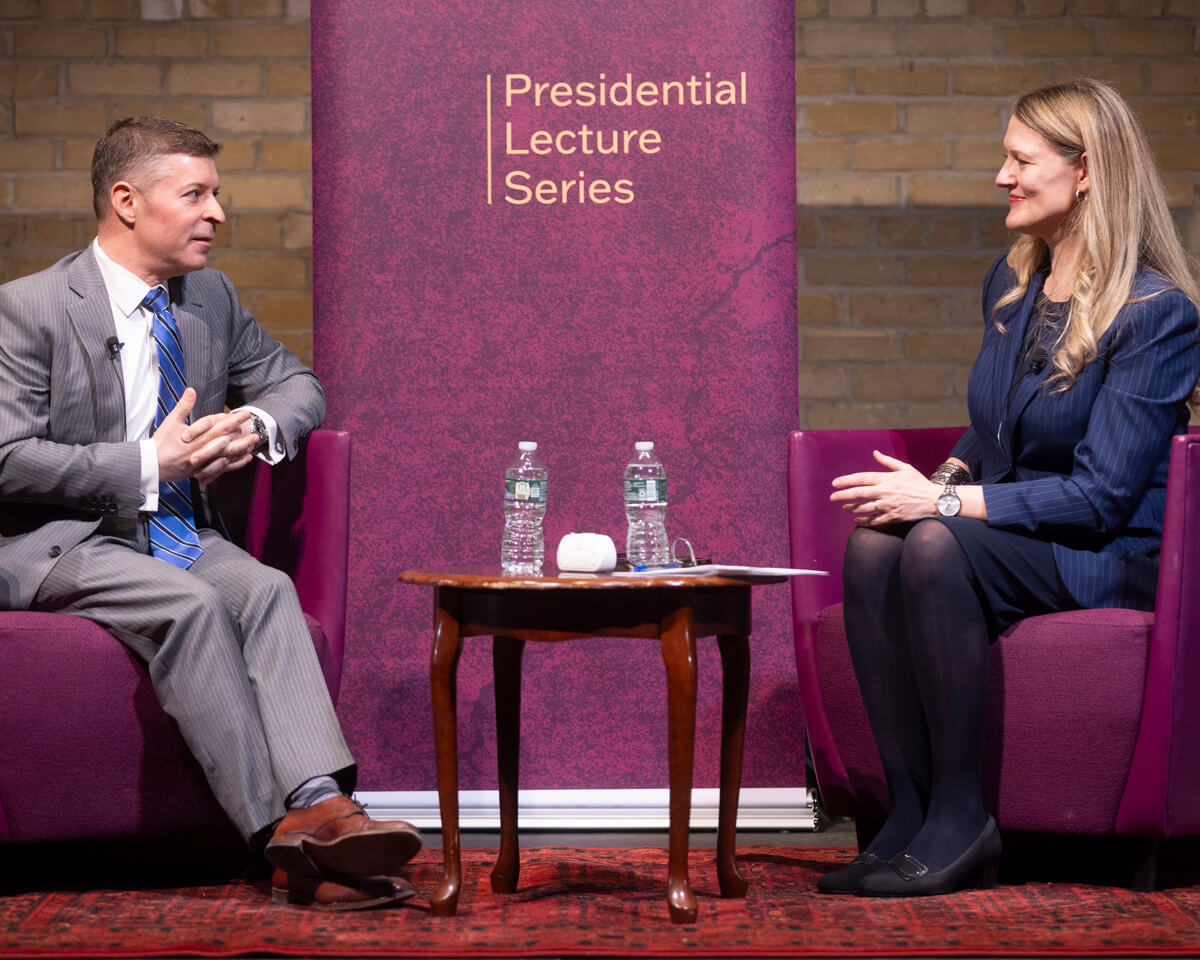
At a recent event in the Presidential Lecture Series, Brooklyn College President Michelle J. Anderson sat down with Aaron K. Olson, Executive Vice President at Aon and author of Strategy and Change: Finding Opportunity in Disruption Through Insight, Choice, and Risk, for a lively and thought-provoking conversation on the growing synergy between academia and industry.
Held on September 30 at the Aon New York headquarters with a guest introduction by Christine Williams, Aon Northeast Regional Leader, the event brought together students, alumni, faculty, and professionals eager to explore how cross-sector partnerships can help drive meaningful, student-centered change.
Together, Olson and Anderson addressed a central question: How can educators and employers collaborate to prepare the next generation for a future defined by both uncertainty and opportunity?
“Each stakeholder plays a role in helping an organization reach its goals,” said Olson. “In higher education, that means developing real relationships with industry and staying responsive to change.”
Purpose as a Unifying Force
The conversation emphasized the power of purpose in aligning diverse stakeholders—faculty, students, alumni, donors, and employers—around a shared mission: student success.
“What do we mean by making a difference?” Olson asked. “It’s about elevating student success to a level where it commands attention and resources. That’s where employers and educators can come together.”
President Anderson highlighted the impact of Aon’s commitment to higher education and the students Brooklyn College serves.
“Aon’s dedication to fostering student success is truly inspiring,” she said. “Few companies demonstrate this level of devotion.”
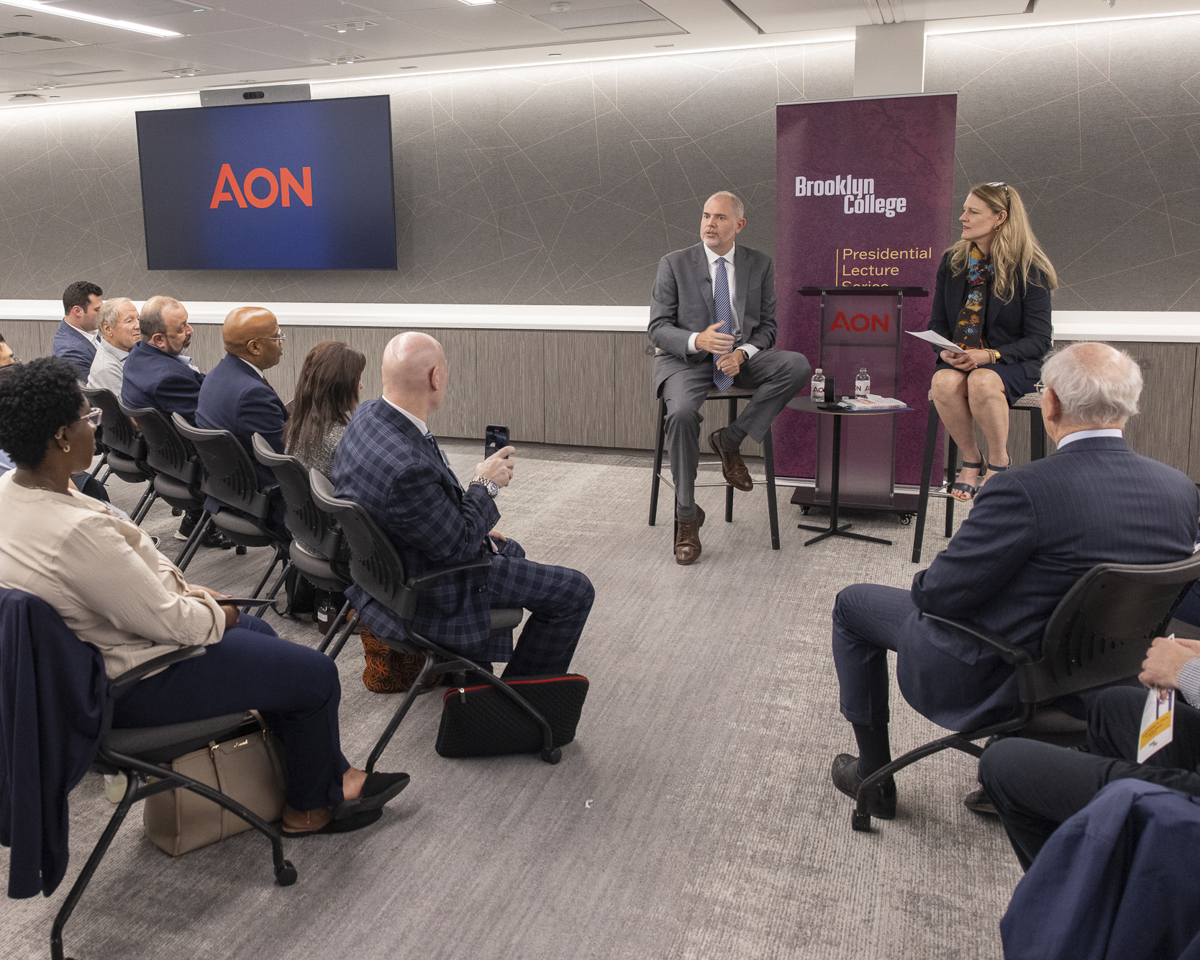
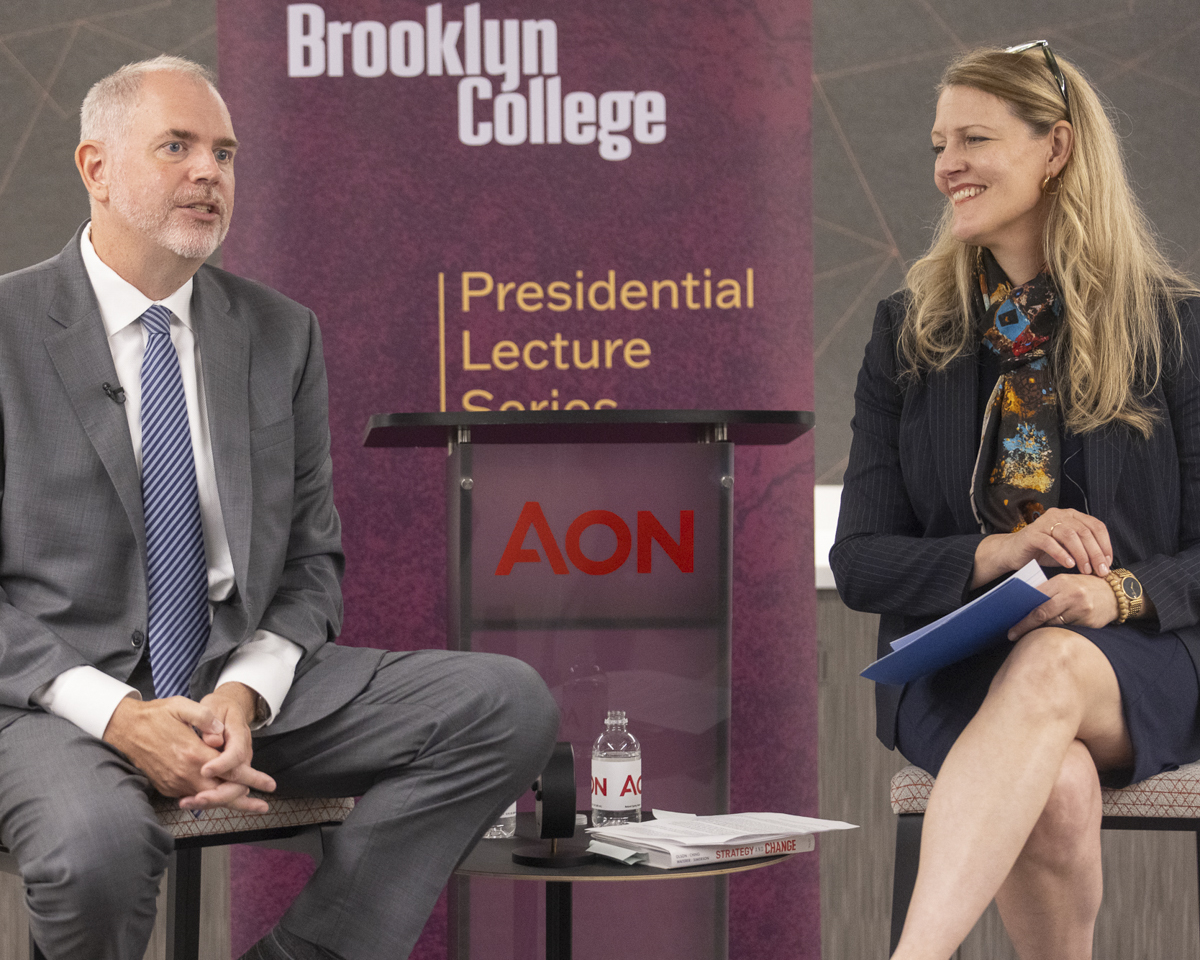
Aaron K. Olson, Executive Vice President at Aon, and Brooklyn College President Michelle J. Anderson address the audience at the Presidential Lecture Series event on September 30.
Preparing Students for a Changing Workforce
As artificial intelligence and automation reshape the job landscape, Olson stressed the need for closer collaboration between employers and colleges to ensure graduates are prepared for tomorrow’s roles.
“Brooklyn College has leaders who are focused on this outcome,” Olson said. “Businesses should prioritize schools with a track record of producing qualified graduates—without saddling them with overwhelming debt.”
Brooklyn College is already leading in this space. Consistently ranked among the top institutions nationwide for economic mobility, the college delivers a high return on investment and opens doors to meaningful, upwardly mobile careers.
“Social mobility may sound academic,” Olson noted, “but businesses understand ROI. Look at schools like Brooklyn College that deliver real value.”
Real Students, Real Impact
The evening featured powerful stories from students whose lives have been transformed by these partnerships.
Brooklyn College student Damir Shavkatov, who is pursuing a psychology major and a marketing minor, shared his journey from first-generation college student to intern at Aon.
“My father used to drive us around Manhattan and say, ‘One day, I hope you work in one of these buildings.’ Now I do,” Shavkatov said. “Doing an internship at Aon was a game-changer for me. Even though my internship is over, I still carry my Aon badge in my backpack every day.”
He credited Brooklyn College for providing opportunities he might not have found elsewhere.
“If I went to a different school, I would probably have stayed behind the scenes. I wouldn’t necessarily have been a student that the professors really engaged with since a lot of schools, it’s about prestige, where the student came from. But Brooklyn College has shaped me. And here I am on the 30th floor. “
Aon’s engagement goes far beyond internships. The company helped establish a risk management and insurance curriculum at Brooklyn College and actively recruits from its diverse, talented student population.
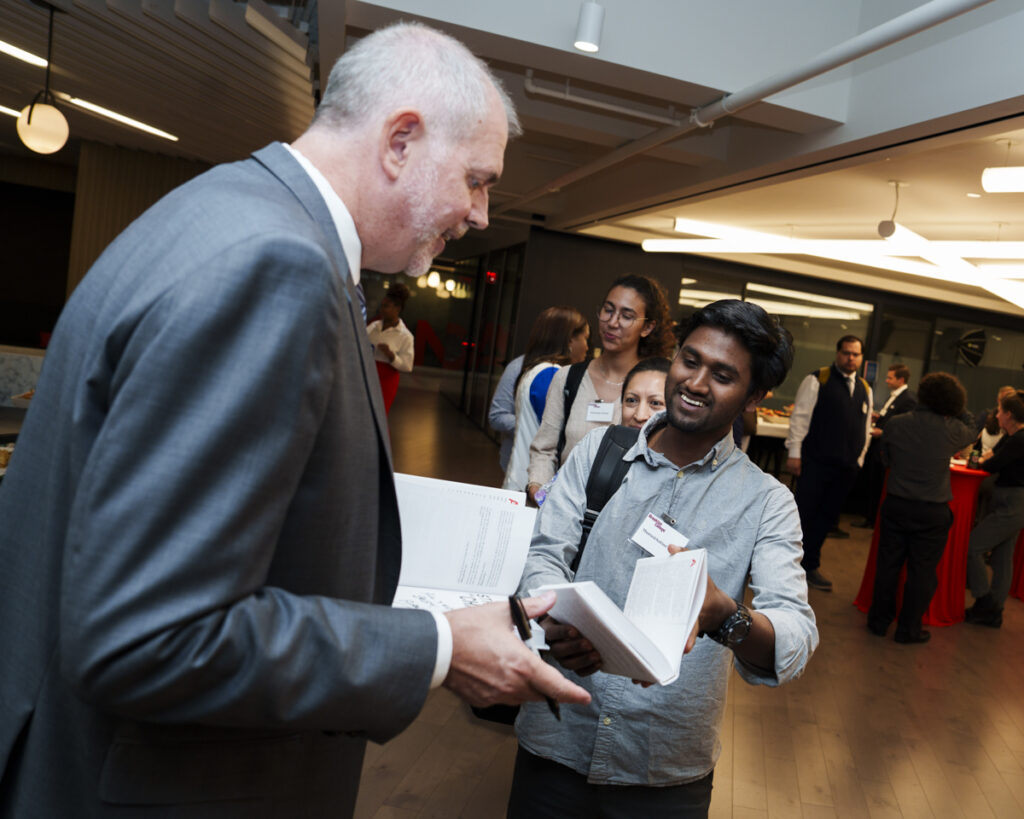
Aaron K. Olson, Executive Vice President at Aon and author of “Strategy and Change: Finding Opportunity in Disruption Through Insight, Choice, and Risk,” signs a copy of his book for a student.
Advice for the Next Generation
During the Q&A, a student asked what skills emerging professionals should prioritize. Olson’s answer was simple yet profound: “Invest in relationship-building,” he said. “We watch for students who are proactive—who go out of their way to connect.”
As the evening concluded, one message stood out: while disruption is inevitable, it can be a force for good when approached with shared purpose, strong partnerships, and an unwavering focus on student success.
Watch this Presidential Lecture Series event here.