
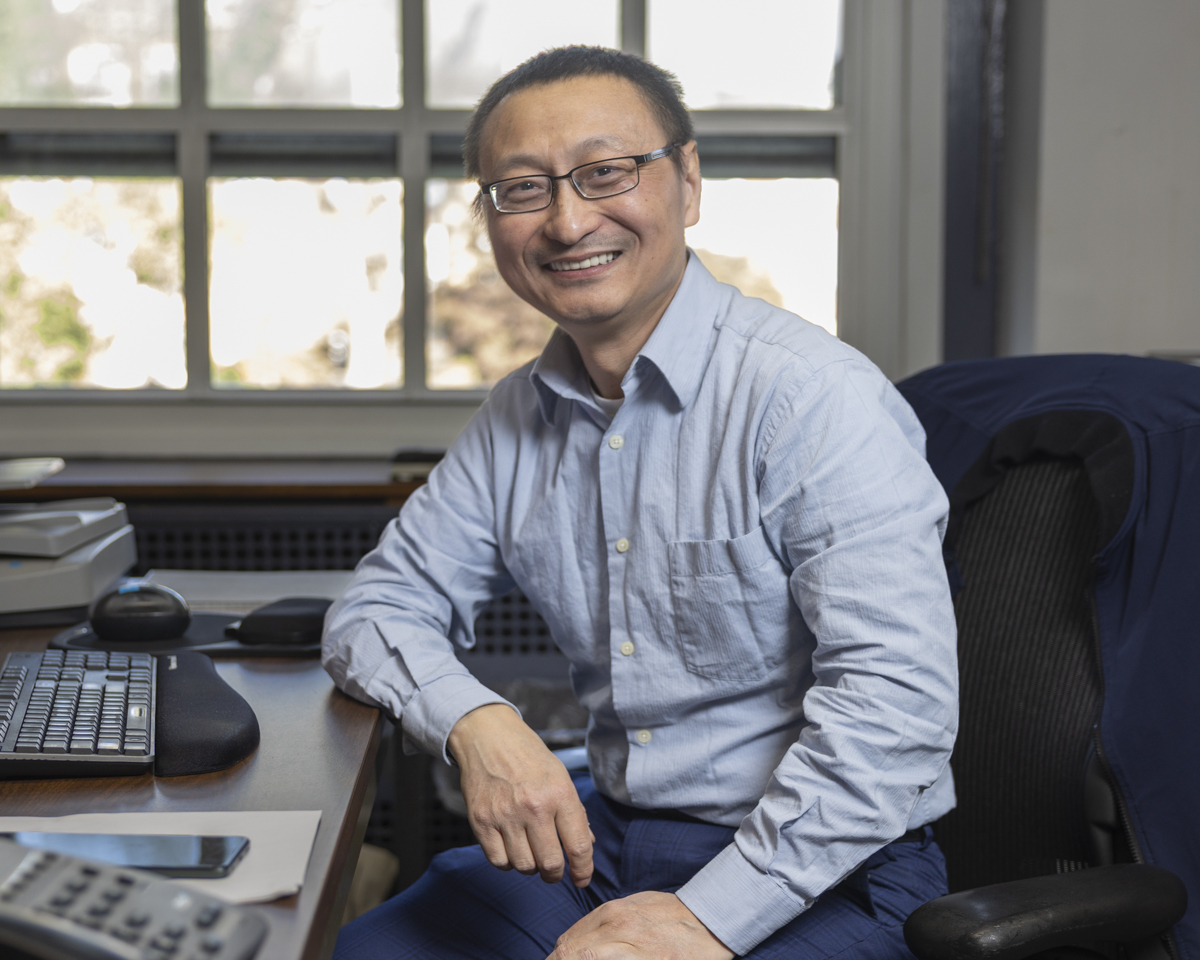
Under Hui Chen’s leadership, Brooklyn College is not only keeping pace with technological change—it’s preparing students to lead it. By blending fundamentals with hands-on experience and an emphasis on ethics, our computer science programs equip graduates to navigate complex challenges and seize new opportunities. For Chen, the mission is clear: empower students to become adaptable, responsible innovators who will shape a future where technology serves humanity.
How is AI being integrated into the computer science curriculum at Brooklyn College?
AI has long been an important component of the computer science curriculum at Brooklyn College. Both required and elective courses include machine learning, AI, and computer ethics. Embracing recent advancements in AI, we also offer classes in pattern recognition, data mining, machine learning, neural networks, and artificial intelligence. Furthermore, our faculty are in active discussion about how to address the pedagogical challenges presented by AI, as well as to deepen students’ knowledge of the societal and ethical issues related to AI use.
What skills can students learn with a computer science degree that will make them better prepared for a career now that AI is here?
The most important skills remain problem solving and critical thinking. The distinction of a computer science major lies in the type of problems we solve, and the specific skills required to think critically within the domain. For example, AI tools can help our graduates write code; but they are far from able to determine whether that code truly meets user needs, is architecturally sound, or is robust enough to withstand security threats.
Students still need a solid foundation in computer science fundamentals, such as programming, data structures, algorithms, computability, systems architecture, and software engineering principles, to name a few. This core knowledge will enable graduates to work alongside AI tools, and not just depend on them. In addition, students need to develop a deep understanding of the strengths and limitations of AI tools, allowing them to become responsible practitioners.
We are seeing a shift in the emphasis placed on different knowledge and skill sets in computing. For instance, a graduate’s ability to master the syntax of a particular programming language may become less critical. At the same time, their ability to design, construct, and evaluate complex, multi-component computing systems becomes far more important. Students should be mindful of this, especially, when they are preparing themselves to join the workforce.
Do you have conversations with students about bias, privacy, misinformation, and the environmental impact of large data processing?
These are important and pressing issues. Computers and Ethics has been a long-standing course, which is jointly run with the Philosophy Department and is required for all of our major students. This course directly addresses these topics.
The course is also a designated writing-intensive course. Students engage in writing and presentations of analyses on real-world cases, including assessment of software systems or AI tools in use and design. This ensures our graduates are not only skilled computer science specialists but also responsible practitioners.
How do you see AI reshaping computer science programs in the next five to 10 years?
The role of computer science programs has been to transform curious learners into skilled, disciplined, and ethical practitioners in computing. Graduates often join the workforce as computer programmers, software developers, computer system analysts, and information security analysts. In the next few years, the role of computer science programs in society should still be as the main feeders of these career paths.
However, a shift is underway. The demand for entry-level computer programmers may decrease; but there should be an increase in careers that require high-level skills, such as software developers and information security analysts. Particularly, there should be a demand for professionals who can design, implement, and secure complex systems integrated with AI technologies.
AI advancement has brought about a shift that some characterize as seismic. Colleges should embrace this shift. First, on the level of computer science curriculum, we should explore ways to shift from language-centric, syntax-focused instruction to a pedagogy centered on AI-assisted problem-solving. This can include designing inputs for AI systems, evaluation of AI-generated code, and effectively applying software engineering principles in the presence of AI assistants.
Second, we should explore new course offerings. This can be an exploration of courses that go beyond using AI as a tool, such as teaching students to design computer systems that facilitate human-AI collaboration, including user experience design and delegated decision-making with AI.
Looking beyond computer science programs, colleges should continuously hold to their broader mission as knowledge curators and disseminators. Our fundamental purpose remains to prepare our students for enduring careers, not just their first job. We should continue to strengthen the fundamental knowledge and skills that enable lifelong learning.
Nevertheless, we should strive to balance enduring fundamentals with near-term job readiness. We should innovate cost-effective ways that are aimed at bridging the academia-industry gap with hands-on, AI-fluent practice. With both strong fundamentals and job-relevant, near-term experiences, we expect our graduates to prosper in the workforce, adapt in their careers, and contribute to a future where technology serves humanity.
If you were starting in your career today, would you still pursue a career in computer science?
Yes, without a doubt.
At its heart, computer science is about solving computational problems. I have been interested in solving problems in two closely related domains: computer science and computing education research. This career is a privilege that allows me to explore solutions for many problems in those domains. It has also been a privilege to work alongside students. The value our students bring to these pursuits far outstrips any AI assistants can offer.
The advice I wish to give students is to grow a genuine passion for the discipline and the profession. Computational problems in computer science span algorithmic foundations, hardware realization, linguistic realization, and their myriad applications. A long-standing “crown jewel” of those computational problems has been to investigate how to build machines that mimic the human mind. The pursuit to solve that computational problem has led to the recent advancement in AI.
In my view, AI is not a replacement for computer scientists; it is a catalyst. It invites and emboldens more people from all fields to seek computing solutions for problems in their lives and work. While there may be a cyclical downturn in computing jobs, AI will ultimately act as an amplifier—creating new, unforeseen roles, and thus eventually accelerating job growth in our society. The future belongs to those who are passionate, driven, and prepared.