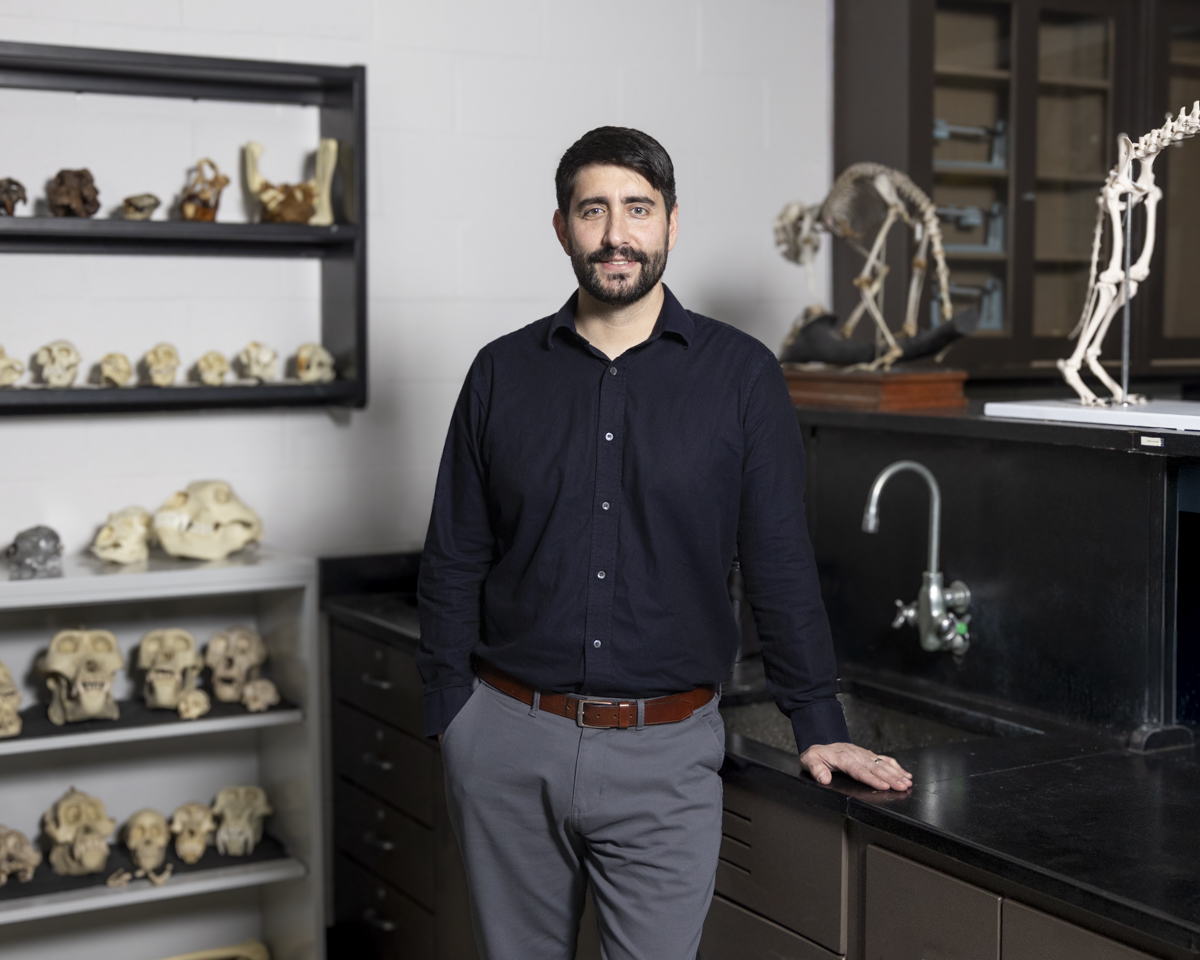
A new scientific study led by paleontologist and Brooklyn College and CUNY Graduate Center Associate Professor of Anthropology Stephen Chester is shedding fresh light on how the earliest known primate relatives evolved and spread across North America after the extinction of the dinosaurs.
The research—published as the cover article in the Journal of Vertebrate Paleontology—was conducted in collaboration with scientists from the Denver Museum of Nature & Science. It focuses on Purgatorius, a small, tree-dwelling mammal that lived about 66 million years ago and is considered the earliest known relative of all primates, including humans. Chester served as lead author on the paper, alongside co-authors Jordan Crowell (also a CUNY Graduate Center graduate), Tyler Lyson, and David Krause of the Denver Museum of Nature & Science.
Until now, fossils of Purgatorius had only been found in northern regions such as Montana and Saskatchewan, leaving scientists with an incomplete picture of how and where these animals evolved.
Chester and his colleagues report the southernmost discovery of Purgatorius fossils ever found, uncovered in Colorado’s Denver Basin. The fossils were recovered through careful screen washing of ancient sediments at the Corral Bluffs study area.
“This discovery helps fill a gap in understanding the geography and evolution of our earliest primate relatives after dinosaur extinction,” Chester said.
The newly discovered fossils are tiny teeth that show a unique mix of features, suggesting they may belong to a previously unknown, early species of Purgatorius. Their presence in Colorado suggests that archaic primates originated in the north and then spread southward, diversifying soon after the mass extinction at the end of the Cretaceous Period.
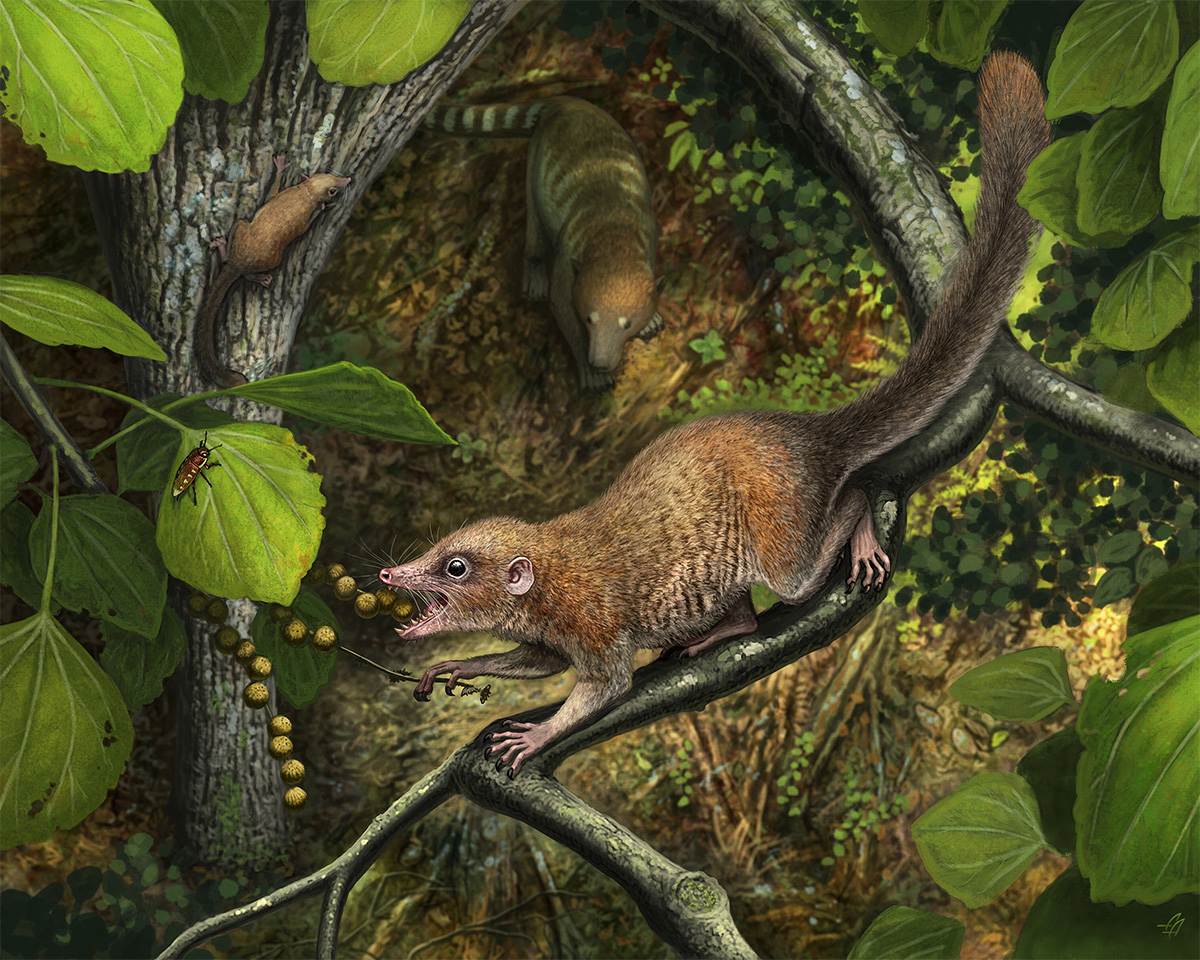
A lifelike rendering of the archaic primate Purgatorius. (Rendering by Andrey Atuchin.)
The study also challenges long-standing assumptions about where archaic primates lived. Scientists thought Purgatorius might be absent from southern regions during this time, but the new findings suggest that this was likely due to limited fossil sampling, not true absence.
“Our results demonstrate that small fossils can easily be missed,” Chester explained. “With more intensive searching, especially using screen-washing techniques, we will undoubtedly discover many more important specimens.”
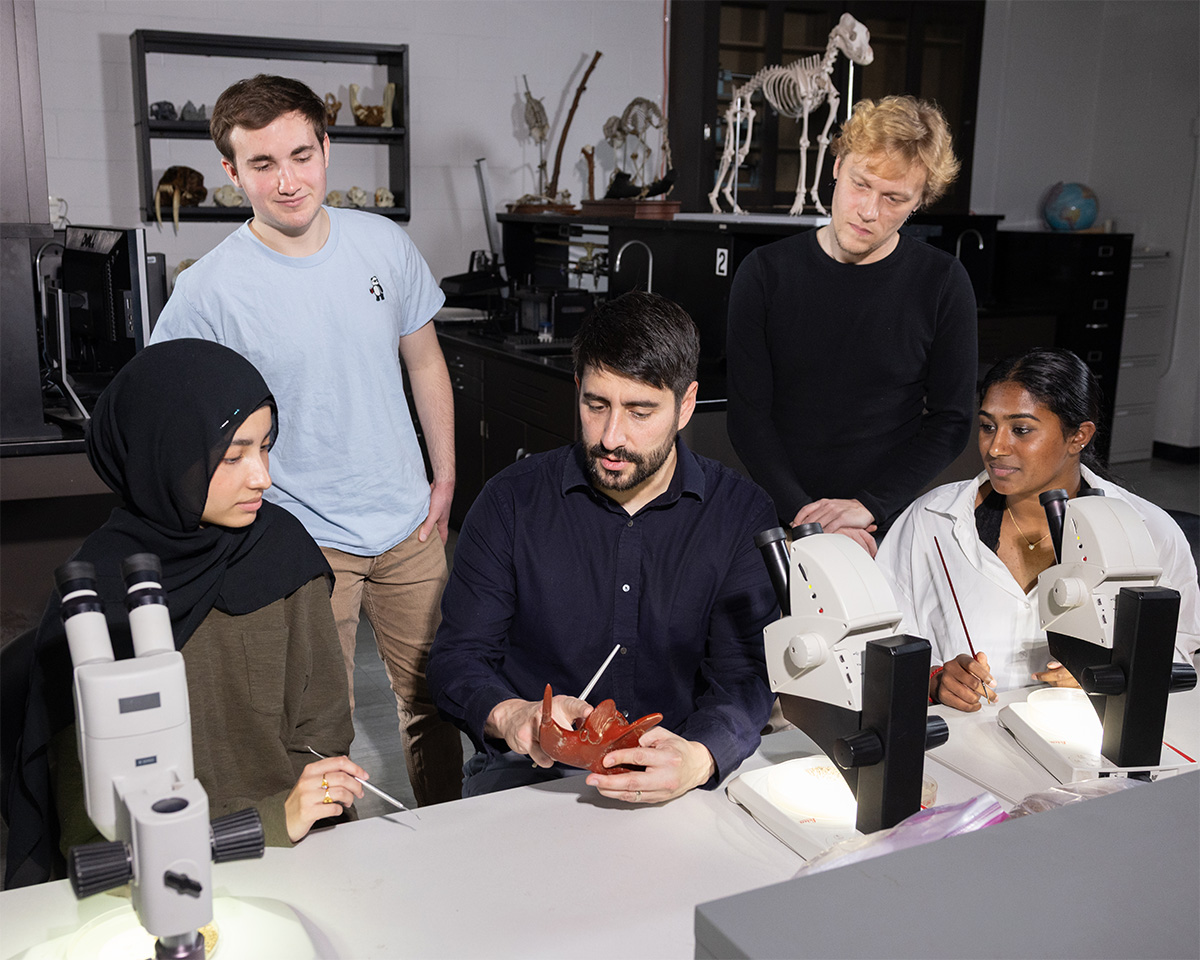
Brooklyn College Professor Stephen Chester (center) points out dental features on an enlarged model of an extinct mammal to undergraduate research assistants (left to right) Aisha Amir, Aidan Smith, Todd Skahill, and Shruthika Srinivasan) at his lab on campus.
This work was supported in part by a nearly $3 million collaborative grant from the National Science Foundation that Chester and his colleagues received in 2023. Over the five years, this grant will fund Brooklyn College undergraduate research assistants who sifted through excavated sediment in Chester’s laboratory, uncovering fossils of Purgatorius and other vertebrates that lived in the immediate aftermath of the dinosaurs’ extinction.
You can read more about this study in National Geographic.