Mental Health Counseling, M.A.
School of Natural and Behavioral Sciences
Program Overview
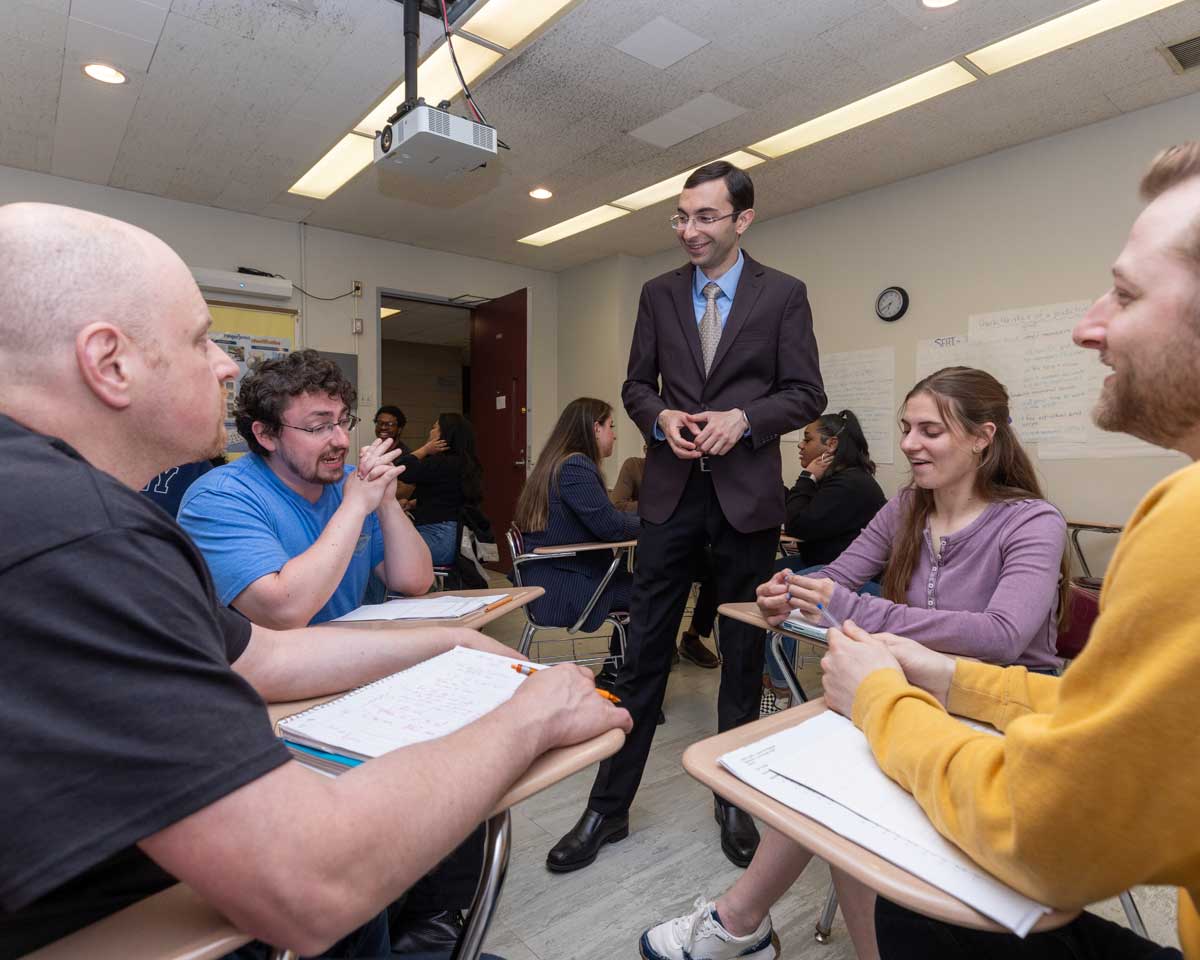
The Master of Arts degree in mental health counseling (MHC) prepares students to work within medical, community, and private practice settings. The program focuses primarily on clinical work with adults, and also includes opportunities for working with children, adolescents, families, and couples. Through rigorous academic coursework and clinical internship training, students learn to apply mental health approaches to contemporary practice, assessment, and treatment. The MHC program provides in-depth exposure to three principal approaches to counseling: psychodynamic, experiential/humanistic, and cognitive/behavioral therapy. Each entering student cohort completes the program together as a peer support group in 21 months. After 3,000 hours of supervised, post-degree experience, students are eligible to take an exam for licensure permitting private and independent practice of counseling.
Program Details
The program information listed here reflects the approved curriculum for the 2026–27 academic year per the Brooklyn College Bulletin. Bulletins from past academic years can be found here.
Program Description
NYSED Program Code: 30978
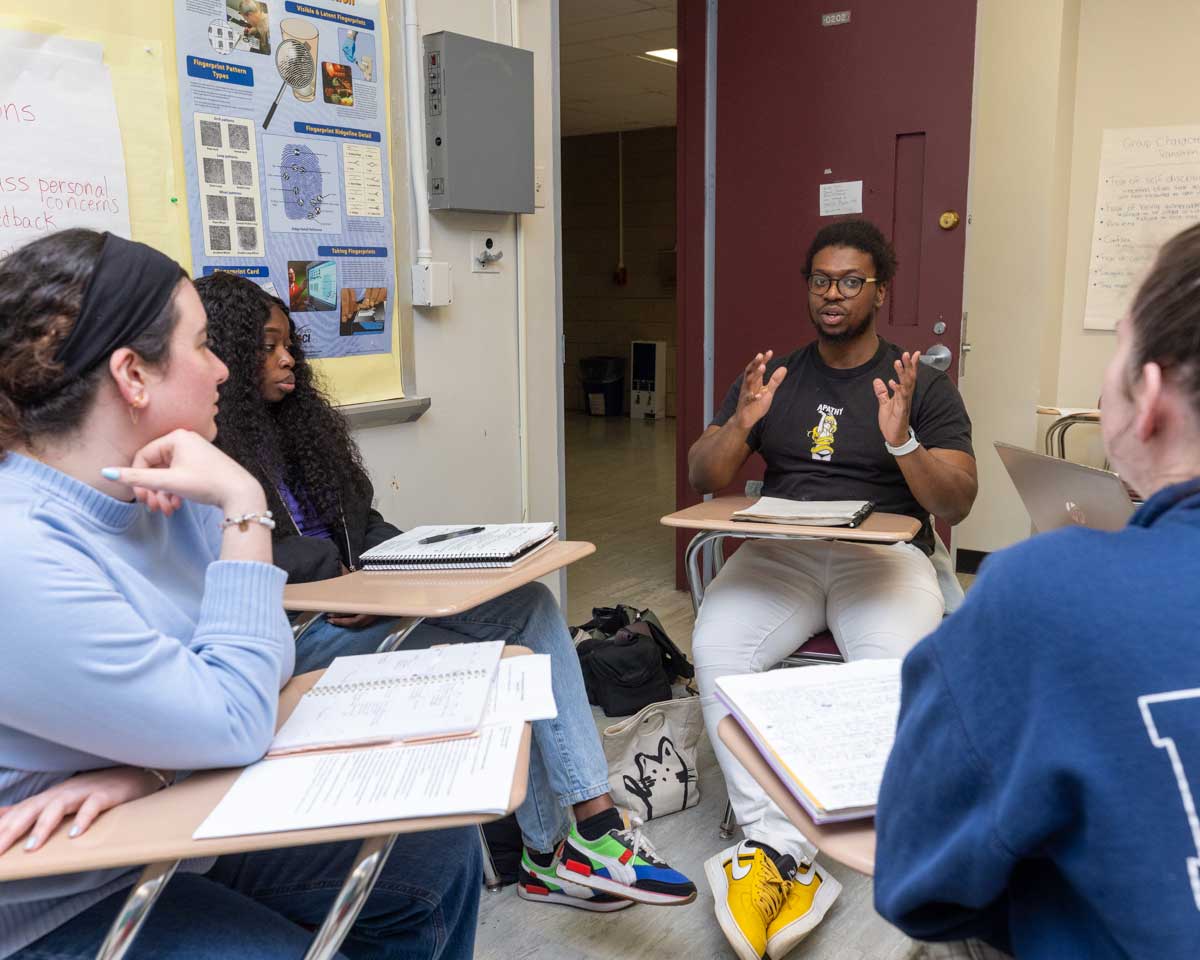
The 60-credit master’s degree in mental health counseling (MHC) prepares students to work as mental health counselors within medical, community, and private practice settings. Through rigorous academic coursework and clinical internship training, students learn to apply mental health approaches to contemporary practice, assessment, and treatment. The MHC program provides in-depth exposure to three principal approaches to counseling: psychodynamic, experiential/humanistic, and cognitive-behavioral therapy. In addition to the internship, students perform intake evaluations and psychotherapy at the college’s counseling center. The program focuses primarily on clinical work with adults, and also includes opportunities for working with children, adolescents, families, and couples. After 3,000 hours of supervised, post-degree experience, students are eligible to take an exam for licensure permitting private and independent practice of counseling.
Matriculation Requirements
Applicants must have completed a minimum of 15 credits in undergraduate courses in psychology, with at least one course in each of the following areas: child or adolescent (developmental) psychology; general or introductory psychology; psychological disorders/abnormal psychology/ psychopathology; and psychology statistics. Evidence of appropriate comparable background in related fields can be submitted for review. Applicants must provide a personal statement, including discussion of related work, internship and/or personal experiences. Applicants must also submit three letters of recommendation from individuals familiar with applicants’ professional and academic experience, at least one of which should come from a college instructor or academic setting.
General matriculation and admission requirements of graduate studies are in the section “Admission Requirements.”
Degree Requirements (60 Credits)
Sixty credits are required for the degree, a minimum of 48 of which must be taken in the Psychology Department. Students must pass a comprehensive examination after completing 48 credits. See comprehensive examination information below.
Required courses are: Psychology 7410G, 7720G, 7755G, 7421G, 7431G, 7771G, 7441G, 7449G, 7442G, 7443G, 7110G, 7544G, 7591G, 7545G, 7106G, 7592G, 7245G; the remainder of each student’s program must be approved by the program director. The program must be completed on a full-time basis.
Failure to earn a grade of B (3.00) or better in any one attempt at Psychology 7431G, 7449G, 7591G or 7592G may result in implementation of a student remediation plan, independent of the overall GPA, as deemed appropriate and according to procedures adopted by the department. Following remediation, failure to earn a grade of B or better in a subsequent attempt at Psychology 7431G, 7449G, 7591G, or 7592G may result in restrictions on registration in the mental health counseling program. In addition, continued enrollment in all clinical practicum and internship courses is also contingent upon the student’s adherence to and demonstration of standards of professional conduct and demeanor as deemed appropriate by the Psychology Department in concurrence with standards codified in the American Psychological Association and American Counseling Association and American Mental Health Counseling Association professional and ethical codes and guidelines and New York State regulations, as well as Brooklyn College standards for student conduct. These standards include, but are not limited to, confidentiality, client welfare, honesty, and academic integrity. Significant and/or repeated violations of these standards may result in dismissal from the mental health counseling program when warranted and in conformity with policies and procedures adopted by the department and the college as appropriate.
New York State Mental Health Counseling Licensing
Three thousand hours of supervised post-degree experience are required to be eligible for licensure permitting private practice of mental health counseling. Information about New York State licensing for mental health counseling may be found here.
Student Learning Outcomes
1. Content Knowledge and Application
Students demonstrate comprehension of the major concepts, theoretical perspectives, historical trends, and empirical or evidence-based findings to discuss how psychological principles apply to behavior and mental processes. Students completing foundation courses demonstrate breadth of their knowledge and application of psychological ideas to simple problems; students completing a baccalaureate degree show depth in their knowledge and application of psychological concepts and frameworks to problems of greater complexity. Students are able to discuss psychological science’s integrative themes and the respective sociocultural and historical backgrounds of those themes.
2. Scientific Inquiry and Critical Thinking
Psychology is a STEM discipline that uses the same research practices found in other scientific fields (Dovidio et al., 2010). The skills in this domain involve the development of scientific reasoning and investigation, including developing proficiencies in research methods and statistics. Although these outcomes are introduced in foundation coursework, students typically develop these proficiencies mainly in required courses that focus on research methods and statistics. Students completing foundation courses learn basic skills and concepts in interpreting behavior using research, studying research, and applying research design principles to draw appropriate conclusions about behavior; students completing a baccalaureate design, evaluate, and execute research plans. Research skills reflect knowledge of and respect for diversity-related issues when targeting samples in study design. Research practice also includes an evaluation of the extent to which research findings can be generalized as applicable to groups beyond the research sample.
3. Values in Psychological Science
This goal promotes the development of ethical and socially responsible values and behaviors in personal, professional, organizational, and institutional settings. The goal includes ethical reasoning and practices, interpersonal and intercultural responsiveness, and strategies that promote and sustain strong communities and equitable opportunities. Novice students in psychology become familiar with the formal regulations that govern ethical obligations in psychology and begin to embrace the values that will help them contribute to socially responsible outcomes in academic and work settings and in society. Advanced psychology students have more direct opportunities to embrace and adhere to ethical practices that will help them optimize their personal and professional achievements and contributions. Novice students recognize how diversity deriving from individual and intersectional differences can enrich human experience. Advanced students are adept at applying knowledge of individual and intersectional differences to improve outcomes. The final outcome addresses the ways in which psychological science can promote a more functional and fair society. Novice students explore the possibilities of using psychological knowledge to build better communities. Advanced students develop the skills to take appropriate action to improve community functions.
4. Communication, Psychological Literacy, and Technology Skills
The skills in this category address the ability of students to build and maintain effective communication skills in processing and expressing information. Novice students develop the capacity to distinguish appropriate and inappropriate communication strategies in developing interpersonal relationships. Advanced students use their knowledge of equity, diversity, and inclusion to improve the effectiveness of their communication skills. Novice students grow in their ability to express their own ideas with clarity, explain the ideas of others, discuss psychological concepts, communicate a cogent scientific argument, and present information using a scientific approach. Toward the end of their major, students are able to communicate the results of a research study or other psychology-related project, explain scientific results, and present information to professional audiences in different formats. Students develop psychological literacy, including applying knowledge of research skills necessary to be an informed consumer of research or a critic regarding unsupported claims about behavior. Ultimately, the psychology student possesses the tools and motivation to evaluate whether claims have merit. They also develop some sophistication in using appropriate technology to improve communication outcomes.
5. Personal and Professional Development
The skills in this domain refer to abilities that sharpen students’ readiness for the workplace whether the student’s future involves graduate school or a job following the associate or baccalaureate degree. A background in psychological science may confer a workplace advantage because of the specific applicability of content that focuses on understanding human diversity and behavior. The skills related to this goal have been influenced by The Skillful Psychology Student, a document developed by APA’s Committee on Associate and Baccalaureate Education that articulates what skills students will need to be successful. The emphasis in this domain involves self-regulation, project management skills, professional judgment, collaboration skills, and proficiency in workplace technology and career planning. Curriculum design within psychology programs needs to address how to provide explicit feedback to promote development of these skill sets over the duration of study in psychological science. These skills can be developed and refined in traditional academic settings and through experiences acquired during internships, full- or part-time jobs, leadership positions, and extracurricular engagement (cf. National Association of Colleges and Employers’ Job Outlook, 2022). Educators commit to facilitating inclusive opportunities for psychology students from different backgrounds. Campus career professionals can be enlisted to support planning and execution of goals related to selection and pursuit of a professional direction.
Admissions Requirements
Fall Application Deadlines
- Priority: February 1 (early decisions made in April).
- Final deadline: March 1 (decisions provided by May).
- Waitlist: Applications received after the March 1 final deadline may be considered on a space-available basis. Applicants are strongly encouraged to apply by the priority (Feb. 1) or final (Mar. 1) deadline for full consideration. Applications submitted after March 1 are not guaranteed review and will only be evaluated if seats remain available after priority and final offers are made.
Supporting Documents for Matriculation
Submit the following documents to the Office of Graduate Admissions:
- Personal statement (three pages maximum) describing (1) your interest in and preparation for the mental health counseling field; (2) related work, internship, and/or personal experiences; and (3) any special experiences or circumstances related to your application.
- Complete and official transcript from all postsecondary institutions attended. Transcripts must include your personal information, courses, grades, GPA, and graduation degree notation. Internet and fax copies of transcripts are not suitable.
- Three letters of reference, at least one of which should come from college instructors or academic settings.
- A completed Program Factsheet (PDF).
Be advised this program does not accept nondegree-seeking applicants.
Required Tests
- F-1 or J-1 international students must submit English Proficiency Exam. TOEFL—79, IELTS—6.5, PTE—58–63, Duolingo—105–160.
I-20 Submission Deadlines
F-1 students who are not currently in the country should submit their I-20 by the following dates to allow sufficient time for visa processing and to meet the semester start date.
- July 15 for fall admission
- December 5 for spring admission
More Information
Refer to the instructions at Graduate Admissions.
Contact
Tōnia Hucey, Graduate Program Assistant
5401 James Hall
E:
P: 718.951.5601
Or contact:
Office of Graduate Admissions
222 West Quad Center
2900 Bedford Avenue, Brooklyn, NY 11210
E:
P: 718.951.4536
Office Hours
Mondays–Fridays, 9 a.m.–5 p.m.
Schedule an appointment with a graduate admissions counselor.
Additional Departmental Information
Additional Admissions Information
GPA Requirements
Applicants must possess a bachelor’s degree from an accredited institution, a strong undergraduate GPA (successful candidates typically have a GPA of 3.30 or higher), and relevant professional or volunteer experience.
Prerequisite Coursework
Applicants should also possess a minimum of 15 credits in psychology courses with at least one course in each of the following areas:
- General or introductory psychology
- Developmental psychology or child development or lifespan development
- Abnormal psychology or psychological disorders or psychopathology
- Psychology statistics (addressing the specific uses of statistics in psychology research; not general statistics in a math, business, or other department)
Applicants may apply with missing prerequisites, and if admitted, they are required to complete missing undergraduate coursework. This is typically done before starting the program. Evidence of appropriate comparable background in related fields can be submitted for review.
Applicants with missing prerequisite psychology courses, who are strong students (GPA of 3.30 or above) with good understanding and motivation related to mental health counseling, may apply if able to complete the required courses (typically) before entering the program.
In some circumstances, concessions and other provisions can be made. Once completed, supporting documents (e.g., transcripts) should be sent to the program. Good-quality applicants, who meet our entrance requirements, have a strong chance of being offered admission.
Work, Internship, or Volunteer Experience Requirements
Related internship, work experience, or participation in personal counseling or psychotherapy are not required but are considered highly desirable. Most accepted applicants have such experience(s).
Successful applicants to the MHC program usually have some kind of related work, internship, or volunteer experience(s) that involves helping others in such settings as hotline, peer counseling, tutoring programs, teaching, camp counselor, social services, etc.
Standardized Test Scores
While standardized tests are not required, applicants are encouraged to submit GRE (including the Psychology Subject Test), MAT, and other test scores, especially if their undergraduate records do not adequately reflect their academic abilities.
Nonmatriculated Students
Nonmatriculated students are not permitted to take program courses.
Spring and Part-Time Admissions
We do not offer spring or part-time admission. All students begin in the fall semester of each academic year.
Requests to Defer Admission
There is no deferred admission to the MHC Program.
You are welcome to re-apply for the next admission date. Contact Graduate Admissions and request that they reactivate your application file. There is no guarantee of admission a second time, but your chances would be good, having been admitted previously.
Accreditation Status
The MHC Program, like all programs in New York State, is registered (approved) by the New York State Education Department and meets all NYSED laws, rules, and regulations, which are based on national accreditation standards. The educational programs of Brooklyn College are accredited by the Middle States Commission on Higher Education.
Transfer of Graduate Credits
Only credits for courses that are directly equivalent to MHC Program course requirements may be applied toward this degree, with the possible exception of one advanced elective. No more than 12 credits may be transferred from other institutions or from outside the Psychology Department. Courses that have already been applied to an awarded degree may not be transferred. It is not possible for the program to pre-evaluate which credits would be eligible for transfer.
Transfer From Another Related Program
It is difficult to apply as a transfer student because most other MHC programs are not interchangeable (directly equivalent) with the Brooklyn College program.
It is unusual for students to have all of the courses required to enter the second year of our program. Also, because students only have room to take one elective course, we are unable to award credits for courses that do not match those in our curriculum.
If you wish to apply as a transfer student, compare the courses you have completed with those required for the Brooklyn College MHC Program, especially first-year courses. If you think you have completed a directly equivalent course for nearly all first-year courses, file an official admission application. Also email or fax a complete copy of your application, including an unofficial transcript copy, a description of all equivalent courses, and a syllabus for each.
Potential Applicants in Possession of Related Master’s Degrees
The MHC Program is not well-suited for those holding related degrees because we cap transfer at a maximum of 12 credits. Those wanting to “fill in” a few “missing” courses to qualify for licensing will not find the MHC Program a good fit for this purpose.
Practicing in Another State Post-Graduation
If you know that you intend to seek a license in another state, you should check with that specific state licensing authorities—even after attending an accredited program—since each state has its own procedures and regulations. Most state standards are based on the national standards which are also employed by New York State.
Tuition, Housing, and Finances
Tuition and Aid
Brooklyn College’s tuition and fees compare favorably with most private university programs, and class sizes are small. Students are expected to pay tuition for four academic semesters (fall, spring, fall, spring), one summer course (after year 1), and two January courses (in years 1 and 2).
Many students may apply for financial aid. Occasionally a small amount of additional funds are available through the Psychology Department. In previous years, some MHC students have received small grants (contingent on funding and announced when available.)
Under the terms of a CUNY-wide program, Brooklyn College students may enroll in the approved budgeted tuition payment plan. To maximize the benefit of this plan, students should complete their enrollment and commence making payments before the start of the fall or spring semester, but can enroll at any time as long as they pay “up-to-date” as of the date of enrollment. There is no payment plan for summer or intersession terms.
Work Opportunities
Although it may be possible to work on a part-time basis during the first or second year, it is not advisable to do so. It is virtually impossible to do so during the second, with its 20-hour per-week internship, plus coursework and comprehensive examination.
Housing Information
Students who need housing should plan their arrival in New York to allow sufficient time before classes begin to arrange housing. Low-cost housing in New York City can sometimes take considerable time to locate. Housing arrangements, however, are the exclusive responsibility of the student.
Curriculum
In the first semester of the program, students undertake an introductory MHC course in addition to developmental psychology, psychopathology, and clinical assessment, with an assessment practicum. An intensive January course covers ethical and legal issues in counseling.
In the second semester, students undertake course work in psychodynamic and cognitive-behavioral approaches to counseling, as well as group processes. Students continue to explore the counseling process through role-play and other in-class exercises in their counseling practicum course. Through this course, they have the opportunity to conduct an intake and may counsel a client at the Brooklyn College Personal Counseling Program who is developmentally appropriate for students’ training level. They also may gain their first-year counseling experience at an external practicum site.
Over the summer, students participate in a social, linguistic, and cultural foundations of counseling course.
In the third semester, internship experience is the primary focus. Students carry out a 20-hour per-week internship at a site of their choosing. MHC faculty members provide group supervision of interns as part of a yearlong internship course (six credits per semester). In conjunction with the internship class, in-depth coursework focuses on experiential approaches and couples and family counseling.
In the final semester of the MHC Program, course work relates to career development counseling and research and program evaluation, along with an advanced elective. Students also continue with their yearlong internship and group supervision course.
This is a very demanding, full-time, daytime, year-round program. Although it may be possible to work on a part-time basis during the first year, by the second year outside work is generally not possible. The combination of internship and coursework makes it very difficult to work while attending the program. We wish to stress that this is an intensive, two-year program with coursework in the summer and during the January breaks. Please bear this in mind when deciding whether to apply.
Curriculum
The M.A. program requires the following courses (60 credits total). The ordering of specific courses, particularly intersession and summer classes, may vary annually.
First Semester
- Foundations of Mental Health Counseling (3 credits)
- Developmental Psychology (3 credits)
- Psychopathology (3 credits)
- Assessment Techniques (3 credits)
- Assessment Practicum (3 credits)
Winter Break (approximately 10 days)
January Intersession
- Ethical and Legal Issues (3 credits)
Second Semester
- Psychodynamic Approaches (3 credits)
- Cognitive and Behavioral Approaches (3 credits)
- Group Process (3 credits)
- Counseling Practicum (3 credits)
Summer (June–July)
- Social, Linguistic, and Cultural Foundations of Counseling (3 credits)
Mid-July–August Break
Third Semester
- Experiential Approaches (3 credits)
- Couples and Families (3 credits)
- Counseling Internship I (6 credits)
Fourth Semester
- Research Methods and Program Evaluation (3 credits)
- Career Development (3 credits)
- Counseling Internship II (6 credits)
- One elective (3 credits-approved by Program Director), which may include:
- Child and Adolescent Counseling (required for students that have child cases at internship)
- Neuroscience, Trauma, Psychopharmacology, and Severe Mental Illness in Mental Health Counseling
- Substance Misuse and Compulsive Behaviors
Course Schedule
The program is offered only on a full-time basis with fall admission.
First-Year Students
Courses are scheduled on Mondays, Tuesdays, Wednesdays, and Thursdays from 9:30 a.m. to 5 p.m. Students should expect to be on campus for classes three to four days per week. In addition, students are expected to be available for substantial, unpaid practicum work in the first year. In the winter and summer sessions, class schedules will vary (and may include Fridays), given the shortened schedule (see course bulletin).
Second-Year Students
Courses are scheduled on Mondays and Wednesdays from approximately 9:30 a.m. to 5 p.m. Students are expected to be available for substantial, unpaid internship work, 20 hours per week (Tuesdays, Thursdays, and Fridays), in the second year.
Outside employment cannot interfere with students’ ability to meet these requirements.
Comprehensive Examination
Students must pass a comprehensive examination in their last semester. The comprehensive exam consists of diagnosis, formulation, treatment planning, etc., of two case vignettes, one psychodynamic and one CBT treatment approach. Detailed information about and practice for the comprehensive exam is provided to students through multiple courses.
Internship
In addition to coursework, students complete a clinical internship in an approved mental health setting.
The 600-hour (approximately one year), unpaid internship is carried out in the second year, and requires 240 direct hours of psychotherapy. Our students have completed internships at various mental health agencies, clinics, hospitals, counseling centers, and specialized programs including domestic violence, substance abuse, and eating disorder settings. The internship is an opportunity to specialize in a treatment approach or client population or gain broad clinical training.
The Brooklyn College MHC Director of Clinical Training must approve all sites before students can begin their internship placements. Approval decisions are based on the breadth and depth of experience offered at the site, in addition to the setting. In all cases, on-site supervision is required by a credentialed mental health professional with at least three years of appropriate professional experience. While the program maintains a list of approved internship sites, we encourage students to apply to additional sites of interest.
Placement Requirements
The Brooklyn College MHC Program requires the following of all internship placements:
- On-site supervision provided by a licensed mental health professional with at least three years of appropriate professional experience.
- A total of 600 hours is a minimum requirement, with at least 240 hours accrued for providing direct counseling services.
- Students must be able to provide individual mental health counseling/therapy. Engaging in any additional direct services such as group counseling/therapy, intakes, or assessments is optional but recommended.
- A minimum of one hour per week of individual supervision by the internship site supervisor.
- Evaluation of the intern to be completed by the internship supervisor at the end of each semester.
- A signed contractual agreement between the internship site supervisor and the MHC Program of Brooklyn College, which binds the supervisor to their commitment to supervise students, and a signed affiliation agreement between CUNY and the internship site, which specifies the broad terms of the internship placement. The Brooklyn College MHC Director of Clinical Training will provide additional information about these contractual agreements.
Internship students are required to keep weekly logs of their hours, activities, and details of the clinical work being carried out at their practicum sites. These logs are submitted to the Brooklyn College internship supervisor on a monthly basis, accompanied by a Supervisor Verification of Internship Hours Form, which certifies the supervision times and content of discussion, signed by the supervising counselor. MHC students who do not complete the minimum number of direct contact hours during the academic year (i.e., 240 hours) are required to complete their hours in the summer following the second year of the program. Internship site supervisors formally evaluate students at the end of each semester. Students are required to keep a copy of this evaluation, which is reviewed and signed by the student, the internship site supervisor, and the Brooklyn College internship course instructor.
Practicum and Internship Sites
We encourage MHC students seeking internships to apply to additional sites beyond those listed.
Representative sites that have indicated interest in hosting—or have hosted—interns from the MHC Program:
- A Caring Hand
- Albert Einstein College of Medicine (Children’s Evaluation and Rehab Center)
- Albert Einstein College of Medicine Oncology Program (BOLD Cancer Wellness Program)
- Andrus
- Aurora Counseling Services
- Baruch College/CUNY Starr Career Development Center
- Camelot Counseling of Staten Island
- Capaz Counseling
- Center for Alternative Sentencing and Employment Services (CASES)
- Child Center of NY
- Children of Promise
- Children’s Home of Wyoming Conference
- City Tech (NYC College of Technology) Counseling Center
- Closetless Mental Health Counseling
- Collaborative Therapy
- Community Counseling and Mediation (CCM)
- CUNY School of Law Wellness Center
- Family Services of Westchester
- Federation of Italian American Organization (FIAO)
- Footprints
- Footsteps
- Freedom from Fear
- Gaining Ground Mental Health Counseling PLLC
- Gay Men’s Health Crisis (GMHC)
- Goodwill PROS
- Greene Clinic
- Greenwich House
- Guttman Community College, Counseling & Wellness Center
- HASC Center, INC
- Henry Street Settlement
- Institute for Community Living—Pros & School Placements
- Institute for Family Health
- Institute for Human Identity
- Interborough Developmental & Consultation Center
- International High School at Lafayette
- Integrative Therapy Center
- Journeys
- John Jay College of Criminal Justice (CUNY): Wellness Center
- Kingsborough Addiction Treatment Center
- Kingsborough Community College—Access-Ability Services
- Kingsborough Community College—Counseling Center
- LaGuardia Community College (CUNY)
- Medgar Evars College Counseling Center
- Mental Health Providers of Western Queens, Inc.
- Mosaic Mental Health
- Sinai West/Addiction Institute of New York
- Nassau Psychology
- New Alternatives for Children, Inc.
- New Hope Mental Health Counseling Services
- New York Psychotherapy and Counseling Center (NYPCC)
- Ohel Children’s Home and Family Services
- Pesach Tikvah
- PS 193 Elementary School
- Quad Preparatory School
- Queens College Counseling Center (CUNY)
- Refresh Psychotherapy
- Richmond University Medical Center — Early Childhood Mental Health Program
- Saint Joseph’s Medical Center
- SEEK Counseling
- Sephardic Bikur Holim (SBH) Counseling Center
- South Beach Psychiatric Center — Brooklyn
- South Beach Psychiatric Center — Staten Island
- South Brooklyn Health Hospital (formerly Coney Island Hospital)
- Staten Island Mental Health Counseling
- SUNY Downstate Infant & Child Learning Center
- The Boundary
- The Bridge
- The Door
- The Family Center
- The Jewish Board
- The Therapy Zone
- YACHAD
- Yeshivah of Flatbush Elementary School & Joel Braverman HS
Professional Outlook
The United States Department of Labor Bureau of Labor Statistics offers national projections on job prospects for mental health counselors and related professionals.
The New York State Department of Labor periodically posts information about the prospective employment status of mental health counselors in the New York City area.
In addition, services provided by licensed MHC practitioners are covered by some insurers. Coverage regulations are governed by the policies of the individual insurance providers. Visit the New York State Department of Education’s Office of Professions website for additional practice information.
The American Mental Health Counselors Association and American Counseling Association both offer career centers and professional development information for members.
Mental Health Counseling Licensure Requirements
Effective January 1, 2010, persons must have completed a 60-credit program to meet the education requirement for licensure as a mental health counselor in New York State.
Many other states already require a 60-credit degree for licensure.
Check with the American Mental Health Counselors Association, American Counseling Association, or state counseling organizations for specific requirements and additional information, including:
Connecticut Counseling Association
New York Mental Health Counselors Association
Effective January 1, 2010, persons must have completed a 60-credit program to meet the education requirement for licensure as a mental health counselor in New York State. Many other states already require a 60-credit degree for licensure. Check with the American Mental Health Counselors Association, American Counseling Association, or state counseling organizations for specific requirements and additional information:
- Connecticut Counseling Association
- New York Mental Health Counselors Association
- Pennsylvania Mental Health Counselors Association
Advantages of a Mental Health Counseling Degree
Relative to a Degree in Social Work
The MHC degree is focused on preparation for the counseling role, whereas social work programs also cover policy and case work. As a result, social work programs may give less attention to counseling training. On the other hand, social work is a more established profession in New York State. To our knowledge, entry-level salaries are comparable.
Relative to Other MHC programs
The Brooklyn College Mental Health Counseling Program was first offered in 2006 to address the needs of those training for the MHC license. Many other programs were created by altering or expanding existing tracks, which often are in Schools of Education and were originally designed to train school counselors. In addition, other programs may focus on one approach to counseling, with brief exposure to others, while the Brooklyn College program aims to provide in-depth exposure to each of the three principal approaches to counseling: cognitive-behavioral, experiential/humanistic, and psychodynamic counseling.
We also offer two specialized programs that require coursework and fees in addition to those of our MHC Program (there are no additional fees if you are already enrolled as a full-time student). While undertaking the program—or, more usually, following its completion—students may opt to earn advanced certificates in grief counseling, autism spectrum disorders, or play therapy. An advanced certificate in aging and coursework in substance abuse counseling leading to a CASAC are planned. Substance abuse counseling leading to a CASAC are planned.
Relative to Doctoral Degrees in Professional Psychology (Psy.D. or Ph.D.)
The master’s degree in mental health counseling is a two-year degree. Doctoral programs are considerably longer, typically a five- to eight-year commitment (although see ** below). Doctoral degree programs are appropriate for those interested in research or teaching careers.
While students may be able to transfer some credits from MHC courses toward a doctoral degree, this will depend on the policies and requirements of specific doctoral programs, and it is rare for a doctoral program to accept all master’s-level credits completed elsewhere. Those interested in doctoral-level work should inquire about the requirements of specific programs. Generally, the MHC Program is not the best avenue for those seeking a doctoral degree.
In general, a doctoral program provides more robust training than master’s degree programs, including MHC**. Although many students believe that the MHC will provide a quicker route to employment, a doctoral program may be almost as expeditious in length of training to reach full licensure with better, more diverse training and employment opportunities. The MHC program can be completed in two years, but an additional three years of postgrad (under-compensated), supervised work experience is required for full MHC licensure (versus one year of postdoc), making the total length and investment of the pre-licensure training period more similar than it might appear. Typically, pre-doctoral interns and postdocs are paid during training. For most students who can gain admission to a doctoral program, the doctoral program is a better option.
Visit American Psychology Association for additional information related to Accredited Doctoral Programs in Professional Psychology.
The Support You’ll Find
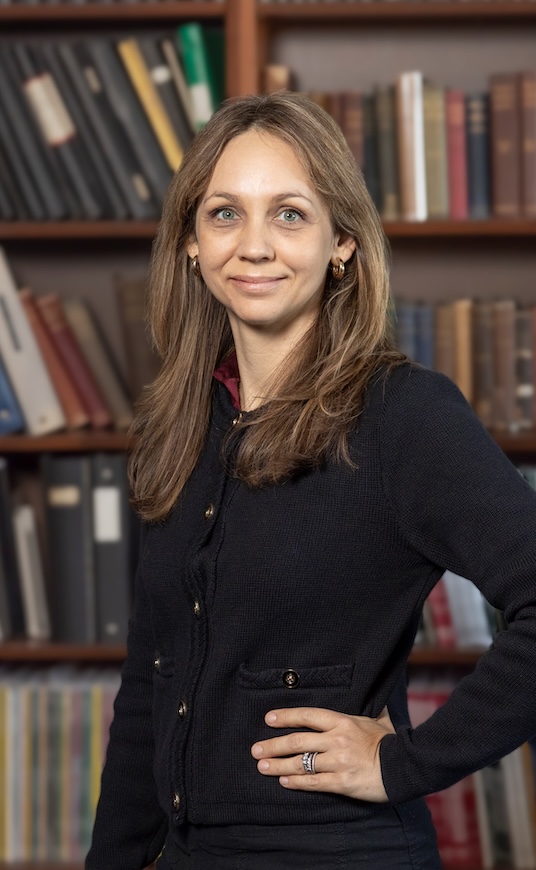
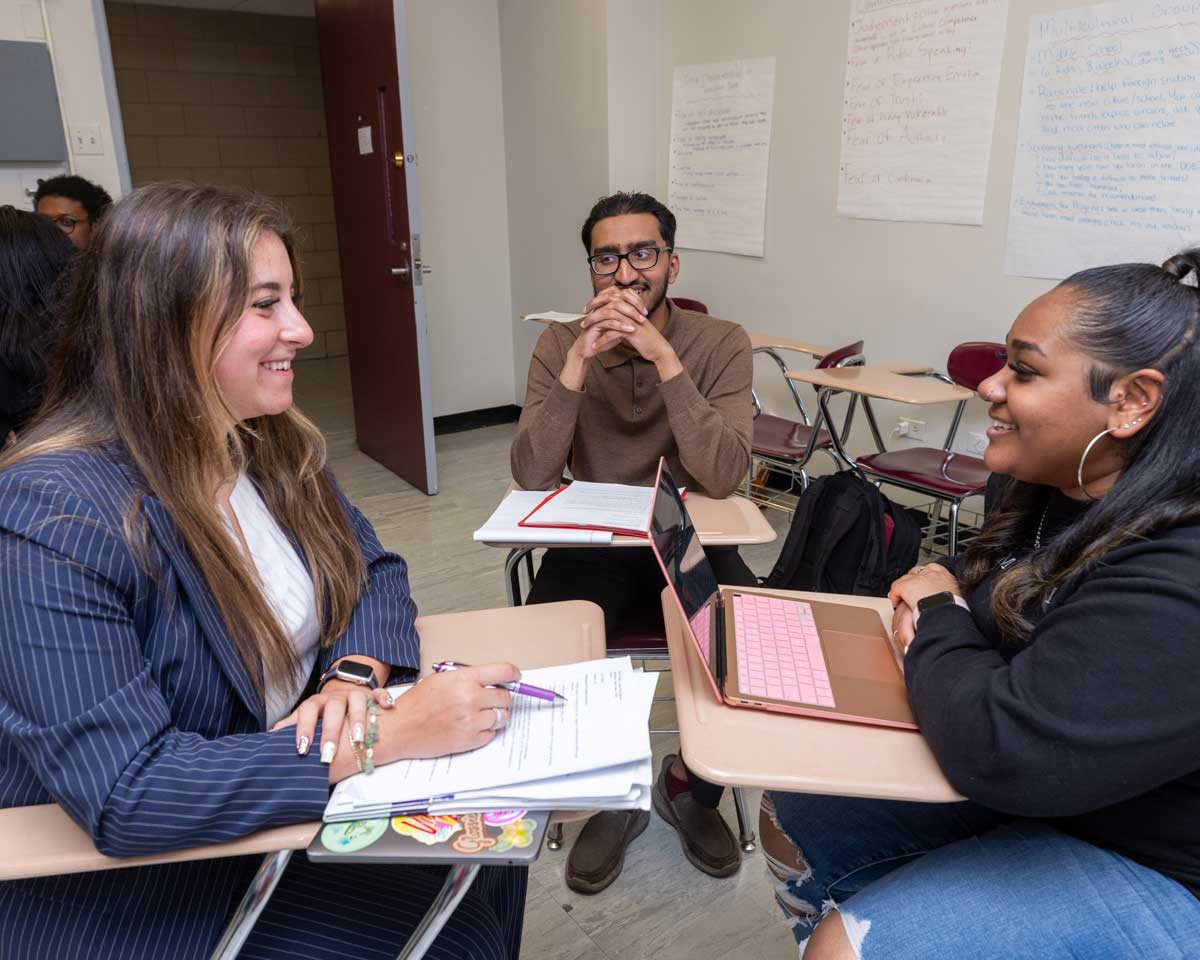
Brooklyn College is an integral part of the cultural and artistic energy of New York City. Our faculty members in the Department of Psychology offer incomparable expertise and tremendous talent, and each brings a unique perspective to their teaching and mentoring in and out of the classroom.
Internships and Employers
Through job fairs, the internship database, and internship panels, the Magner Career Center gives students in the psychology—mental health counseling M.A. program access to internships and jobs at a variety of organizations, including:
- Albert Einstein College of Medicine
- City University of New York
- Coney Island Hospital
- Fordham Tremont Community Mental Health Center
- Institute for Family Health
- Institute for Human Identity
- Iona College Counseling Center
- Jewish Board of Family and Children’s Services
- John Jay College of Criminal Justice (CUNY)
- Long Island Jewish Hospital
- Mount Sinai Adolescent Intensive Care Program
- New York City Department of Education
- New York Psychotherapy and Counseling Center
- Northwell Health
- Pace University
- St. Francis Counseling Center
- St. Vincent’s Hospital
- SUNY Downstate Infant & Child Learning Center