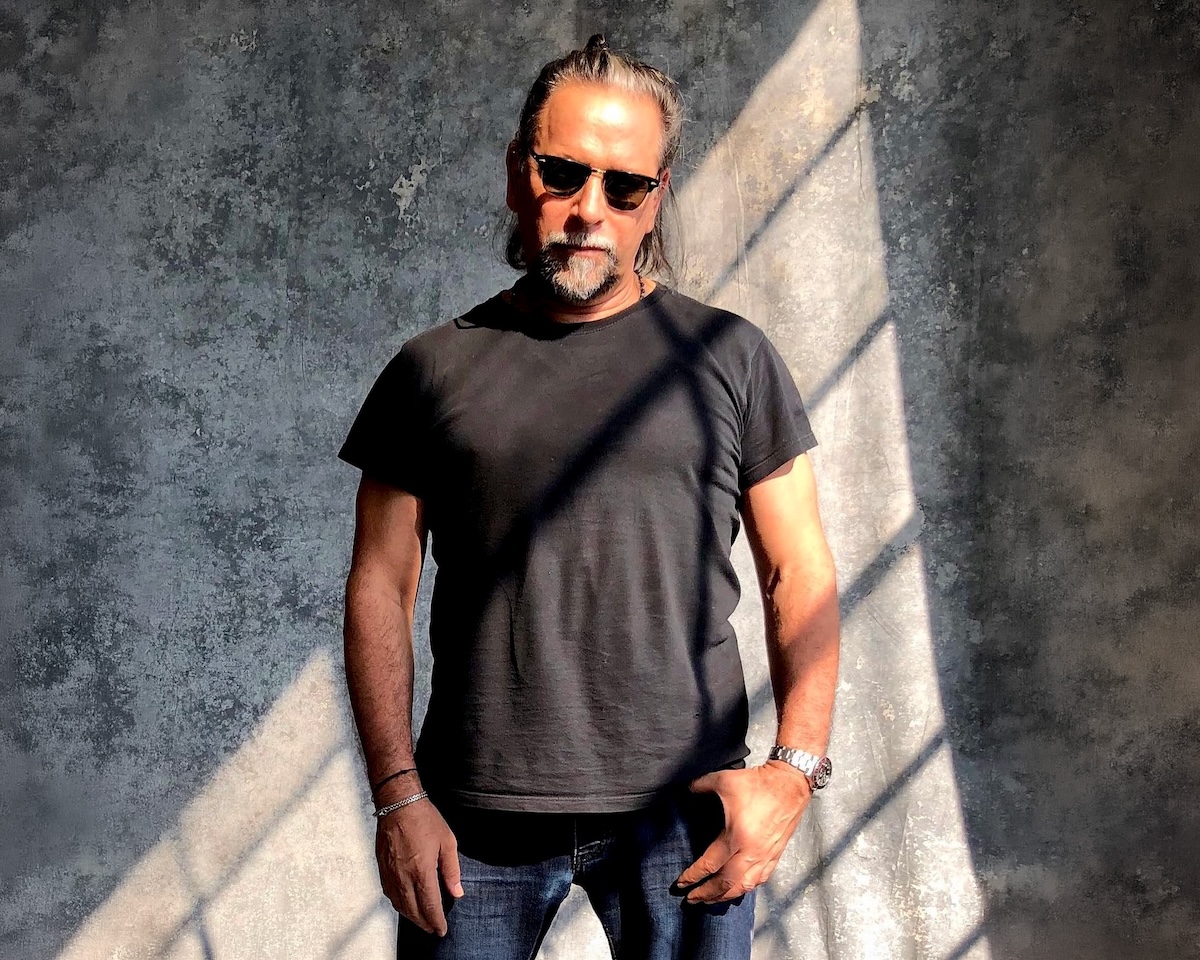
Before the fashion shoots and magazine covers, acclaimed photographer Sante D’Orazio ’77 was a Brooklyn College student moving between drawing classes and humanities lectures, and studying line, form, and the history of image-making. On campus, his mentor, the painter Philip Pearlstein, pressed him to think beyond technique and about what an image does and why it matters. That early education would later help define his work behind the camera.
D’Orazio’s new memoir, A Shot in the Dark (Blackstone Publishing, 2025), traces his journey from growing up in Brooklyn to working at the top of his profession in the fashion field. Here, D’Orazio reflects on his early influences, his evolution as a photographer, and the experiences that have shaped his perspective and his art.
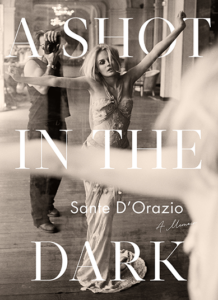
Photographer Sante D’Orazio’s memoir of life in high fashion and Hollywood.
You grew up in Brooklyn.
I was raised in Flatbush and went to Erasmus Hall High School. The area is now called Kensington, but back then it was just Flatbush to me. I still have family there, though most have moved away.
In your memoir, you say you got into photography early because of a man who lived around the corner.
I didn’t know much about him except his name—Mr. [Lou] Bernstein—and that he lived around the corner from me when I was about 10. He became my mentor in photography and life. He’d been part of the old New York Photo League, with photographers like Robert Frank, Walker Evans, Weegee, and Berenice Abbott. He never worked commercially; he shot on weekends and worked at Willoughby Peerless, the equivalent today of B&H Photo.
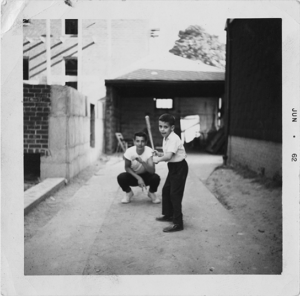
Six-year-old Sante D’Orazio playing stickball in his Brooklyn neighborhood.
You started at a junior college and then transferred to Brooklyn College.
After my father passed away, I went into survival mode. I studied commercial art at a New York Community College, thinking I might become an art director. I hated it. I was already painting nudes at the Brooklyn Museum and the Art Students League, so I transferred after researching the Brooklyn College faculty. Philip Pearlstein was teaching there, he was a leading Realist painter concentrating on the nude. I also discovered how strong the faculty was in the fine arts and the humanities. I’m grateful I wasn’t at a full-time art school; the humanities helped round out my aesthetic education through literature, philosophy, history, and widened my scope of knowledge of the Arts. And I loved the campus.
Your cousin, who was a hairdresser, suggested you get into fashion photography.
I went into the city with my portfolio—no appointments, no experience. I tracked down Avedon, Penn, Scavullo. I didn’t get past the front desk at Avedon’s. Penn didn’t open the door. Scavullo told me to get out. I eventually got a job as a second assistant, doing gofer work and building a portfolio.
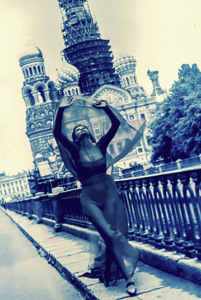
Model Helena Christensen in Leningrad for British Vogue, 1990
You eventually made your way to Milan.
Italian Vogue was down the street from my hotel. I brought my portfolio expecting rejection. Instead, they gave me a two page-spread assignment of “Beauty” nudes, which translates to skincare, makeup, and fragrance. I was 25.
What was it like photographing the supermodels and rock stars of the 1980s and 1990s?
There was a whole new zeitgeist in the 80s. I had my first assignment with Italian Vogue, soon after my first Vogue cover with German Vogue. In Rome, while shooting the collections, I met a 15-year-old Christy Turlington with her mom in the hallway of our hotel. I became friends with Cindy Crawford, Tatjana Patitz, and Stephanie Seymour before they became the new generation of superstars, they were the first to be termed supermodels. Our careers rose in parallel.
By the 1990s, Hollywood glamor had waned and needed revitalizing. Bruce Weber, Herb Ritts, and I brought glamour back to the movie industry through the magazine world. Once we put actresses like Michelle Pfeiffer and Kim Basinger on a Vogue cover, sales shot up, and fashion magazines shifted to celebrities.
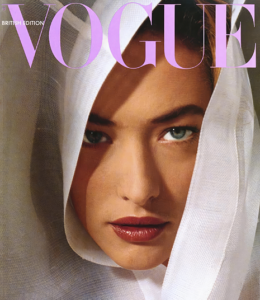
Model Tatiana Patitiz on British Vogue
And famous people like Prince.
I took this assignment because it was Prince. I was early to the studio; Prince arrived early too, with fedora, makeup, and no entourage. Though the client hadn’t arrived, he asked if we could shoot. We finished in about 20 minutes. He left before the client showed up. They weren’t happy, but I was thrilled, we got some great shots.
You have an unnerving story about taking a photo of Mike Tyson with his tiger.
I went to shoot Mike at his home in Las Vegas for Esquire magazine. I was looking for a place to shoot; he directed me out to the backyard. What he didn’t tell me was that he had pet tigers!
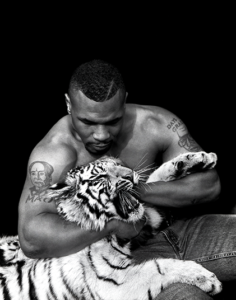
Heavyweight boxing champion Mike Tyson, 1996
When I walked out, I thought a dog was running at me from behind—it was a tiger. It jumped on me. Mike came out laughing and said, “She’s just a puppy.” So I took it in stride and acted like it was nothing, though it wasn’t the case! I asked him to take off his shirt, and he started wrestling with the 200 lb. puppy. That’s the shot.
So you’re also a painter. How do your photography and painting practices relate?
I paint images on film that become small abstractions, scan and print them large, collage them, and paint over them. The mixed media feeds itself.
What do you think about art and artificial intelligence?
AI can only remix what it’s fed. It can’t produce the true idiosyncrasies that only the human mind can create. Perfection is machine-made and meaningless, soulless. That energy from hand to paper—AI can’t replicate that.
There’s a growing interest among young people in film and analog processes. Have you seen that?
My son used to make fun of me for not understanding digital manuals. Now he asks me about film. I like that people are going back to handwriting and notebooks. I wrote my memoir by hand. I believe in that process, it extends your sensory perception.
What advice do you have for today’s young photographers and artists?
Know your history, or you’ll copy people without realizing it. Have chutzpah—knock on doors. Show up, even if you’re mopping floors. That’s how artists always learned and grew, from the past, and the bottom up! Most of all take criticism, if you can’t, you’re not ready.
Anything else you want students to know?
If you spend your time trying to satisfy the right and the left, you’re stuck in the middle—that’s the definition of mediocre. Reach inside yourself, fail and get up again. Don’t be afraid of who you are, as long as it’s real to you. And study, always study. Brooklyn College is exceptional when it comes to the quality of education, it’s the best kept secret in the N.Y.C. school system. But then I’m biased—I have a real soft spot for my alma mater