Brooklyn College’s Haitian Studies Institute (HSI) Archives and Special Collections marked a milestone in its mission to preserve Haitian culture and history with a special event honoring the life and legacy of Daniel Simidor—born André Elizée and widely known by his nom de guerre, his assumed name.
Held in the Brooklyn College Library on November 18—the anniversary of the 1803 Battle of Vertières, which ended French colonial rule in Saint-Domingue and ensured Haiti’s independence—the daylong celebration was both festive and reflective. It brought together scholars, archivists, students, and community members to honor Simidor and to highlight the vital role of archives in preserving collective memory.
Speakers emphasized a central truth: Archives are more than collections of documents. They are vessels of identity, resistance, and continuity. For diasporic communities, archives ensure that histories of struggle, migration, and creativity are not erased but passed forward to future generations.
Program Highlights
HSI Director Marie Lily Cerat and archivist Obden Mondesir welcomed guests, situating the event within the institute’s broader mission: to document, study, and make accessible Haitian culture, politics, and history.
A Q&A hosted by Mondesir featured a panel of distinguished archivists and cultural workers—Steven G. Fullwood, Hadassah St. Hubert, Ph.D., Joanne Hyppolite, Ph.D., and Petrouchka Moise, Ph.D.—who shared reflections on their careers and the broader significance of archives for diasporic communities. Each underscored how archives amplify marginalized voices and preserve cultural memory across generations and borders.
The special event was also attended by Simidor’s son, Georges Elizée, as well as former Brooklyn College Haitian American Students Association leaders Yves Raymond ’77 and Kettly Samuel ’79, giving the occasion a powerful sense of living history.
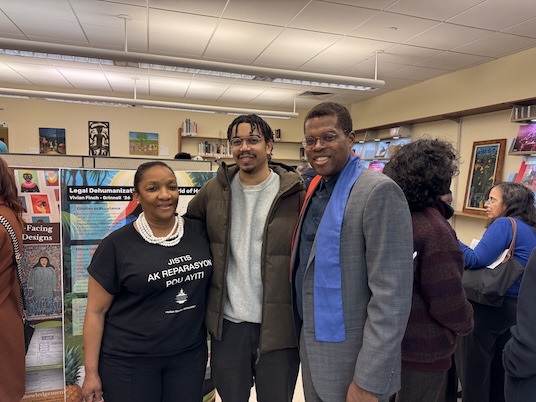
(Left to right) CUNY HSI Director Marie Lily Cerat, Georges Elizée, and archivist Obden Mondesir at the HSI Archives and Special Collections November 18.
The program featured a discussion of the book Silence and Resistance with writer and activist Monique Clesca, hosted by The Haitian Times. Clesca situated her book within Haiti’s ongoing struggle for democracy and cultural survival. She spoke of silence not as absence but as a force that can both oppress and empower, and of resistance as an act of remembering—refusing to let stories and voices be erased. Her words reminded listeners that archives are living tools for shaping the future.
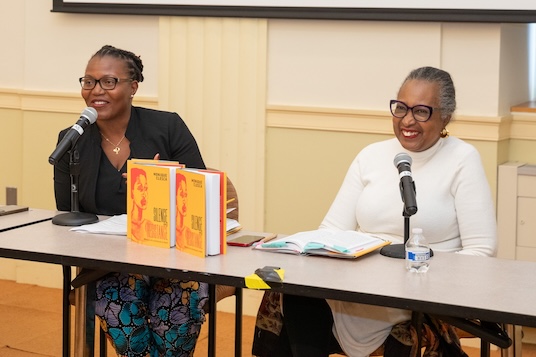
Macollvie J. Neel, Special Projects Editor for The Haitian Times (left), and author Monique Clesca led a discussion about the book, “Silence and Resistance.”
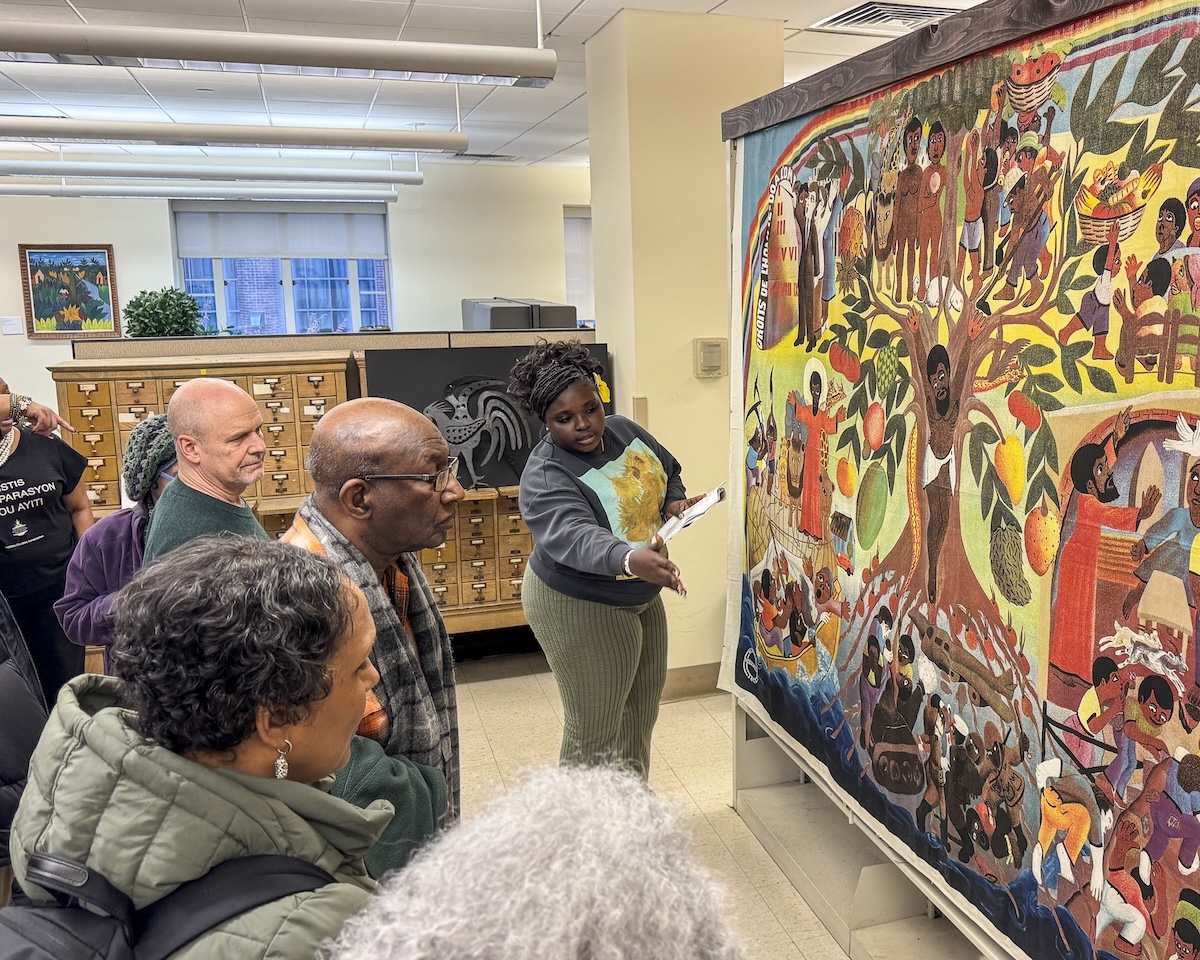
An open house with tours led by Haitian-American Student Association members Rosashia Shortte, Matthew Romulus, Steve Previlon, and others allowed attendees to explore Simidor’s personal papers and other treasures held in the HSI Archives. Manuscripts, photographs, and rare documents offered a tactile sense of the histories preserved, underscoring the power of archives to connect past and present.
The Legacy of Daniel Simidor
At the heart of the celebration was André Elizée/Daniel Simidor, whose life embodied memory as resistance. A writer, poet, activist, and archivist, Simidor was deeply involved in Haiti’s political struggles—the anti‑Duvalier movement of the 1980s, protests against the U.S.‑backed coup against President Jean‑Bertrand Aristide in 1991, and advocacy for Haitian asylum seekers detained at Guantanamo.
His archival work was equally transformative. For 26 years, he served at the Schomburg Center for Research in Black Culture, curating collections that illuminated Haitian history, French‑speaking Africa, the Caribbean, and African American political movements. His exhibitions, including The French Revolution in the Americas and Dechoukaj! Contemporary Social and Political Developments in Haiti, 1986–1988, became touchstones for scholars and the public. He also organized film and lecture series that extended archival materials into classrooms and community spaces.
About the Panelists
- Steven G. Fullwood: Founder of the In the Life Archive at the Schomburg, the largest collection documenting LGBTQ people of African descent.
- Hadassah St. Hubert, Ph.D.: Historian and digital humanist, co‑founder of Sidra Collaborative, emphasizing digital preservation for cross‑border access.
- Joanne Hyppolite, Ph.D.: Supervisory museum curator at the Smithsonian’s National Museum of African American History and Culture, and curator of groundbreaking exhibitions on Afro‑Caribbean and African American culture.
- Petrouchka Moise, Ph.D. Bio