
Linguistics

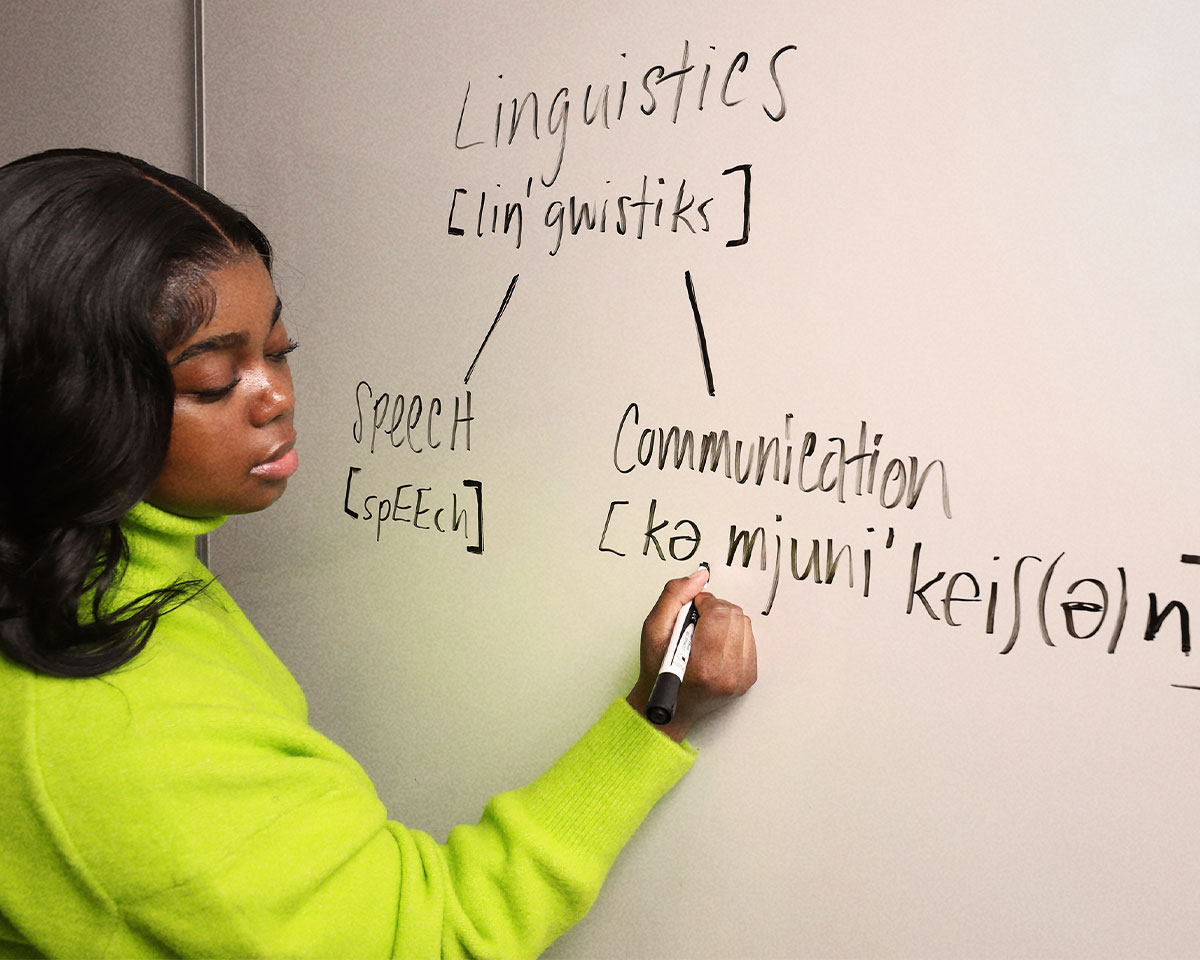
Explore the science behind how we speak, think, and connect. Our linguistics program offers a flexible major, minor, or second major option—perfect for pairing with any field. Gain skills in analysis, problem-solving, and communication that open doors to graduate study and careers worldwide.

Degrees

What You’ll Learn

We provide a strong foundation in contemporary linguistics, starting with the nature and structure of language and moving into core areas:

  • Phonology: Sounds of language
  • Morphology: Structure of words
  • Syntax: Structure of phrases and sentences
  • Semantics: Structure of meaning

You’ll explore how language:

  • Is acquired in childhood
  • Functions in communication and society
  • Is processed by the brain and computers
  • Evolves over time

Our courses also cover related fields such as:

  • First and second language acquisition
  • Cognitive science
  • Philosophy of language
  • Psycholinguistics and sociolinguistics
  • Historical linguistics and language typology
  • Pidgins and creoles
  • Natural language processing

Because we’re housed in the English Department, you’ll also discover the deep connections between language and literature, including how linguistics informs literary criticism.
Why Add Linguistics as a Second Major or Minor?

Pairing linguistics with another field:

  • Strengthens your position for graduate studies and professional careers.
  • Enhances your problem-solving skills, which employers and graduate programs increasingly value.
  • Benefits you even if your career isn’t language-related—business and industry recognize the analytical skills linguistics majors bring.

Eli Joseph, M.S., Business Administration

CAREER AND GRADUATE PATHWAYS

What You Can Do With a Degree in Linguistics
Our program prepares students for graduate studies and careers in:

  • Education: Teaching, curriculum development, language assessment
  • Translation and Interpretation
  • Computational Linguistics and Speech Technology
  • International Business
  • Law: Immigration, international business
  • Publishing: Writing, editing, lexicography
  • Foreign Service and Government Careers

The linguistics program, which draws its faculty from several language-related departments at our beautiful campus in Brooklyn, New York, offers students training in understanding and analyzing language and covers the full scope of the field of linguistics through an interdisciplinary approach. We offer students a Bachelor of Arts degree with a major and a minor in linguistics. In addition, students who choose to double-major with linguistics as their second major may be able to apply up to three courses from their first major toward the linguistics requirements.

We seek first to give our students a solid undergraduate grounding in contemporary linguistics, beginning with an overall understanding of the nature and structure of language, and then moving on to the core areas—phonology (the sounds of language), morphology (the structure of words), syntax (the structure of phrases and sentences), and semantics (the structure of meaning). We seek to give our students an appreciation for language as a defining human characteristic, one that not only distinguishes people from other creatures, but also binds people together in communities and social networks. We offer courses that investigate how language is structured, how it is acquired throughout childhood, how it functions in communication, how it is processed in the human brain, how it can be processed by computers, how it changes over time, and how it functions in society. The program also seeks to strengthen students’ awareness and understanding of the wide range of the field of linguistics and the many key areas directly related to it, including but not limited to, first and second language acquisition, cognitive science, the philosophy of language, psycholinguistics, sociolinguistics, historical linguistics, language typology, the study of pidgins and creoles, and natural language processing. In keeping with its location in the English Department, the program also seeks to foster an appreciation of the close relationship between language and literature, including the many ways in which linguistics has informed the field of literary criticism. The program thus seeks not only to lay out the conceptual tools and the information base in linguistics, but also to show how this knowledge has been applied in these other disciplines.

The program prepares our students for graduate studies, and for a variety of careers, in fields such as:

  • education (e.g., teaching, curriculum development, assessment in language arts, and second language learning at all levels);
  • translating and interpreting;
  • computational fields related to language and speech technology;
  • international business fields;
  • specific areas of legal practice (e.g., immigration law; international business);
  • publishing: writing, editing, and lexicography; and
  • foreign service and other internationally oriented government careers.

Adding Linguistics as a second major or minor

Simply put, a second major or minor in linguistics adds value to your primary major. Because a primary major from an appropriate field that is augmented with linguistics will place you in a stronger position for pursuing graduate studies or professional careers in a wide variety of fields. Even if you do not intend to work in a language-related profession, you can benefit from the study of linguistics: business and industry employers are increasingly aware that linguistics majors have well-developed skills in complex problem-solving—and so are the admissions committees of graduate programs.

Contact Information

Director: Jonathan Nissenbaum
1209 Ingersoll Hall
P: 718.951.5000 ext. 6631
F: 718.951.4136

Brooklyn. All in.