What if the ideas that seem “useless” today are the ones that will change the world tomorrow?
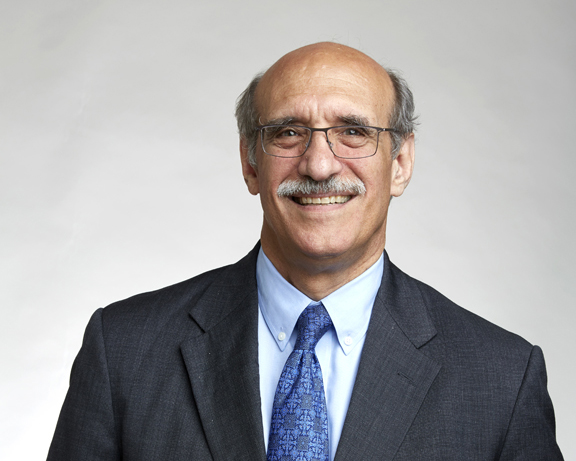
That’s the bold premise behind this year’s H. Martin Friedman Lecture at Brooklyn College, featuring Martin Chalfie, University Professor at Columbia University and recipient of the 2008 Nobel Prize in Chemistry.
On April 28, Chalfie will deliver his talk, “The Continuing Need for Useless Knowledge: Finding the Unexpected to Enable Future Scientific Revolutions.” His message is simple but compelling: Curiosity isn’t a distraction from progress—it’s the engine that drives it.
Hosted by the Brooklyn College Chemistry Society and co-hosted by the Department of Chemistry and Biochemistry, Chalfie’s lecture draws inspiration from a 1939 essay by Abraham Flexner, founding director of the Institute for Advanced Study, who argued that society’s obsession with “usefulness” often blinds us to the discoveries that reshape our understanding of the world. Flexner believed that true breakthroughs happen when thinkers are free to explore without a roadmap. Chalfie brings that idea into the 21st century, showing how curiosity‑driven research continues to spark scientific revolutions.
Chalfie speaks from experience. He shared the Nobel Prize for pioneering the use of Green Fluorescent Protein (GFP)—a tool that transformed biology by allowing scientists to watch living cells in action. Yet his path to scientific acclaim was anything but straightforward.
Born in Chicago, Chalfie entered Harvard with an interest in science but graduated unsure of his abilities and uncertain about his future. He spent two years working a patchwork of jobs—janitor, clothing salesman, high‑school teacher—before a chance opportunity in a research lab changed everything. One experiment worked. One idea led to a publication. And that moment of discovery gave him the confidence to pursue graduate school and, eventually, a career that would reshape modern biology.
From his postdoctoral work with Sydney Brenner in Cambridge to his decades of research at Columbia, Chalfie has helped illuminate how organisms sense touch, how neurons develop, and how cells maintain their identity. His contributions span genetics, neurobiology, and molecular biology, and his leadership roles include service in the National Academy of Sciences, the National Academy of Medicine, and the American Society for Cell Biology.
About the H. Martin Friedman Lecture
The H. Martin Friedman Lecture is an annual lecture series hosted by Brooklyn College, typically organized by the Department of Chemistry and Biochemistry. It brings distinguished scientists and scholars to campus to present a public lecture on a topic in science, particularly in chemistry, biochemistry, and related fields. The event is part of a long-running lecture series named after H. Martin Friedman, who supported the college and this lecture series. In some years, the lecture has been given by eminent researchers and has helped introduce students (including high school students and undergraduates) to careers and advances in the sciences.