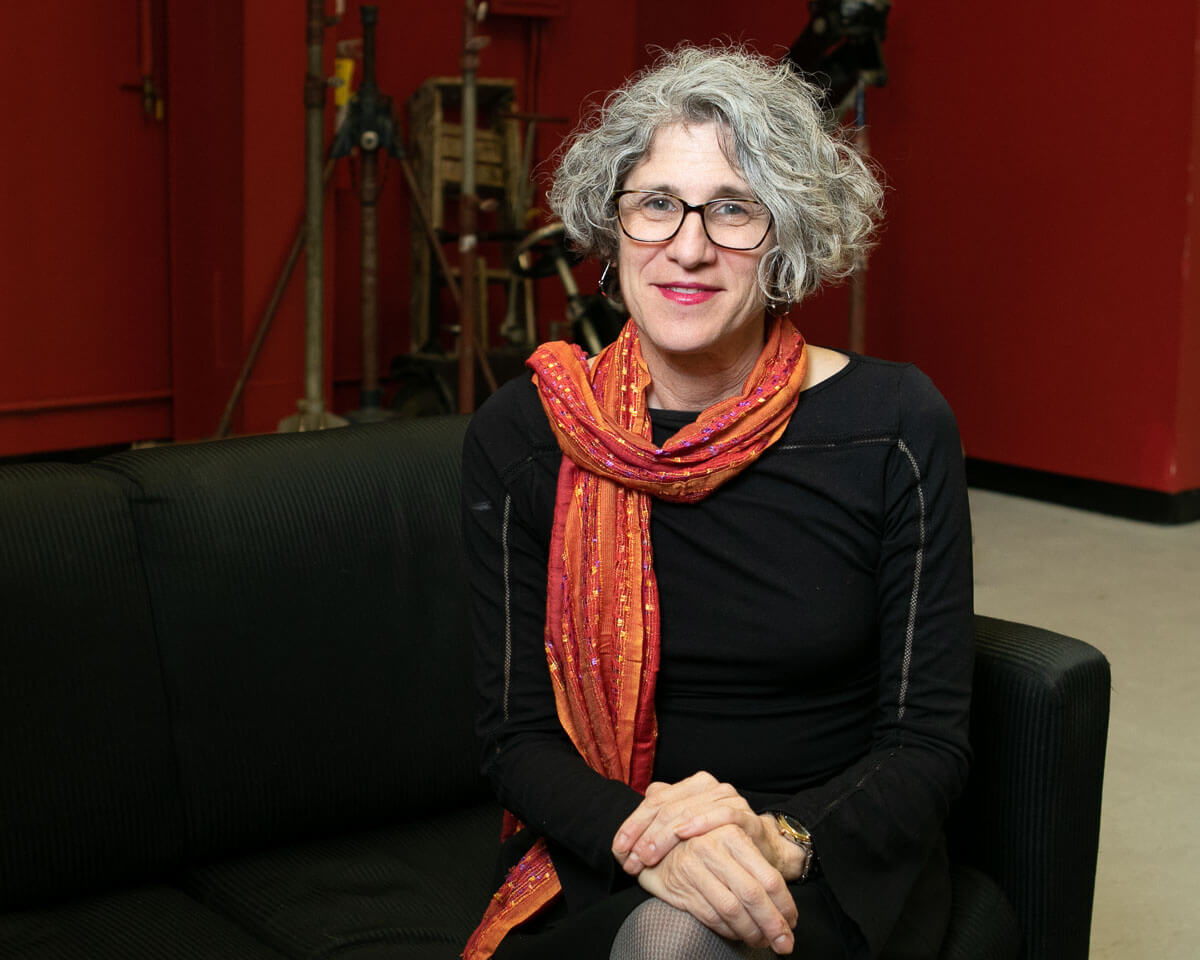
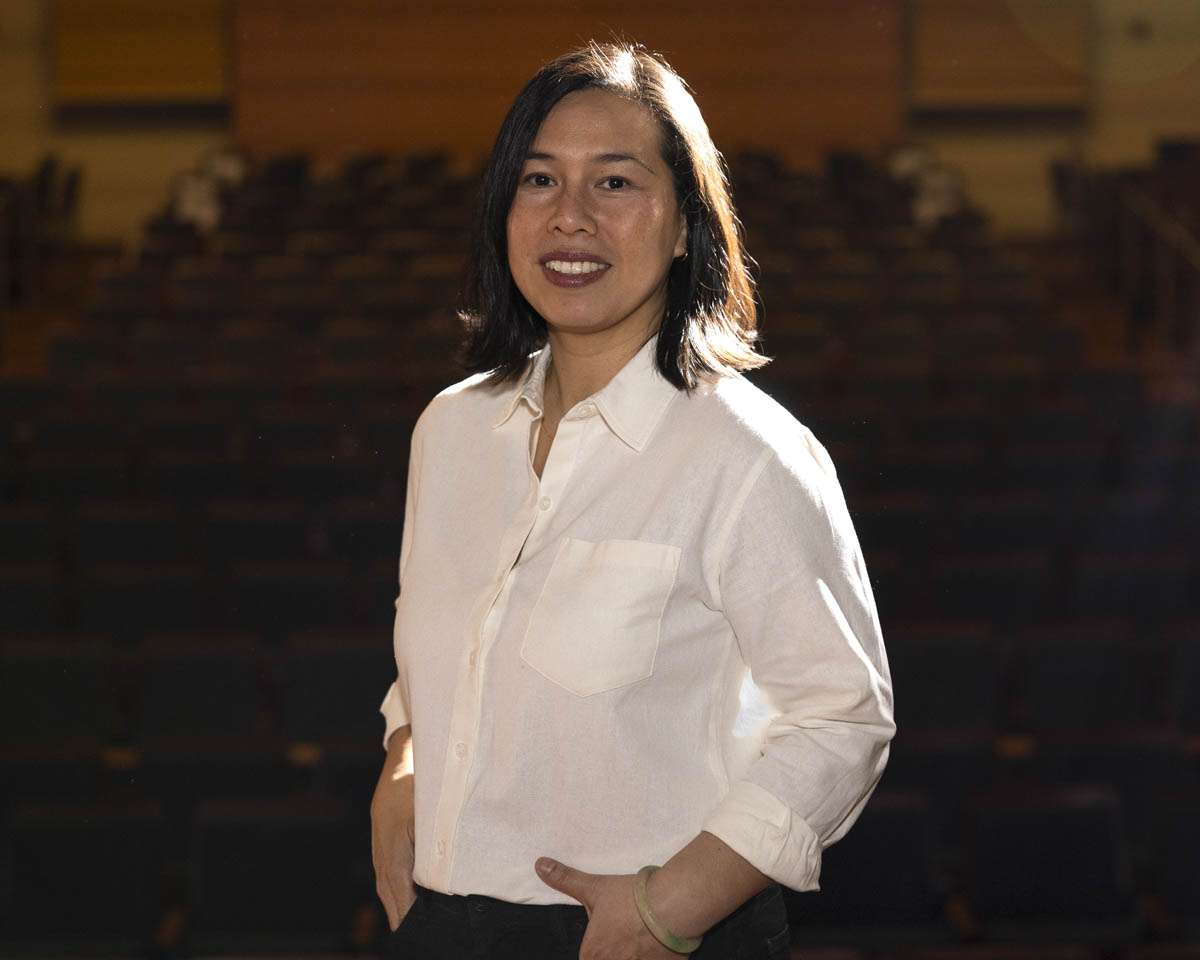
Jolie Tong
At the center of Jolie Tong’s current research lies the guiding question: How can directors build community and support the agency of collaborators so they may realize their highest artistic potential?
Influenced by scholar Amanda Rose Villarreal, the theater professor’s work explores the principles of consent‑based practice—an approach that weaves the concept of consent into every layer of artistic creation.
She explains that “the cornerstones of consent-based practice are recognizing and dismantling power dynamics, open communication, informed choice, and setting and respecting boundaries.” These principles offer a framework that challenges traditional hierarchical rehearsal norms and encourages shared ownership among collaborators.
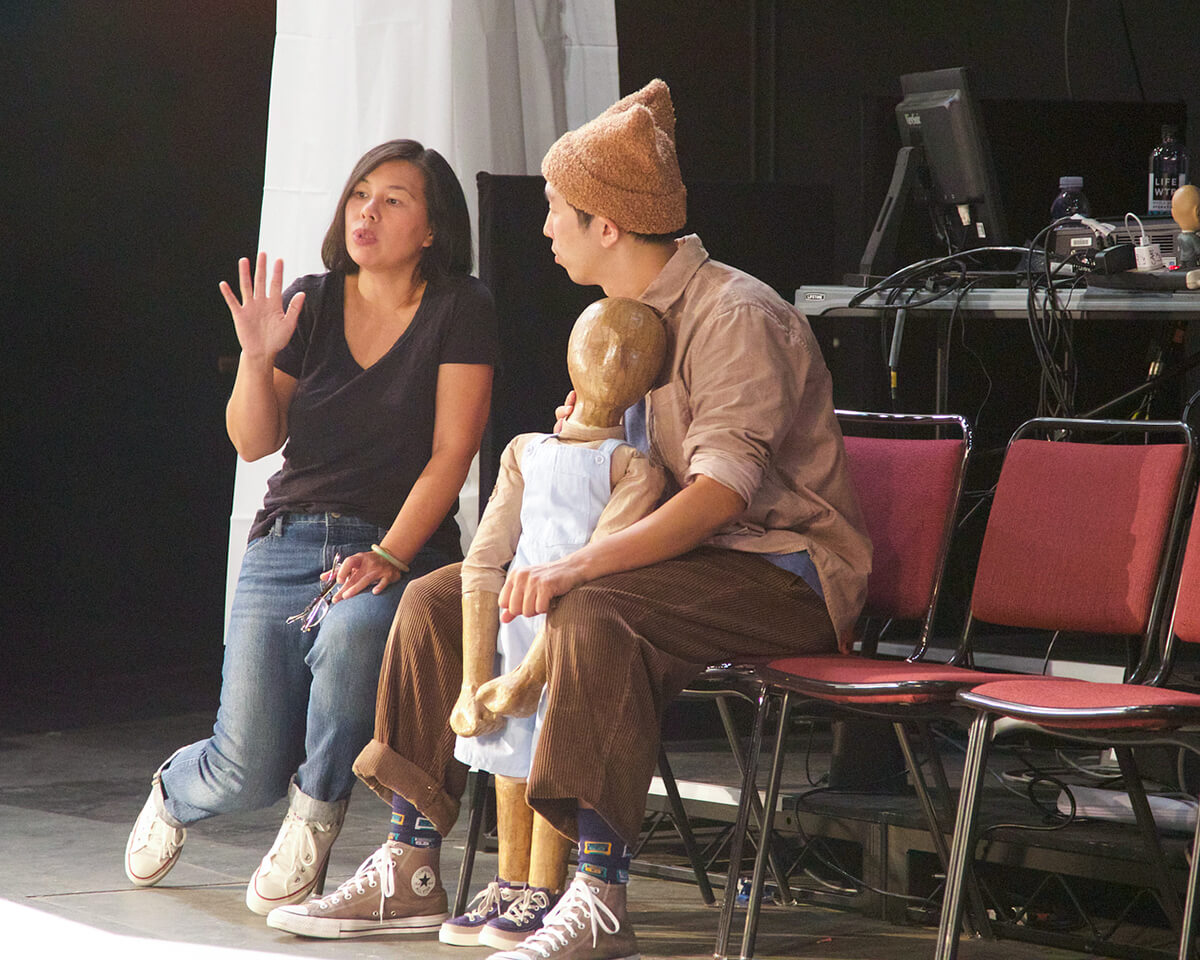
Jolie Tong working with a student during rehearsals. Photo credit: Isidora Farias
Tong’s interest in this methodology emerged during her training in intimacy direction with Theatrical Intimacy Education, an organization that specializes in “researching, developing, and teaching best practices for staging and filming intimacy.”
The experience was a turning point.
“I realized that a lot of the core concepts and skills they were teaching could be applied not just to intimacy directing, but to directing theater in general,” Tong recalls. This realization marked the beginning of a broader shift in her artistic practice.
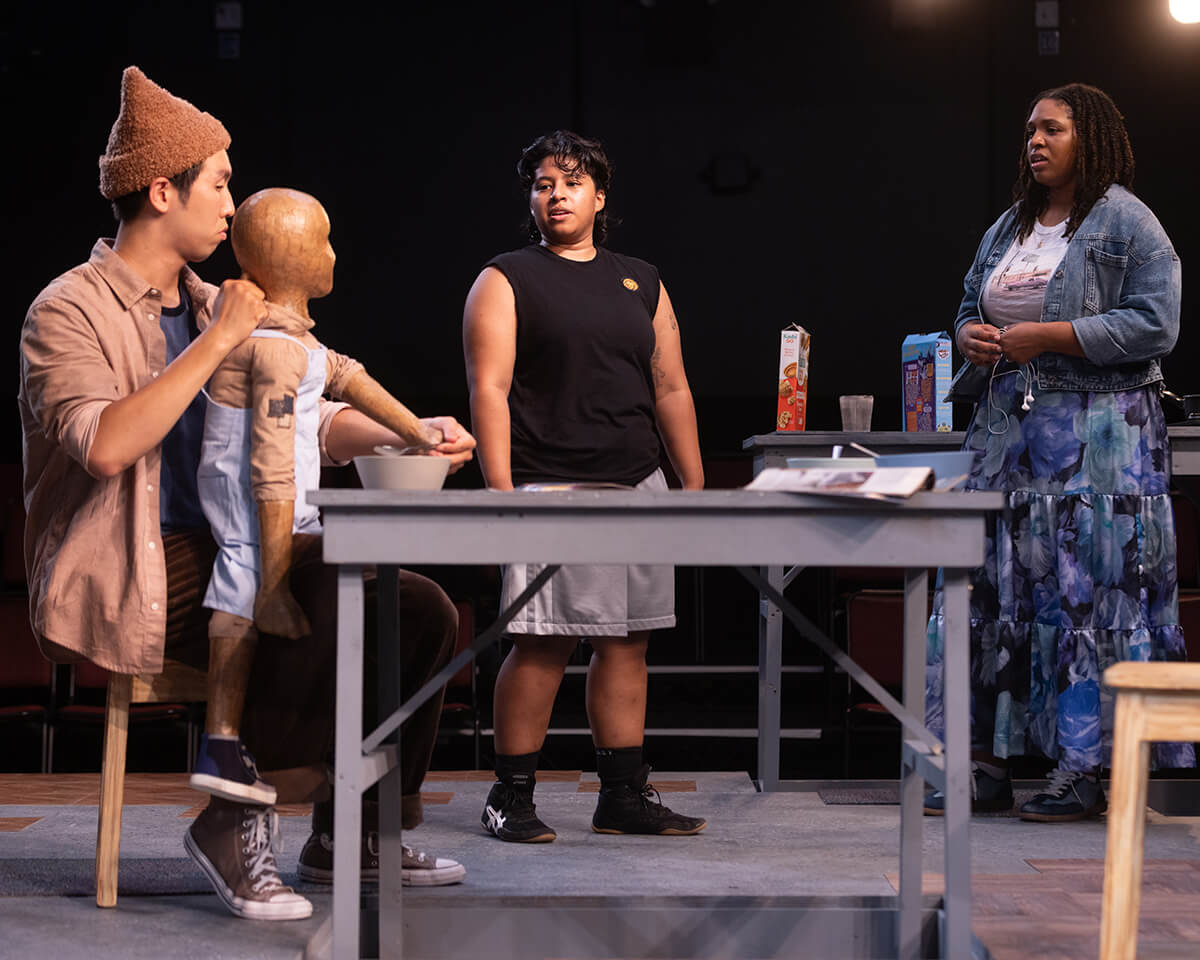
Students perform in Wolf Play.
That shift became especially meaningful earlier this year as she prepared to direct Wolf Play at Brooklyn College. The production offered “the perfect opportunity to take what I was learning and apply it to the practice of directing.”
Written by South Korean playwright Hansol Jung, Wolf Play follows a Korean child adopted by a queer couple through an online “re-homing” forum from his adoptive parents. Through the process of adapting to his unfamiliar environment, the young boy unwittingly brings about issues of identity, societal expectations, and familial norms that both families must grapple with.
Drawn in by the play’s “scope of the imagination” when she first saw it at Soho Rep, Tong found a powerful alignment between the story’s exploration of self‑determination and her own interest in agency‑centered rehearsal practices.
In Tong’s rehearsal room, this alignment took on a new form. She describes the space as a laboratory in which “the students that I work with are active collaborators in the research. They engage with the skills and principles I am experimenting with, alongside me. I can’t do the work that I do without them.” This collaborative ethos shaped the entire creative process, inviting students not just to perform but to participate.
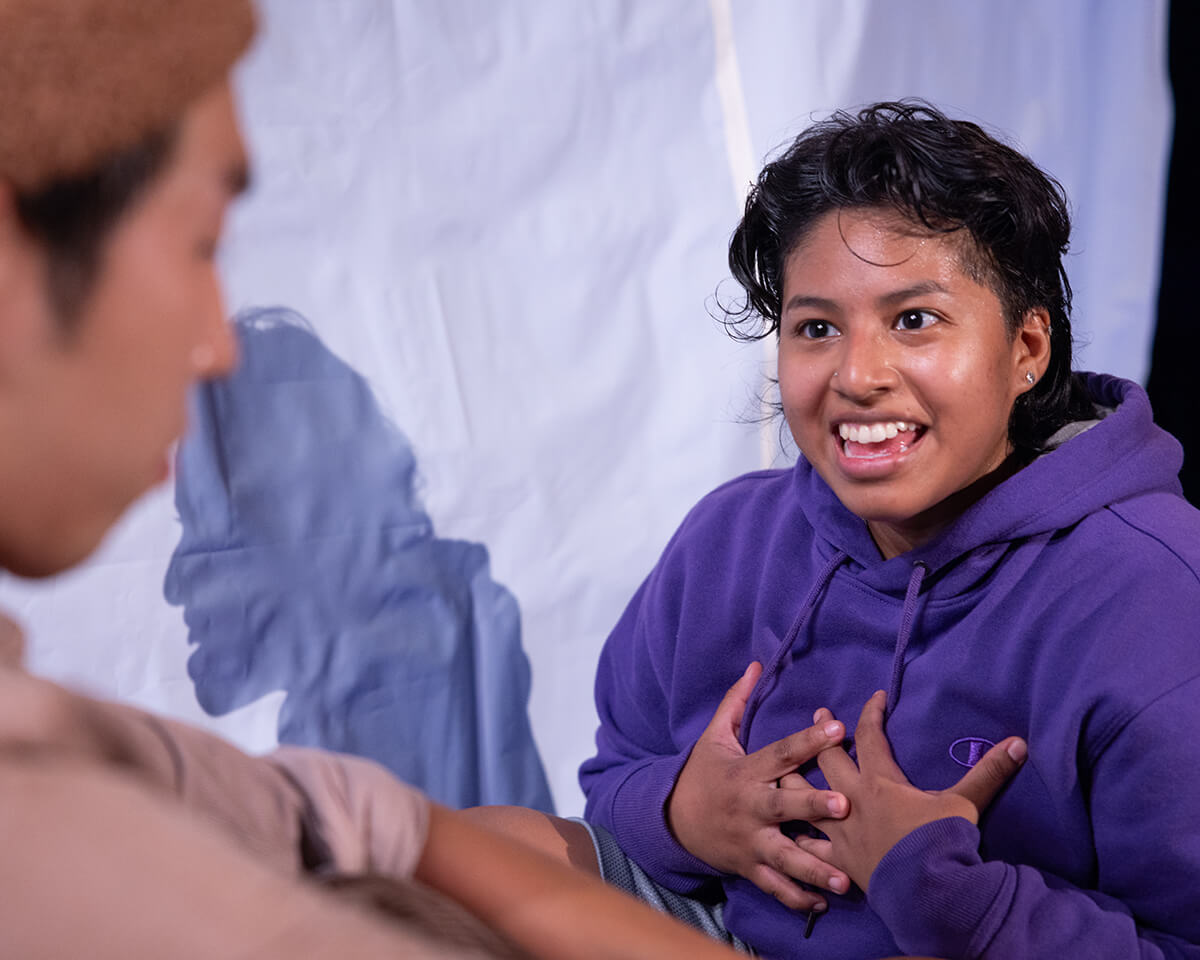
Student actor Josabeth Simisterra ’25 performing in Wolf Play.
One such collaborator was actor Josabeth Simisterra ’25, who portrayed Ash in the production and was among the first students to work with Tong as she introduced these practices. “Wolf Play was one of the most challenging and rewarding productions I’ve ever worked on,” Simisterra reflects.
Simisterra describes feeling, for the first time, a true freedom to explore her artistry—an experience she attributes directly to Tong’s consent‑based approach. “I loved the elimination of hierarchy. Every actor, stagehand, designer was on equal footing, and it created an environment that felt very communal. It wasn’t just Jolie’s show and we were helping; it was our show that we were building together.”
For Tong, this kind of transformation is exactly the point. By centering consent not as a limitation but as a catalyst, she aims to cultivate rehearsal rooms where collaboration feels both empowered and ethical. Ultimately, she hopes students who engage in this work will carry its principles with them—into future productions, artistic endeavors, and creative communities.