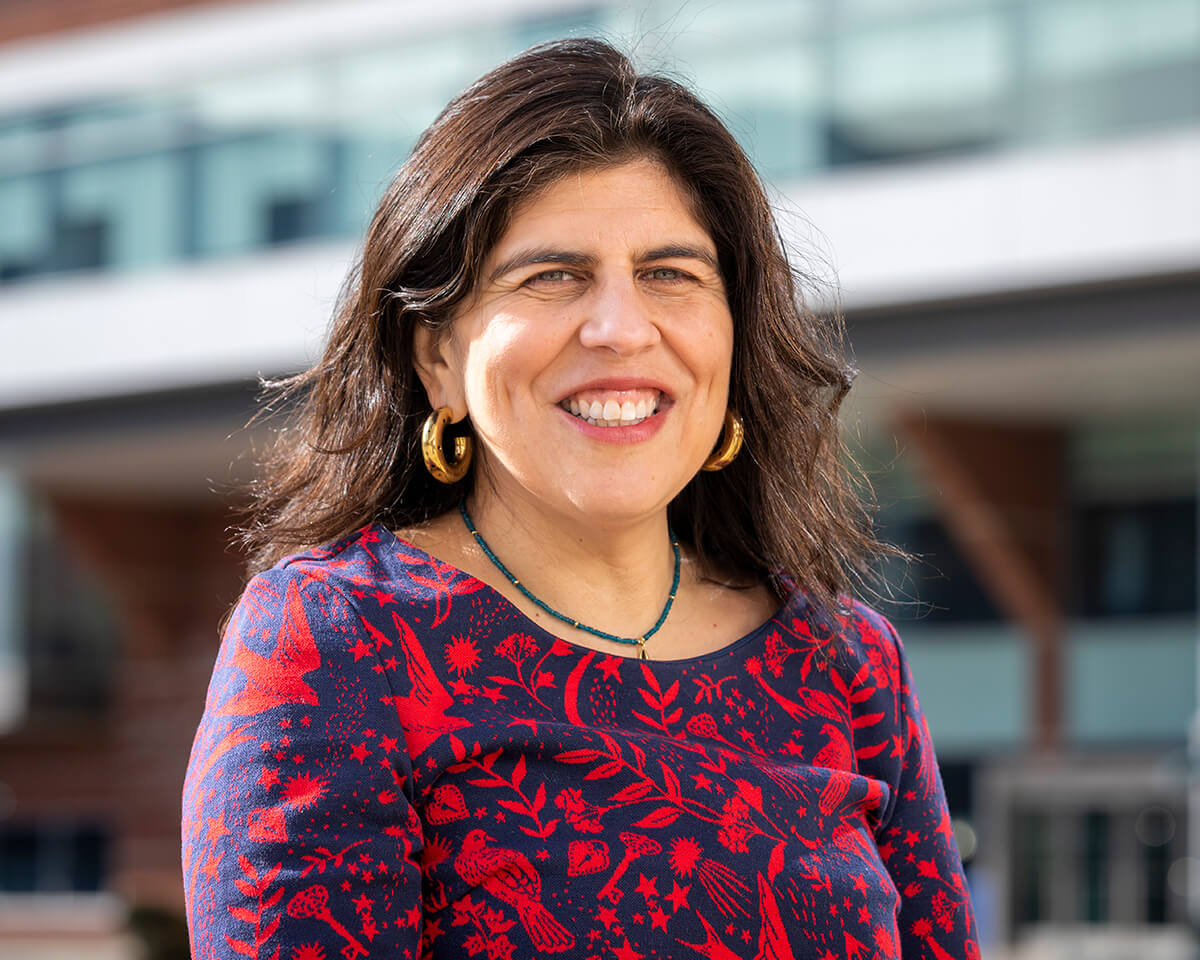
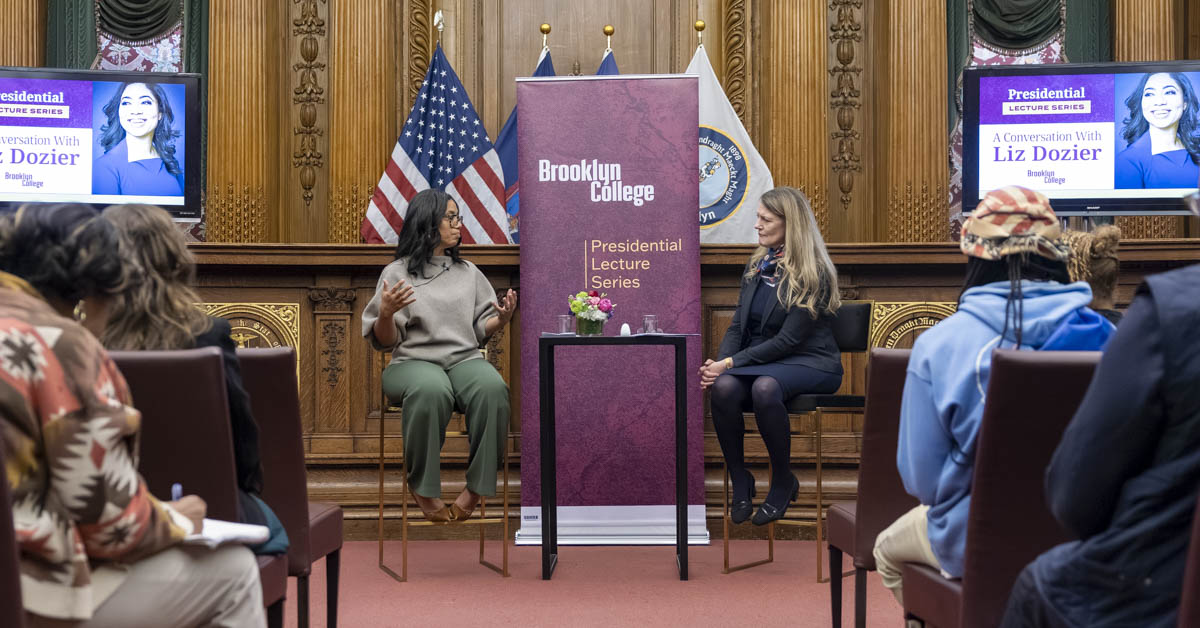
On April 23, Brooklyn College’s Presidential Lecture Series gathered at Brooklyn Borough Hall for a timely conversation on the Black maternal health crisis in the United States. National leader Liz Dozier joined President Michelle J. Anderson, alongside remarks from Brooklyn Borough President Antonio Reynoso, who has lent support for the College’s perinatal mental health programming, to examine systemic inequities and explore collaborative solutions.
Dozier and Anderson examined the structural drivers of Black maternal health disparities, emphasizing the role of higher education, philanthropy, and cross-sector partnerships in advancing change. They framed the crisis as both a public health and moral imperative, calling for accountability, policy reform, and community-centered care.

(Left to right) Liz Dozier, President Michelle J. Anderson, and Brooklyn Borough President Antonio Reynoso at Brooklyn Borough Hall.
Reynoso underscored the urgency of addressing maternal and prenatal health in New York City, citing data linking mental health conditions to pregnancy-associated deaths, many occurring postpartum. He highlighted borough investments, including community baby showers, baby boxes, and partnerships with Brooklyn College to train providers, and stressed the need to confront systemic bias and the daily stressors affecting Black mothers.
In conversation, Dozier reflected on personal experiences that shaped her work at the intersection of education, justice, and philanthropy. She described how exposure to institutional failures early in life informed her belief that inequities are designed and can be redesigned. As former principal of Chicago’s Fenger High School, she implemented trauma-responsive strategies that dramatically improved outcomes, including higher graduation rates and reduced arrests.
These experiences led her to found Chicago Beyond, a philanthropic organization that has invested over $100 million in community-led initiatives. Dozier emphasized directing resources to leaders closest to the challenges, noting that many effective changemakers lack access to traditional funding networks despite demonstrated impact.
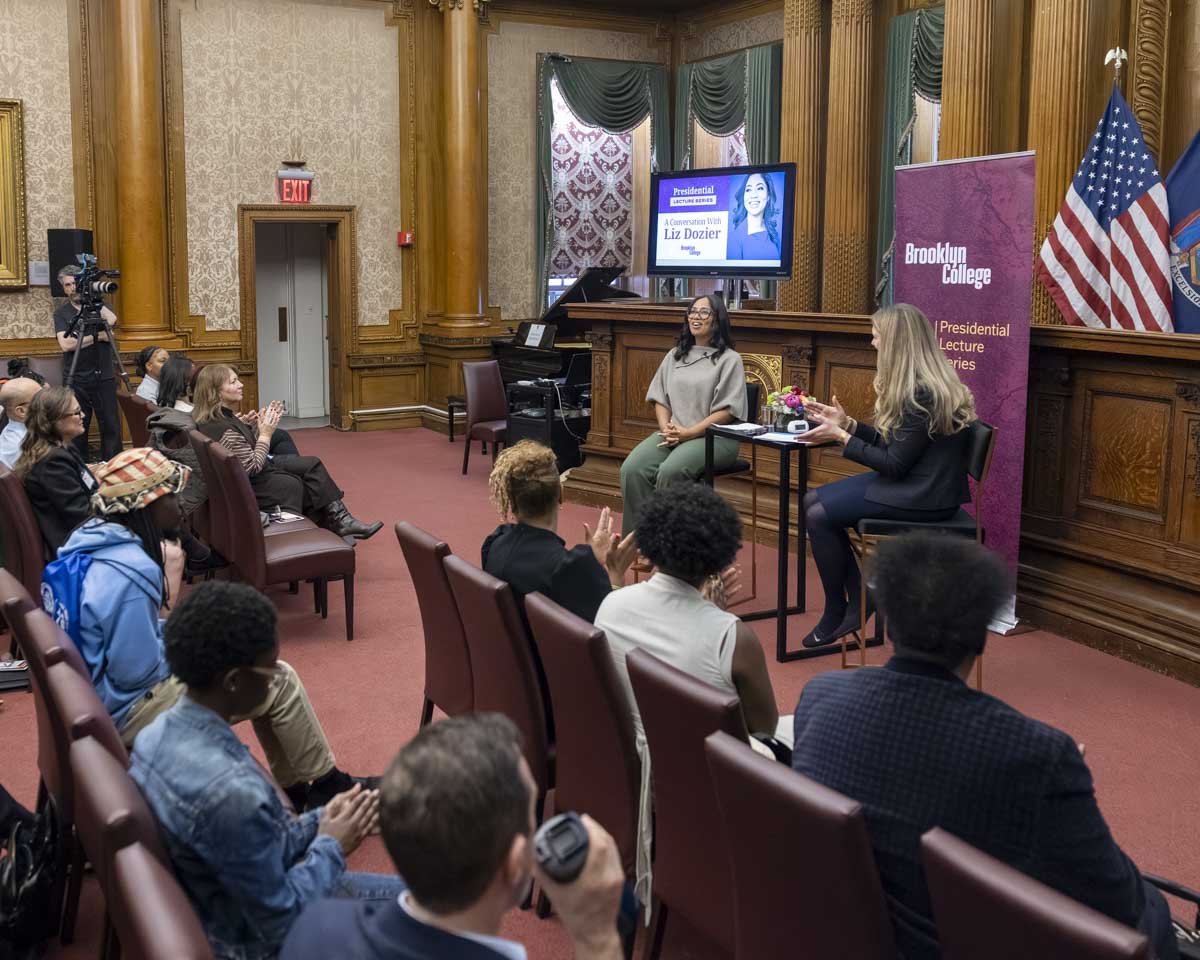
Attendees listen to guest Liz Dozier and President Michelle J. Anderson discuss the structural roots of maternal health disparities, while emphasizing the importance of education, policy reform, and community-centered care.
The discussion also focused on persistent disparities in maternal outcomes for Black women. Dozier pointed to racism, bias, and gaps in care, particularly the lack of a comprehensive continuum that includes mental health, nutrition, and family support, as key factors. Both speakers stressed that solutions already exist but require sustained investment and coordination across sectors.
Addressing misconceptions about perinatal mental health, they highlighted stigma and the tendency to overlook leading causes of maternal death such as suicide and overdose. They called for a broader, community-based approach and systemic reforms involving health care, government, and philanthropy.
A day later, on April 24, President Anderson joined faculty, clinicians, and leading experts in perinatal mental health at the 2026 Perinatal Mental Health Summit, held at the Greg Jackson Center for Brownsville.
Brooklyn College’s Presidential Lecture Series continues to bring influential leaders into dialogue with the Brooklyn College community, fostering engagement with critical social issues.