After advancing the portfolio review, each year, qualified students are accepted into this studio practice-intensive program. Here, they learn to develop their ideas and create artwork based on their own craft, interests, research, and subjects.
Their final presentation comes from this year-long, two-part, thesis course, installed and on view to the public at the end of the academic year. This uniquely thoughtful and earnest display of paintings, printmaking, collage, sculpture, and various forms of mixed media practice features the work of the following artists.
2026 Exhibition Details
May 12–26, 2026
Opening reception: May 12, 5 p.m.
Gallery hours: Tuesday, Wednesday, and Friday 10 a.m.–5 p.m., Thursday from 12:30–5 p.m..
The Art Gallery at Brooklyn College
Meet the Artists
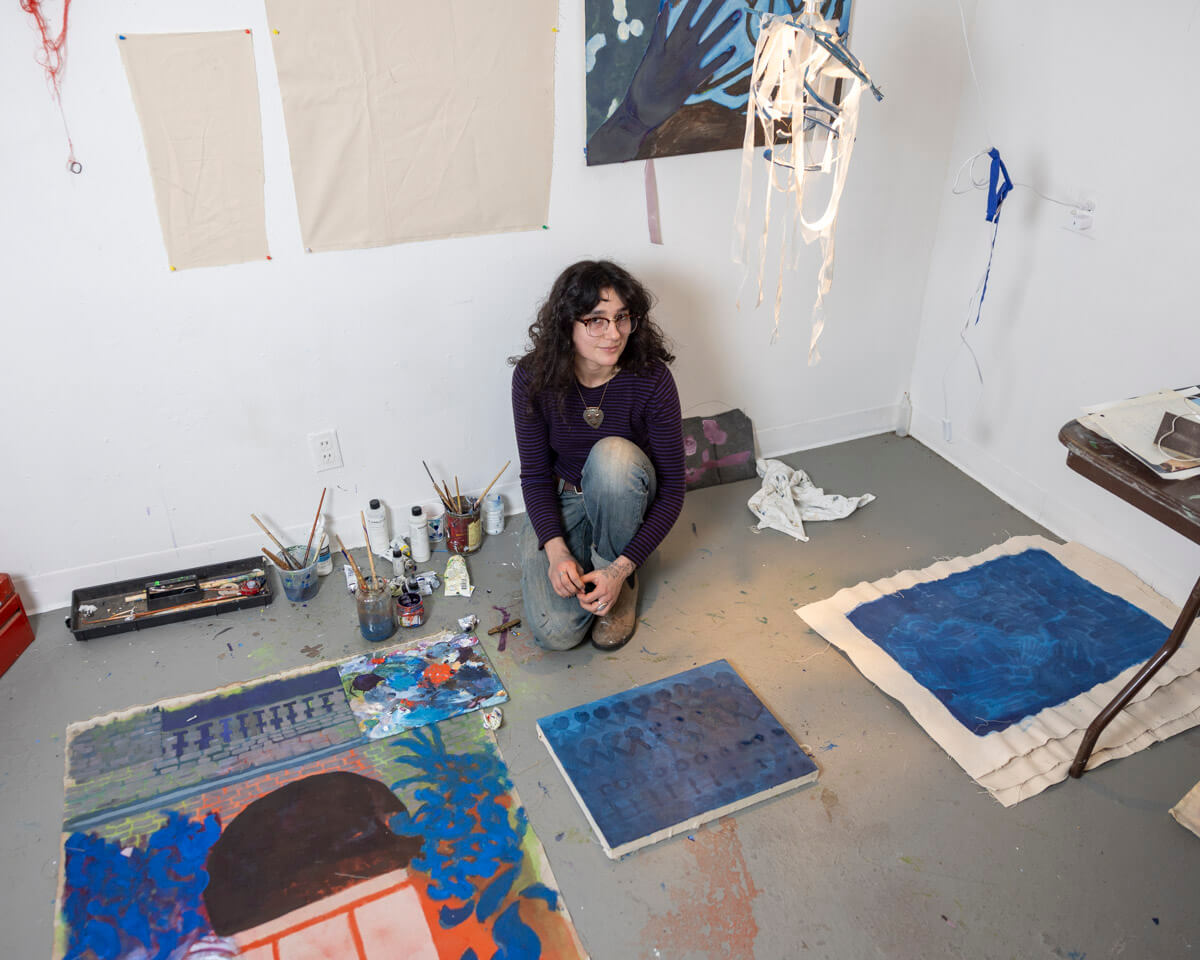
Nazanin Ashorzadeh
I am a multimedia artist working across painting, sculpture and photography to conjure the complexities of romantic and familial love. Born as a first-generation Iranian American, my practice explores the realities of womanhood and cultural diaspora by focusing on expressing the ideas of failed love and obsession. I aim to merge these concepts through the physical connection of steel and canvas. My acrylic paintings allow the fusion of steel to be an unlikely connection that represents a string which tethers nostalgia and romance to experiences recorded through memory and photographs. Whether large-scale acrylic paintings or small steel renditions of keepsakes, the goal of these works is to stir a discussion around the unintentional shortcomings of our loved ones and our willingness to treasure that which is in the past.
Raffell Bailey
I am a multimedia artist. My practice is rooted in the belief that personal growth is a continuous dialogue between the mind and the body. I am deeply interested in how discipline, self-awareness, and lived experience shape an individual over time, gradually molding identity through both intention and endurance. Through my art, I explore transformation not as a fixed destination, but as an ongoing practice. Each piece embodies moments of strain, balance, and adaptation, reflecting how the body strengthens through repetition and how the mind evolves through reflection. The textures, marks, and structural compositions within my work act as visual records of this process. They capture both control and vulnerability—the tension between stability and uncertainty that accompanies meaningful change.
Tomas Benincasa Reade
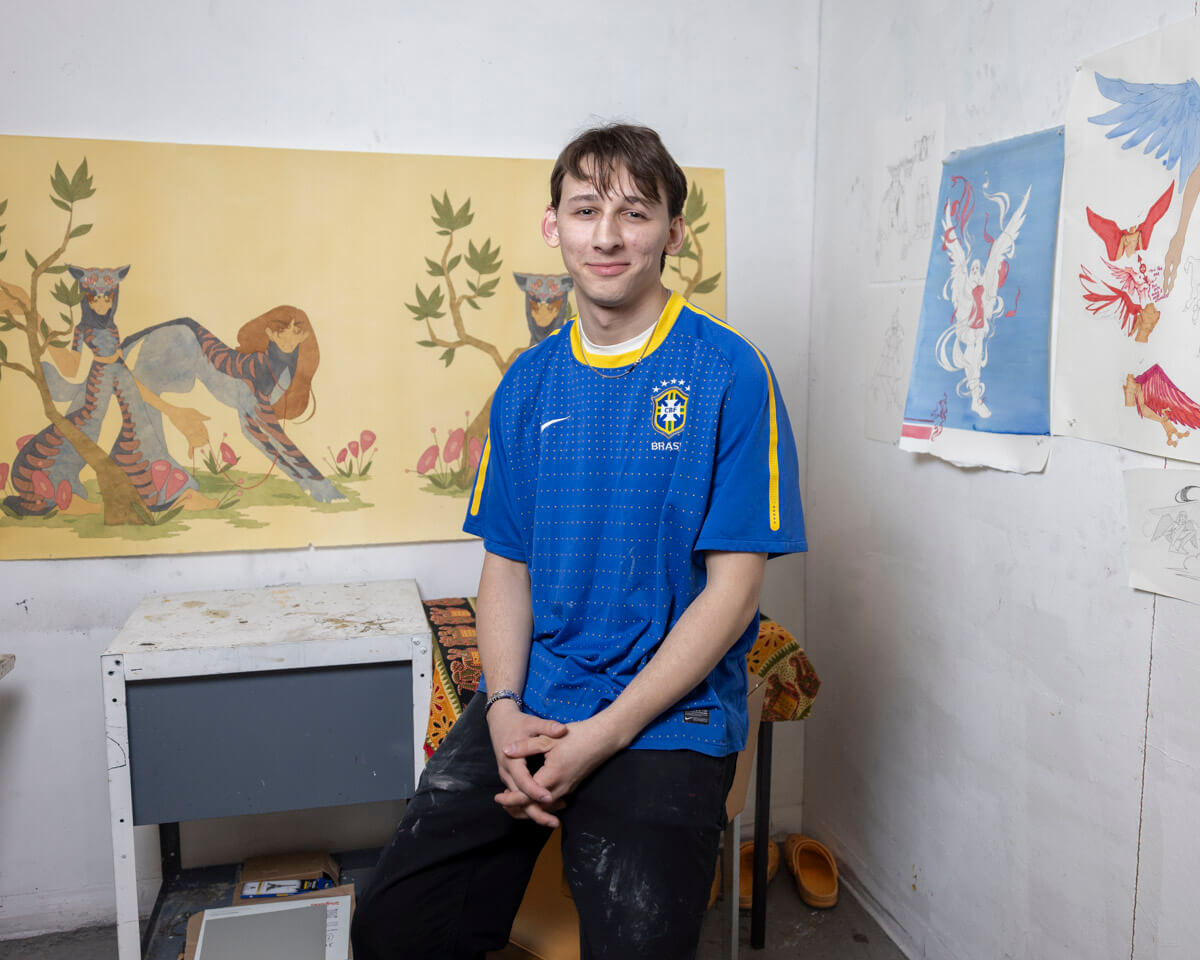
I am a painter and draftsman. I see each artwork I create as a window into an imagined world, and thus I define my general practice as world building. My world building is informed by artists like Moebius, Hieronymus Bosch, or James Jean. These artists create works that are both otherworldly and unmistakably their own.
My art style is informed by my upbringing and heritage. I am a first-generation American with two Brazilian parents, and I was born and raised in New York City. Both cultures—whether it be the untamed nature and color of Rio de Janeiro, or the endless array of cultures and personalities in New York City—are brimming with energy. My artworks are similarly maximalist. When I create, I ensure that every inch of canvas is imbued with rich color, every ounce of paint is applied in an equally delicate manner, and every stroke is made with intention.
As such, my work draws upon the various types of art to which I was exposed throughout my life. It features the color saturation and defined forms found in Brazilian graffiti. It has the same simplified dimension seen in the Mayan, Egyptian, and Medieval Western European art I saw while exploring the Metropolitan Museum as a child. The warped physical proportions are reminiscent of the classic American animation style I grew up watching in cartoons. By grounding my art in these myriad influences, I create subjects that feel completely unique, yet vaguely familiar to the audience. While my artworks feel otherworldly and vast, the stories told within each piece are extremely intimate. Each piece focuses on a single person, relationship, or place. By rooting my work in real stories, I have the freedom to manipulate any aspect of my world without sacrificing the relatability of its message.
My own visual language is carefully designed to help viewers to investigate my imagined world. My painting technique revolves around a rather unorthodox layering of watercolor paint. By using meticulous glazes of paint atop vast washes of color, I create palettes that are both rich and delicate. By combining that with application with rounded forms, my works adopt a gentle, comforting atmosphere that is easy to explore.
David Cespedes
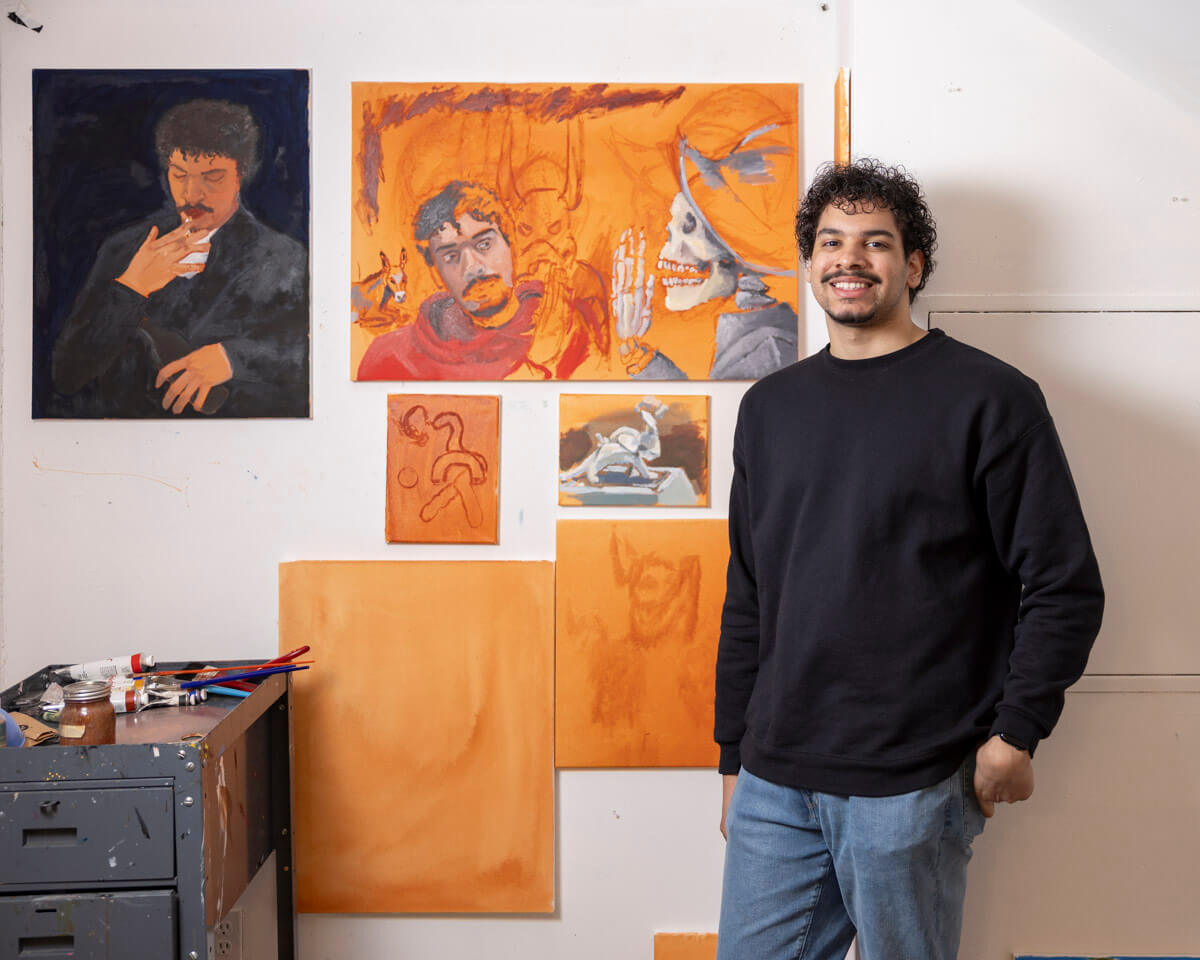
My focus in my art currently has been the issues of colorism and self-identity in the Dominican community. It’s been a creative process where I’ve been using a lot of symbolism— where I’ve been pointing out certain aspects of these ideas of colorism that I’ve witnessed and tackling the root of these ideas. I use masks in these paintings to reveal the subjects’ true lineage and to not shy away from them, although the subject may participate in the realm of colorism. Although masks are usually shown as someone hiding their true identity and performing another, I do the opposite.
My artworks also identify where this idea comes from. I would usually show a skeleton wearing a Spanish conquistador armor set to essentially display what this idea is rooted in and also display that these old ideas still exist—and with that in mind, I create pieces rejecting that idea. As a person coming from a Dominican background, I’ve always wanted to shine some light on this topic. I do believe that it is important to talk about this topic in various ways and I believe that by painting these figures of colorism being rejected in these works, by adding a creative expression to a serious topic, it helps elevate the conversation. When it comes to self-identity, it is a more personal side that shows in my artwork because it has to deal with a lifelong battle of acknowledging your lineage and what group you belong to in the Hispanic/Latino community—whether you refer to yourself as an Afro-Latino, Mestizo, someone of mixed race, etc. These works are more inclined toward how it felt, and being experimental about how I felt, in those moments in time of being confused about the idea of having to identify yourself as a particular group, other than being Dominican.
Melissa Cosentino
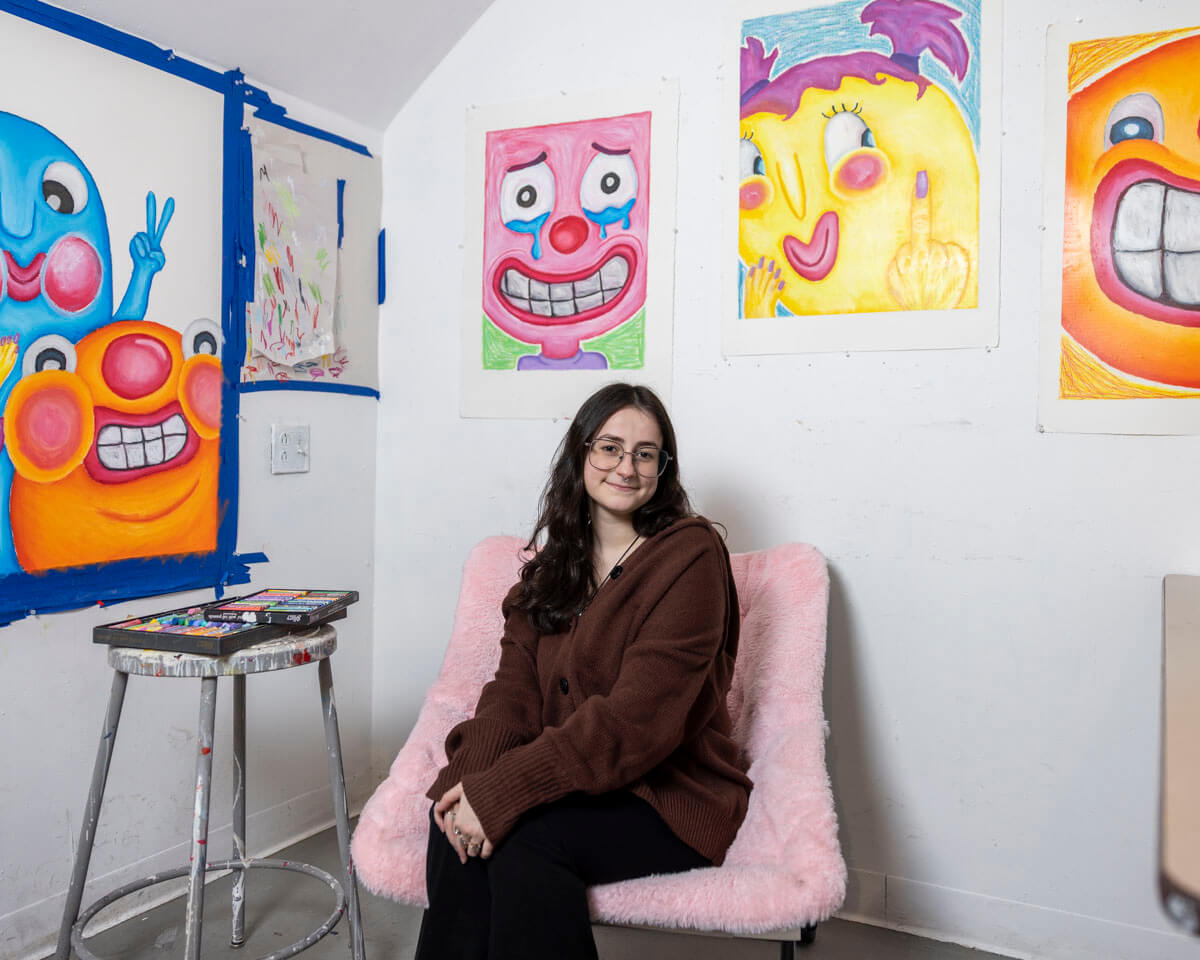
As a visual artist working with paper and oil pastels, I create work that is an honest yet playful defiance of the rigid expectations artists often hold themselves to, to make “perfect” art deemed worthy by others. I see my characters as a microcosm of my internal world—they are their own independent beings, yet are simultaneously reflections of my stream of consciousness. They act as a visual diary for my ongoing journey to break away from my harsh inner standards of worthiness; rediscovering art as an act of self-fulfillment rather than a source of external validation. My pieces are authentically and unapologetically themselves, with purposeful marks and imperfections visible as evidence of intention rather than of inadequacy. Through my artistic exploration, I seek to use my vulnerability as a source of strength, to reclaim creation as an act of self-acceptance rather than self-judgement, and to show that worthiness is our own to define.
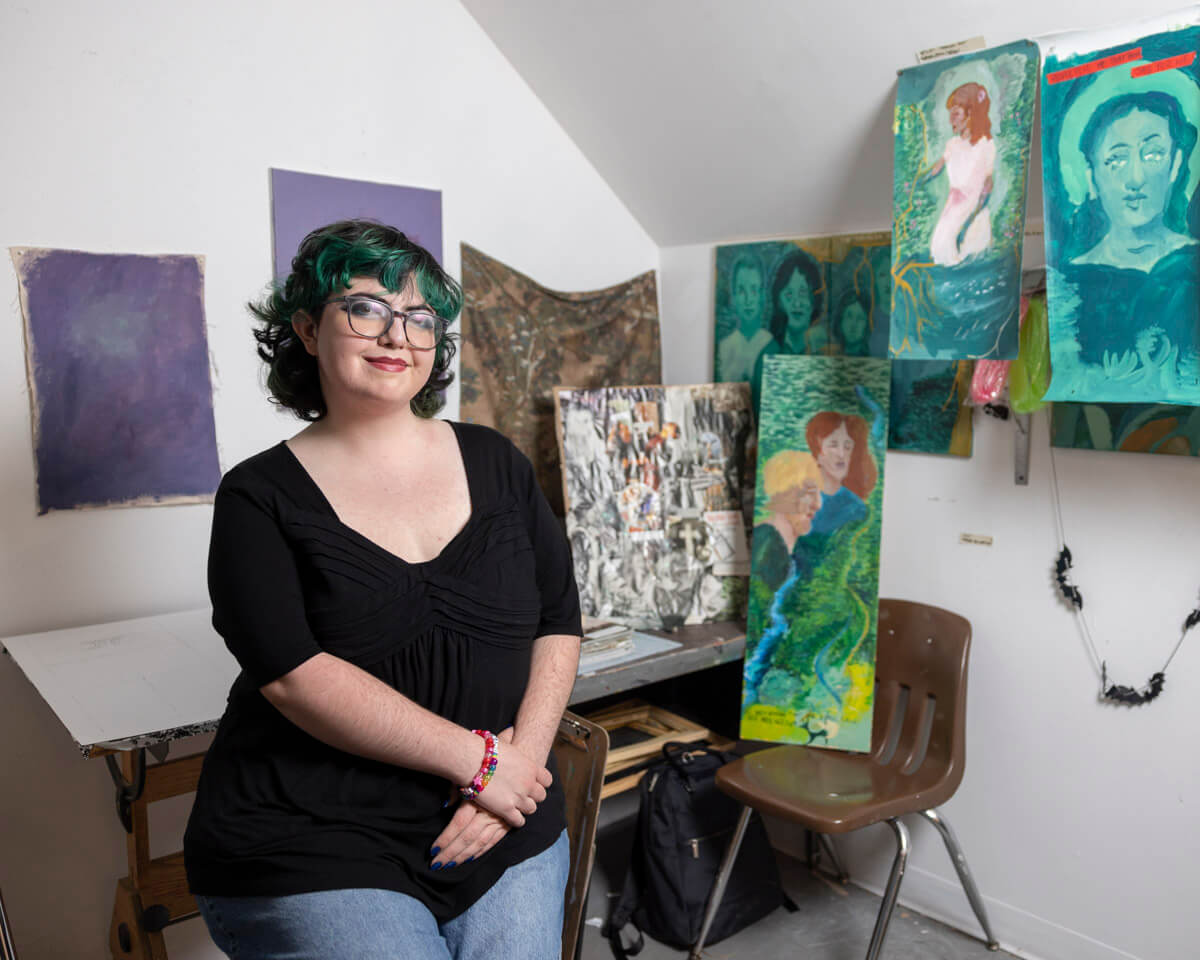
Mars Harris
Every day, thousands of items are discarded without the thought of being reused. I have made it my mission in my art practice to be as resourceful as possible. I utilize found materials such as magazines, cardboard, old canvases, and fabric. A huge part of everything that I do revolves around reusing and repurposing items that most people would ignore or even throw out. Art to me is about experience and experimentation, about expressing my joy and my fear, about living with the objects around me and finding a way to make something out of nothing. Due to this, my work takes form across many different mediums, from charcoal drawings to paintings, from paintings to sculptures made from scraps and newspaper.
My art also revolves around themes of connection, mental health, and growing up in a complex environment. The main focus of my work has been a series of works that follow a mother and daughter, Connor and Jen, over the course of their lives and through the struggle between Connor and her mental illness and drug addiction. There is a large range of emotions that come with a parent being addicted to drugs, and I hope to show that through my paintings. My goal is not to demonize those who are addicted to drugs, nor is it to exploit the themes of addiction, but it is to show the way that addiction affects a whole family, not just the person who is trapped in that cycle. These characters have grown up beside me, developed as I have, and have helped me through things that most people in my life haven’t heard the details about.
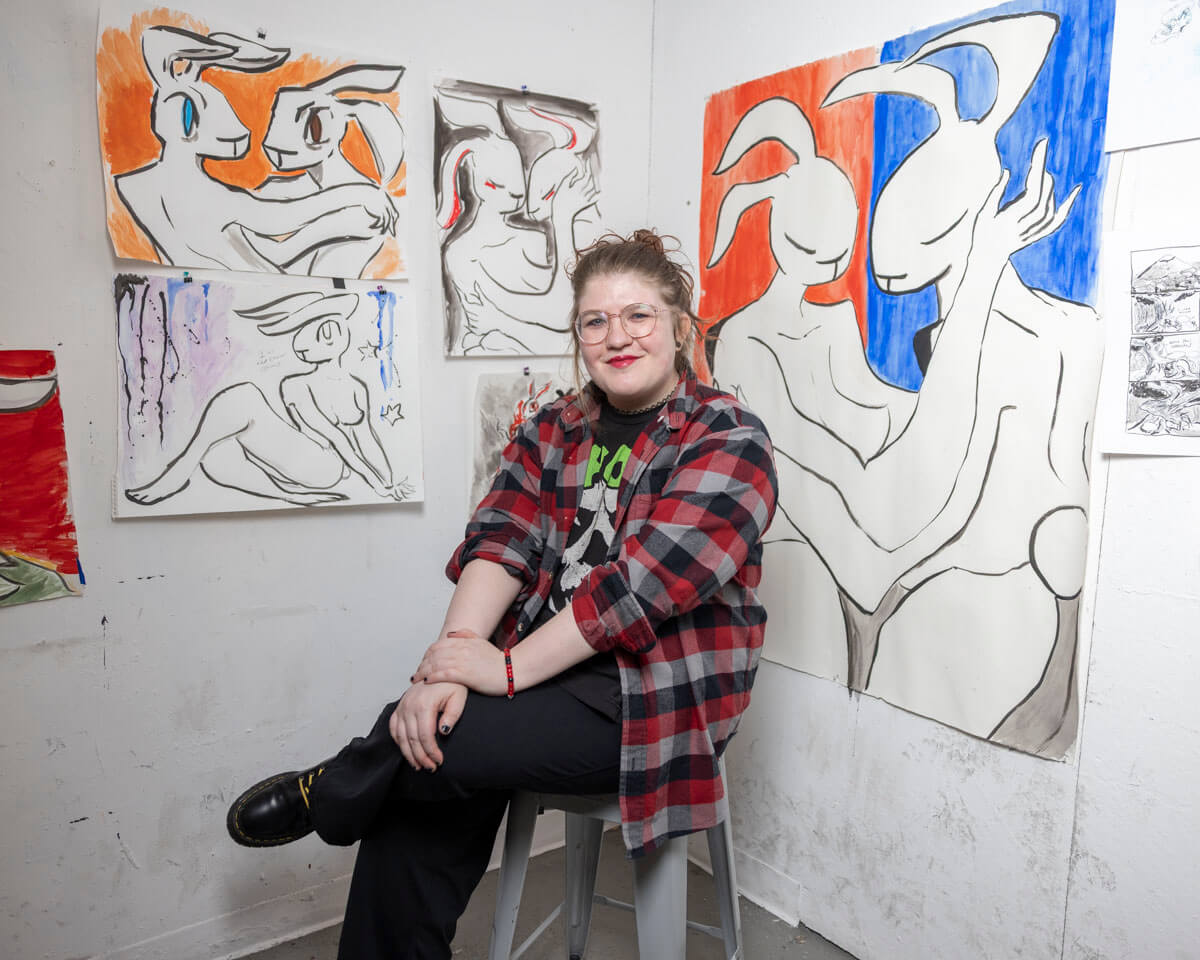
Shira “Adora” Kenny
I am an artist who aims to capture my human identity through self-reflections in gouache, ink, and watercolor combined with expressionism and comic abstraction. I think of my own art practice as an act of presence, a depiction of in-the-moment ideas and purpose through fast mark making and sporadic color. I find the most satisfaction in life through creating tangible works of art and feeding into my own fascination with the body and what it means to be present.
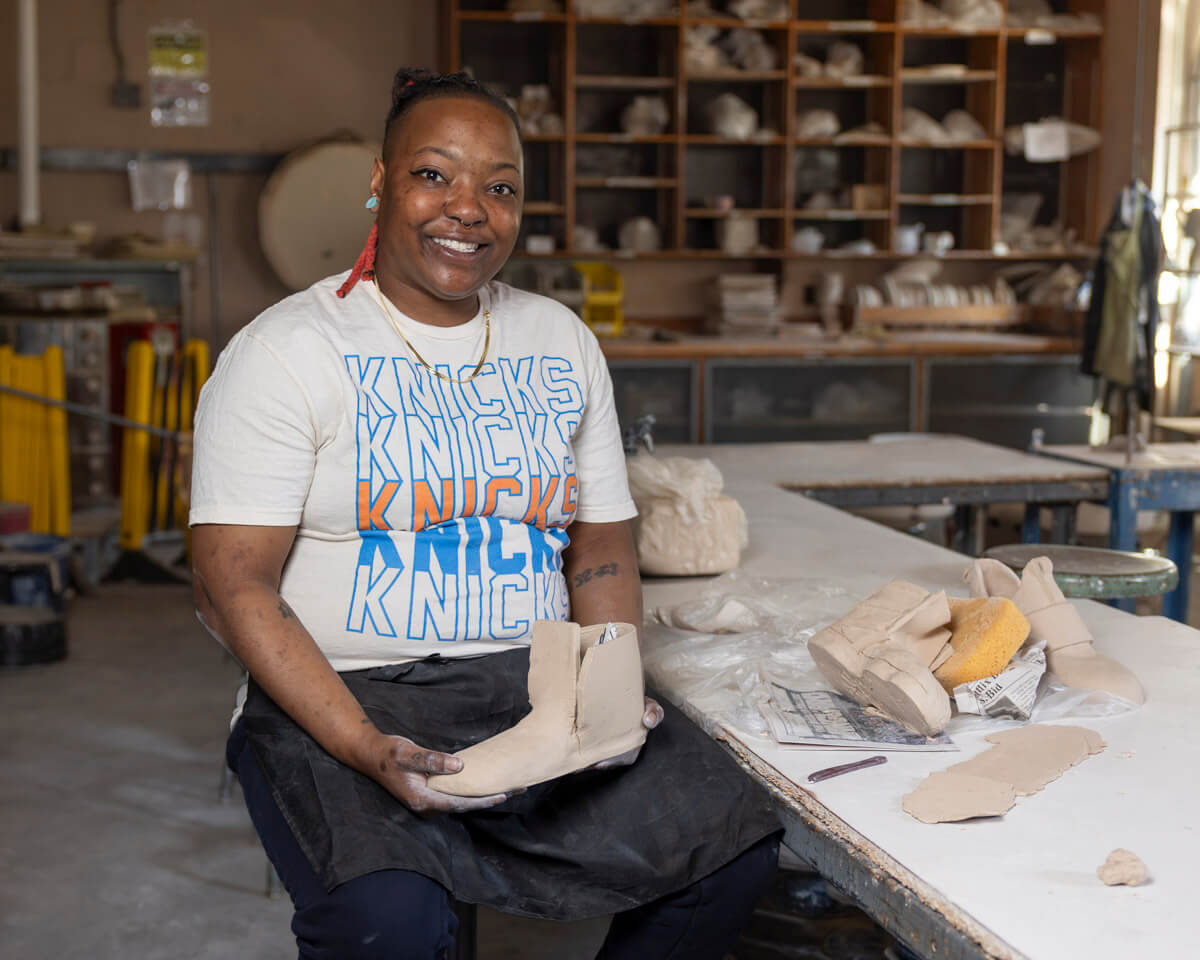
Kisha Landais
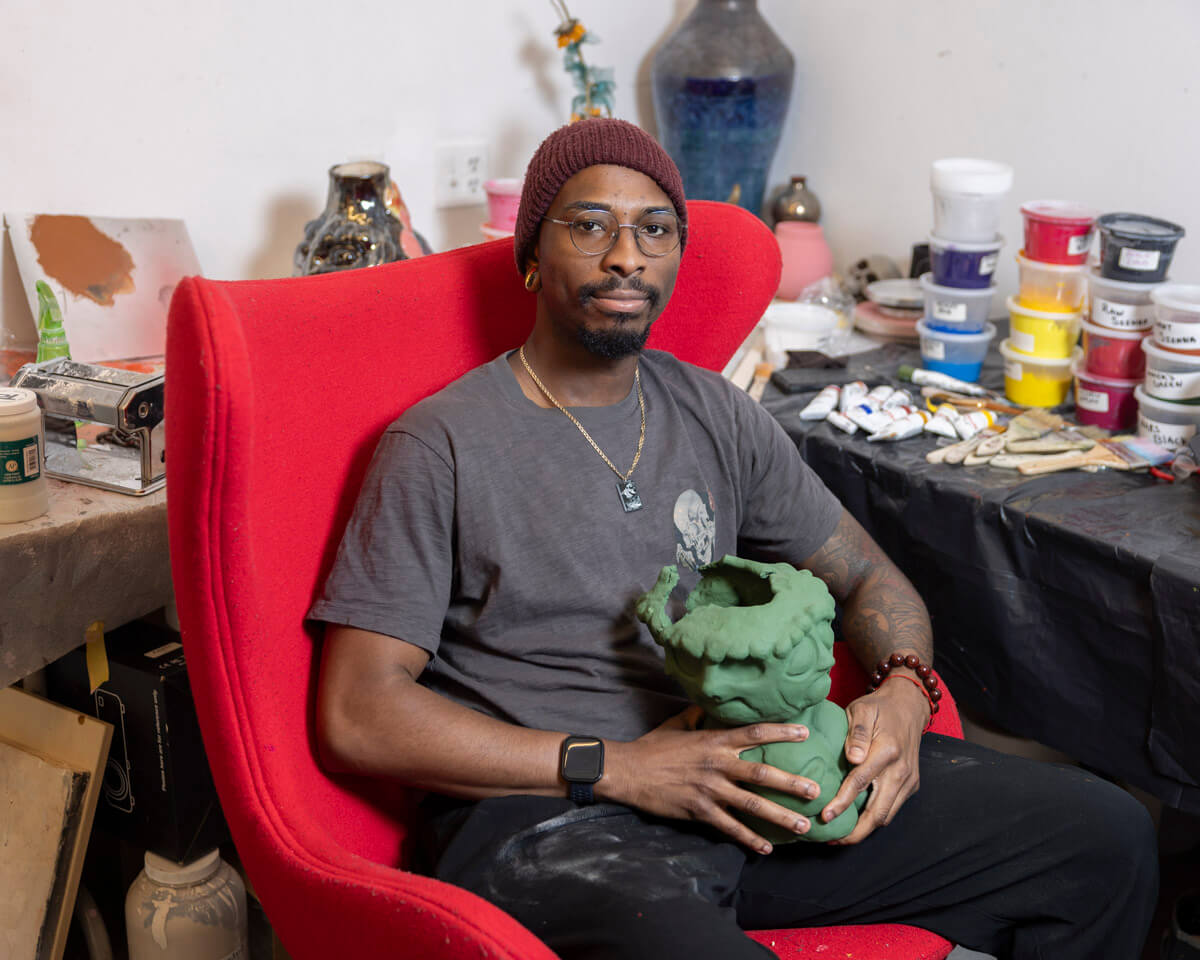
As a Black non-binary artist who finds community development and belonging through craft, I especially value clay. It’s a medium that always grounds my practice and body. As I’m using clay as a therapeutic practice, I feel this connection to the earth and the communities that I deeply care about nurturing. Slowing down, listening, and building relationships is what clay allows me to do. The sense of safety and familiarity is an invitation for viewers to use clay themselves through repetitions of patterns, shapes, textures, and colors. My vessels and sculptures are an open gesture to encourage others to imagine themselves working with clay, reconnect with their hands, find their own moments of grounding and belonging, as it’s a place of connections.
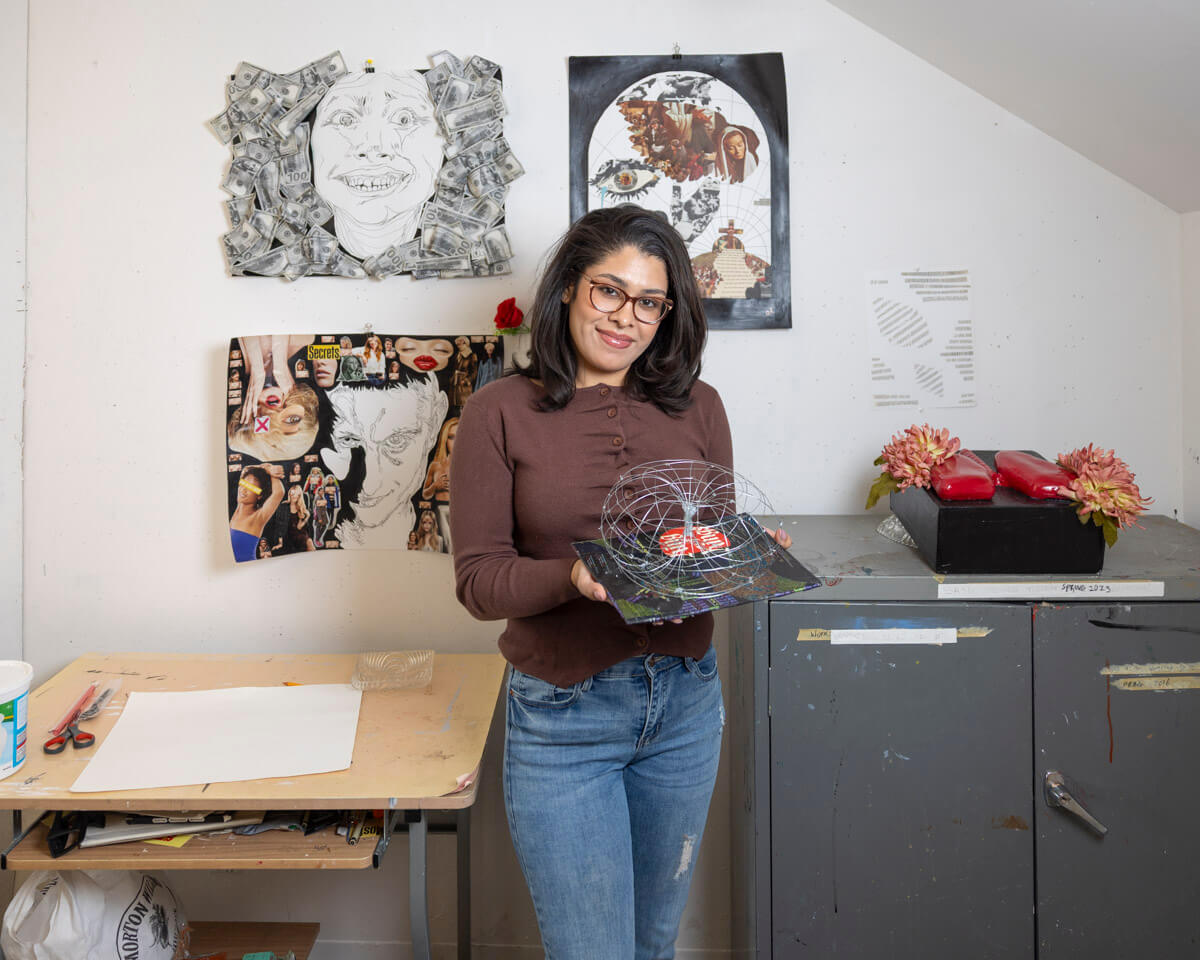
Ashley Lord
My work explores the human experience as a journey toward holiness, navigating the temptations that can hinder spiritual growth. This collection presents a spiritual experience, exploring the interaction between misalignment and divine guidance. Through my work, I examine moments of indulgence and temptation as part of the journey, while showing that God’s presence and grace are always available.
I believe that spiritual awareness holds the potential to foster personal transformation and deepen our understanding of the world. While a relationship with the spiritual realm can sometimes feel overwhelming, exploring it is most meaningful and safest when guided by God. There are always forces that threaten our peace, joy, and identity, yet hope endures through faith. I often reflect on how I can become a better person for myself and others, and turning to scripture guides me toward honest, intentional reflection. I believe meaningful change begins within the individual, rather than hoping the world will change on its own.
This perspective influences my artistic practice, as I value how artwork can reflect an artist’s inner thoughts and emotional landscape. My work often begins as a simple visual idea, but over time, it develops into something more layered and meaningful than I first imagined. I trust the role of intuition in my creative process. I typically begin by imagining what would be visually compelling and then gather a diverse set of materials, ranging from pen, pencil, and paper to magazines, acrylic paint, air-dry clay, wire, books, and cardboard, to bring that vision to life. I welcome interpretation and find it meaningful to hear what resonates with people and what they take away from the work.
For the Redemption collage, I used images from a free library book about the production of an old Christian film called King of Kings (1961). The book included photos of actors and filming locations, which turned out to be perfect for the piece. I had been looking for free material for my next work, and I hope that, as viewers spend time with this particular piece, they continue to discover new details and meanings. In the collage, I cut and reshaped Mary into the form of an angel’s wing, symbolizing protection, hope, and divine presence. Even in times of suffering, doubt, or confusion, guidance is always present.
The collage with the woman and money falling around her is meant to depict her desperation and the moment where someone wants more than what they need. Focusing on what you lack rather than what you have can be destructive. The collage with the man and suggestive images around him serves as a sibling portrait, portraying lust. He’s an extension of the moral tension explored in the collection. I hope viewers find it relatable, whether through their own experiences or personal observations. In a way, he mirrors my own experiences as a woman encountering social advances, just as the piece about greed reflects the lure of excess. Together, these works explore temptation and the ways such impulses can challenge the pursuit of a spiritually mindful life.
These pieces are intended to capture moments of reflection, providing space to consider human impulses, choices, and perhaps their relationship with God and the world. Overall, the collection serves as a meditation on the human experience, offering awareness of the state of the world while affirming the enduring presence of God and His encompassing love.
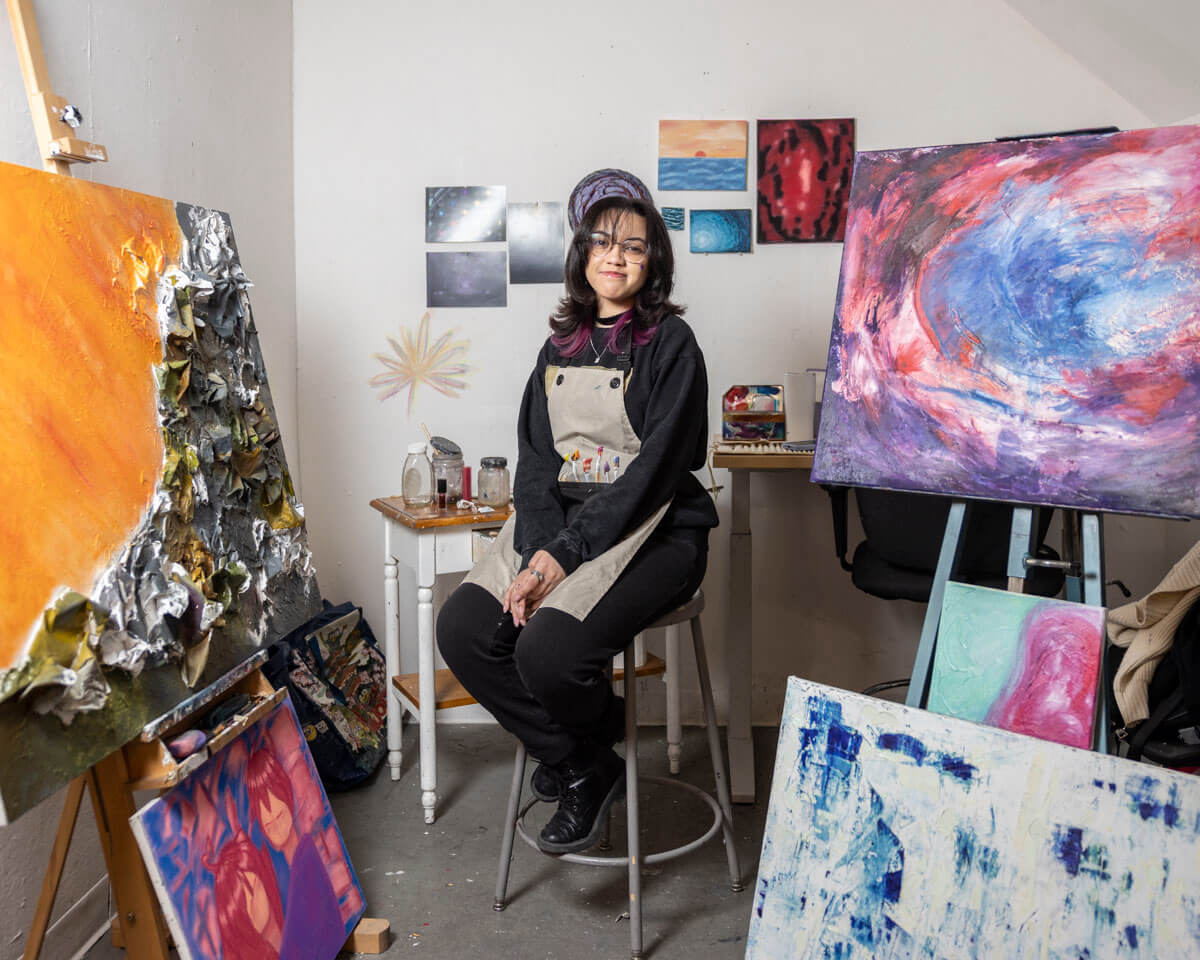
Brithanie Lugo
When words aren’t enough, sometimes art is. The warmth of a sunrise, the unnoticed sorrow, or the quiet moments no one else sees. I strive to capture fleeting moments through illustrations and paintings, experimenting with light, color, and form. My instincts guide my hands, helping me turn what I see and feel into something palpable to others; through abstract pieces or detailed ones, exploring ideas and emotions that are difficult to express with words. The process of creating also forces me to address every feeling and thought that comes from it. A constant cry demanding to be seen. My work invites conversation—occasions where I can share private moments and what matters most to me: my emotions, my perspective, my faith in Jesus Christ and the journey He’s taken me on throughout my life. My creative work allows me to bring those thoughts to life and share them with others.
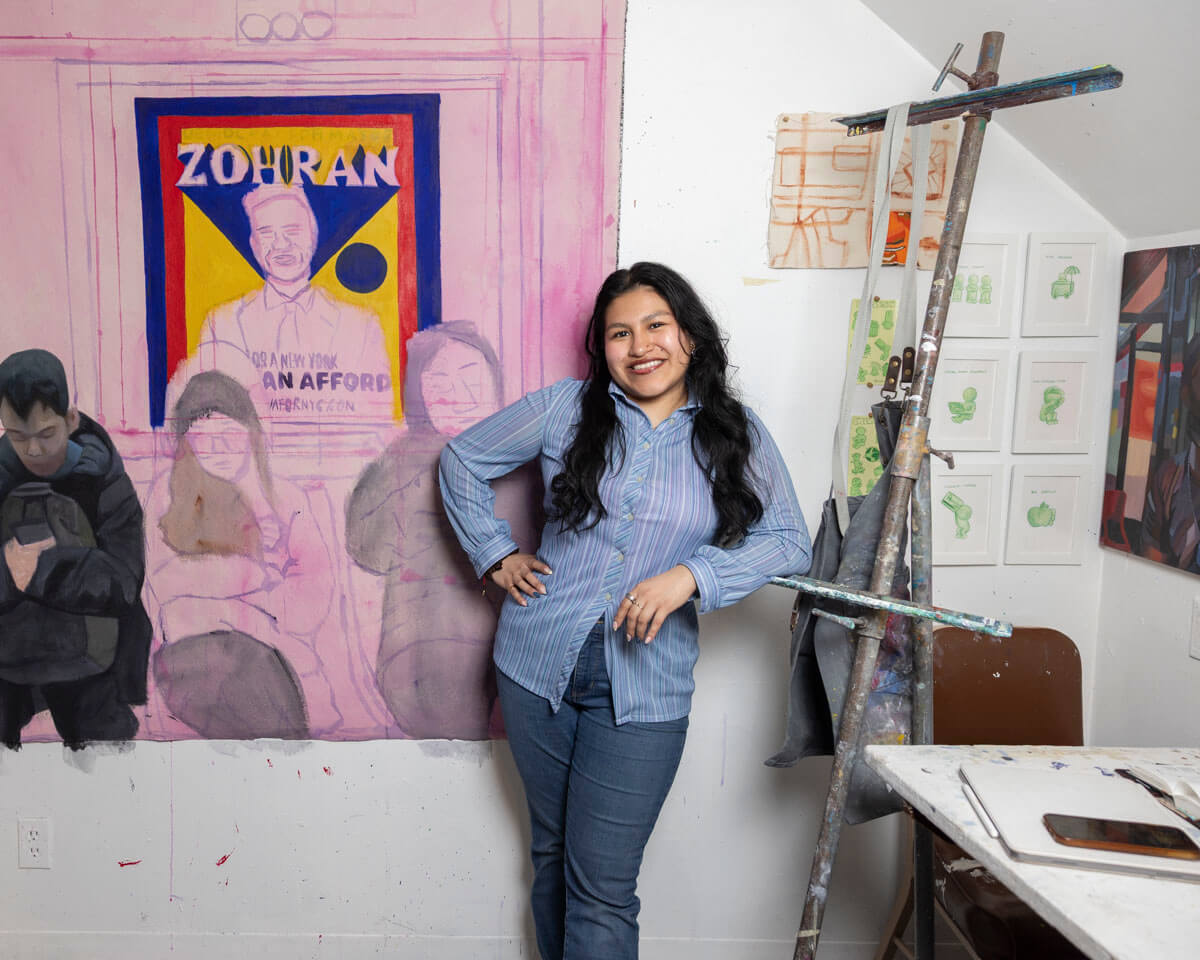
Samantha Martinez
Samantha Martinez is a multimedia artist creating from the nostalgia of her home and memories. Born and raised in New York City in a very immigrant community, she has found herself surrounded by her Mexican roots all her life. Painting became a big part of her creative practice, especially in college through taking an oil painting course and being pushed to create her first 5-foot painting. Her ideas came naturally through themes and prompts she was given but outside of that she was always creating on her own. Her Mexican culture and connection to New York City fueled her ideas in many ways. Many pieces started off through childhood photographs and nostalgia. Others are based on loved ones and memories. Now a mix of it all is in 6-foot paintings as a love letter to her view on New York City.
The thesis is composed of acrylic paintings on raw canvas, hung from the ceiling to create an installation—recreating the illusion of being on the train with the addition of recordings from train travels. Each panel tells its own story. One is her love story. Her first long-term relationship and support system for the past four years as their intimacy is shown in closeness and eye contact. Two, an ode to her CUNY education and current-day politics with a campaign poster and CUNY ad. Three, an homage to immigrants of New York City and the damaging government use of ICE in the country. Four, a family portrait celebrating her Mexican heritage and close familial relation.
Her father, Jesus Martinez, was always known to be the source of her creative being and spirit—a man who worked hard to provide his family with everything he did not have as a child, such as a home where a family could simply eat together as one. He brought her up to use her hands in crafts such as making pinatas or holiday decor for the home. Paper, glue, and scissors were the basis of all their projects. It was not until high school that she started to paint and experiment with a diverse number of mediums, one of those being video and editing. Her passion for video came from film and online media. As an addition to the installation, short videos have been created as an attachment to each panel, telling the story of how each panel was conceptualized and created.
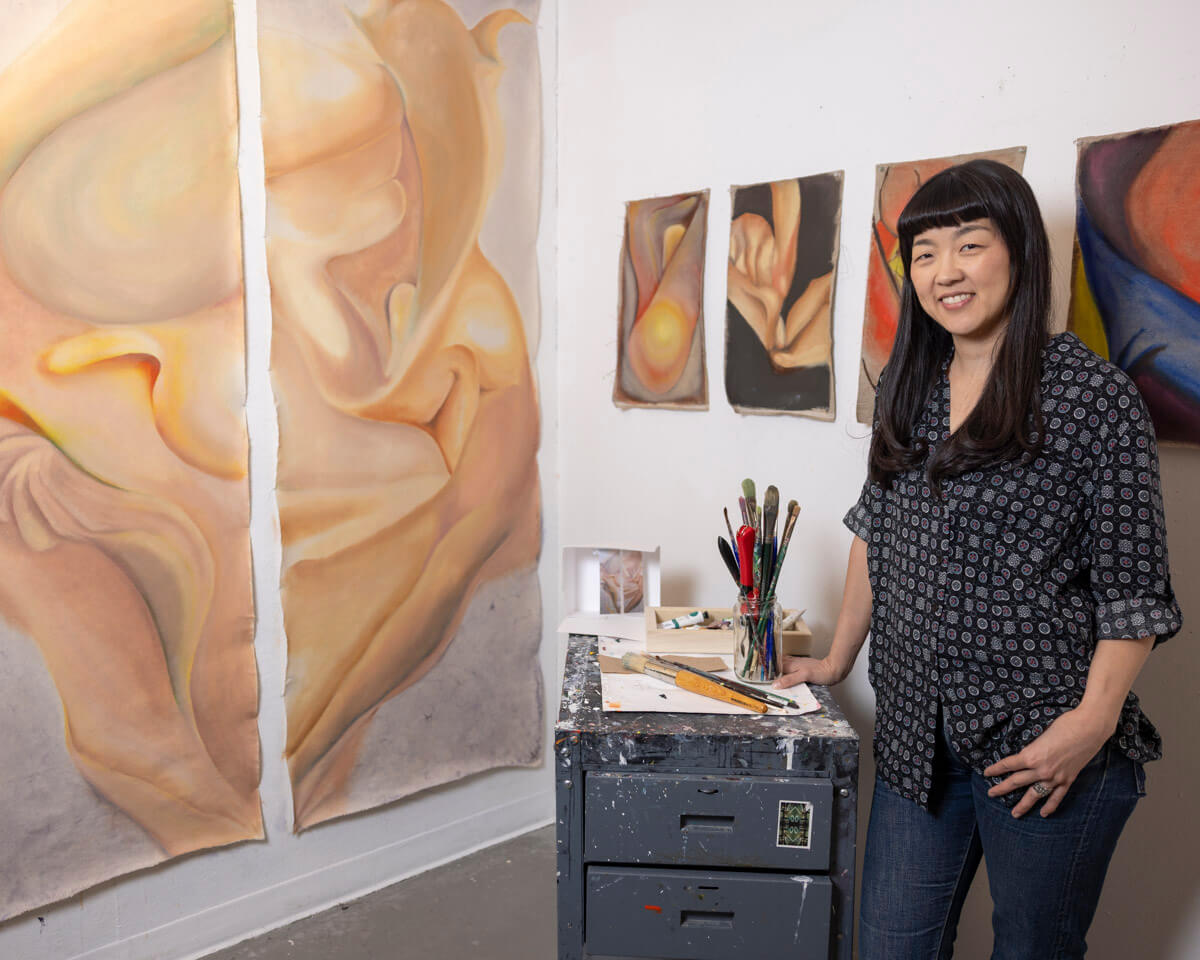
Hideka Minami
Painting is primarily used to further the discussion of how care moves through repetition and depends on the systems it operates within. Exploring the space of care that isn’t performative but rather repetitive, mundane, and habitual, it is practiced quietly, unnoticed, over time. Through delayed recognition, the past begins to reorganize itself. Actions that once appeared unified shift and fragment, taking on different forms of significance. Using the medium as a language model, it aids and dictates my visual storytelling. The work inhabits the space where recognition arrives, revealing the fragility of the structures we operate in.
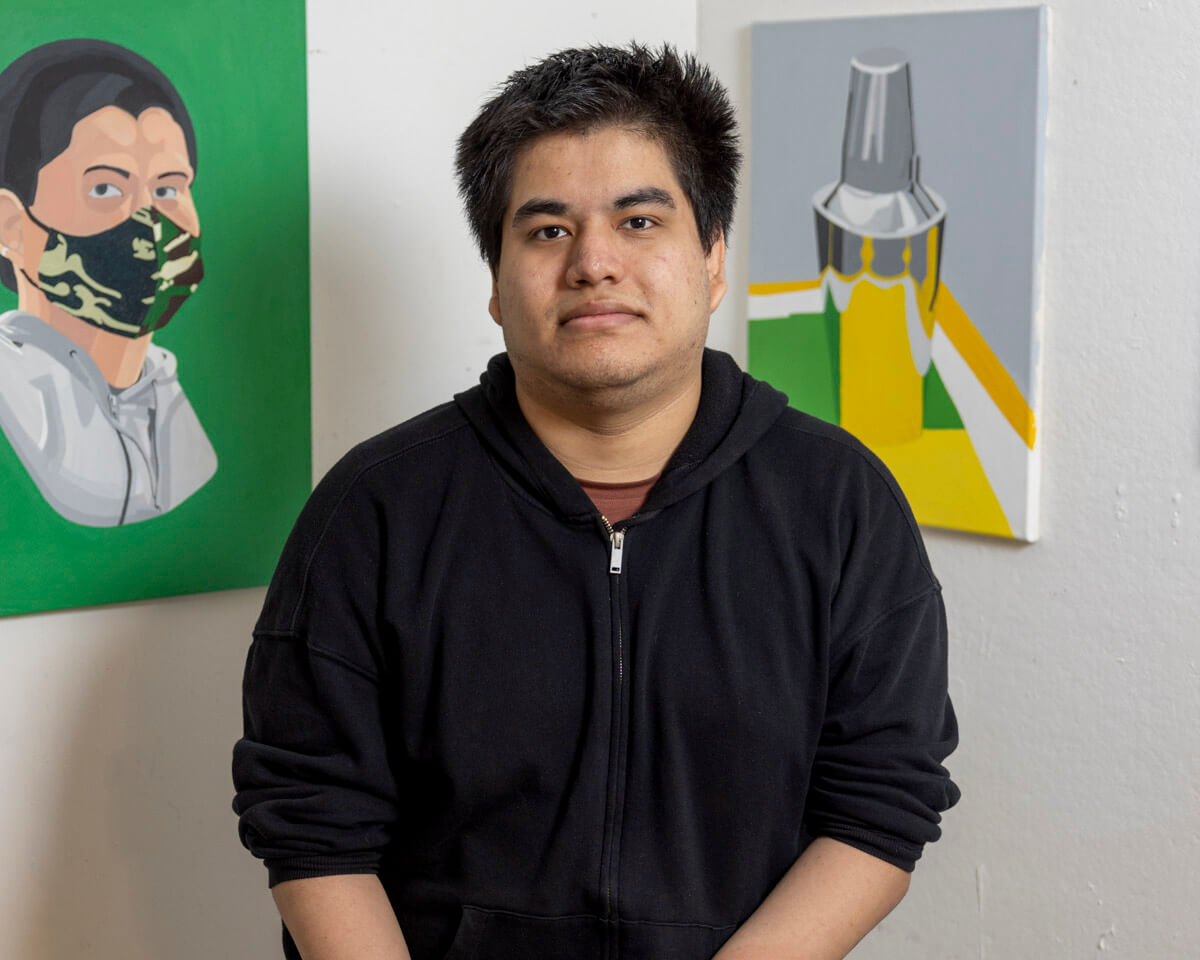
Kevin Molina
Through the means of multimedia and experimentation, I explore a variety of topics—such as icons, my culture, and political issues. I’m influenced by different art periods and the usage of photography to incorporate into my works, to create new objects through storytelling. The mediums and subjects I explore are repeated throughout my works, referencing my past pieces to create new ones and deepening the meanings of the works when approaching from a new angle.
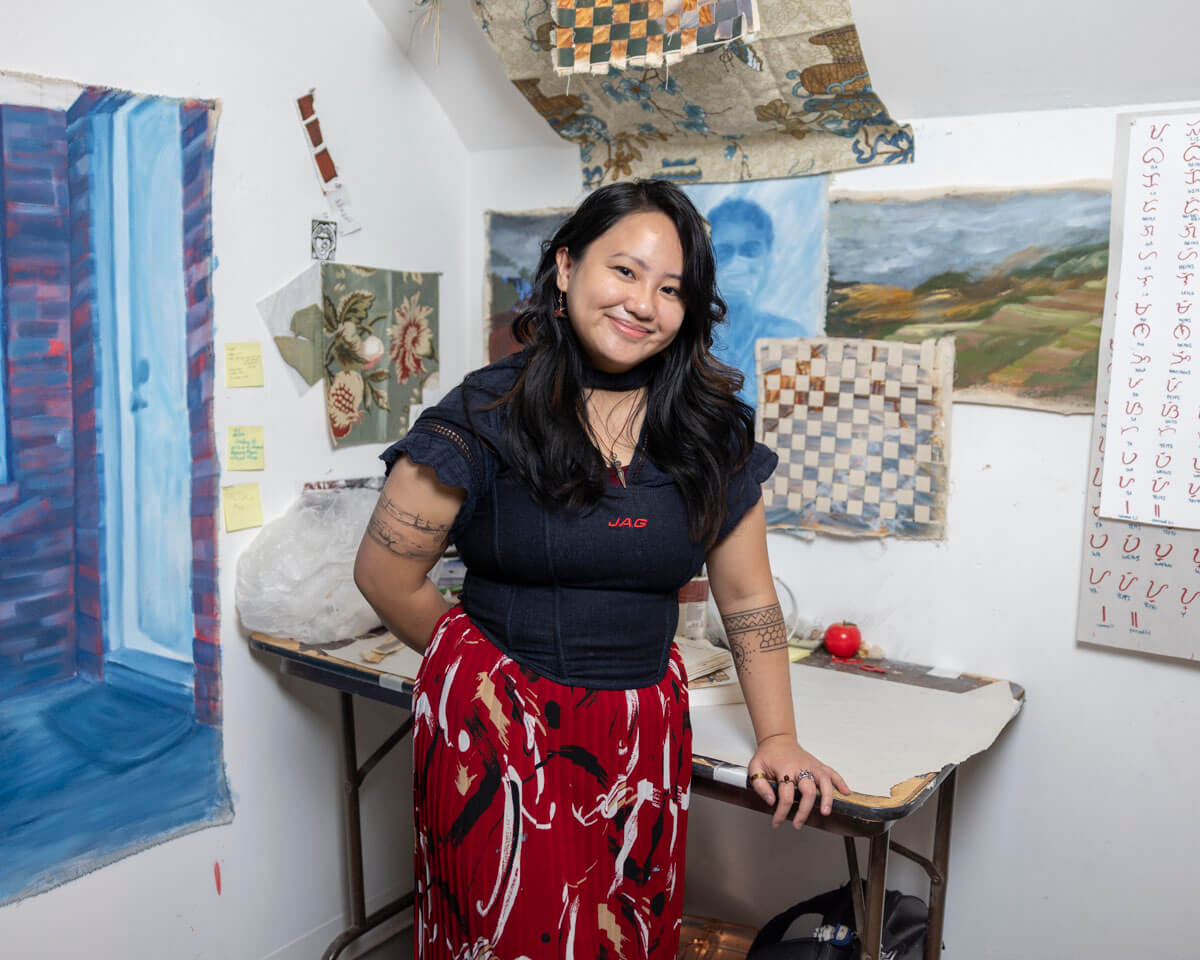
Xinia Okoren
Through oil paints and printmaking, I visualize my experience of acculturation and the idea of home. Utilizing the time and repetition required for these media allows me the space for introspection within the composition. Sifting through memories, I navigate the nuances of nostalgia and the following emotions to create a tangible image of how I reconstruct my life within the country I was raised in, with distinction from the one I was born in. Accepting the divergence from the expectations brought upon the firstborn daughter of an immigrant family, these works resolve the internal conflict that came from such fragmented worlds into intricate textures woven together between the cultures that raised me.
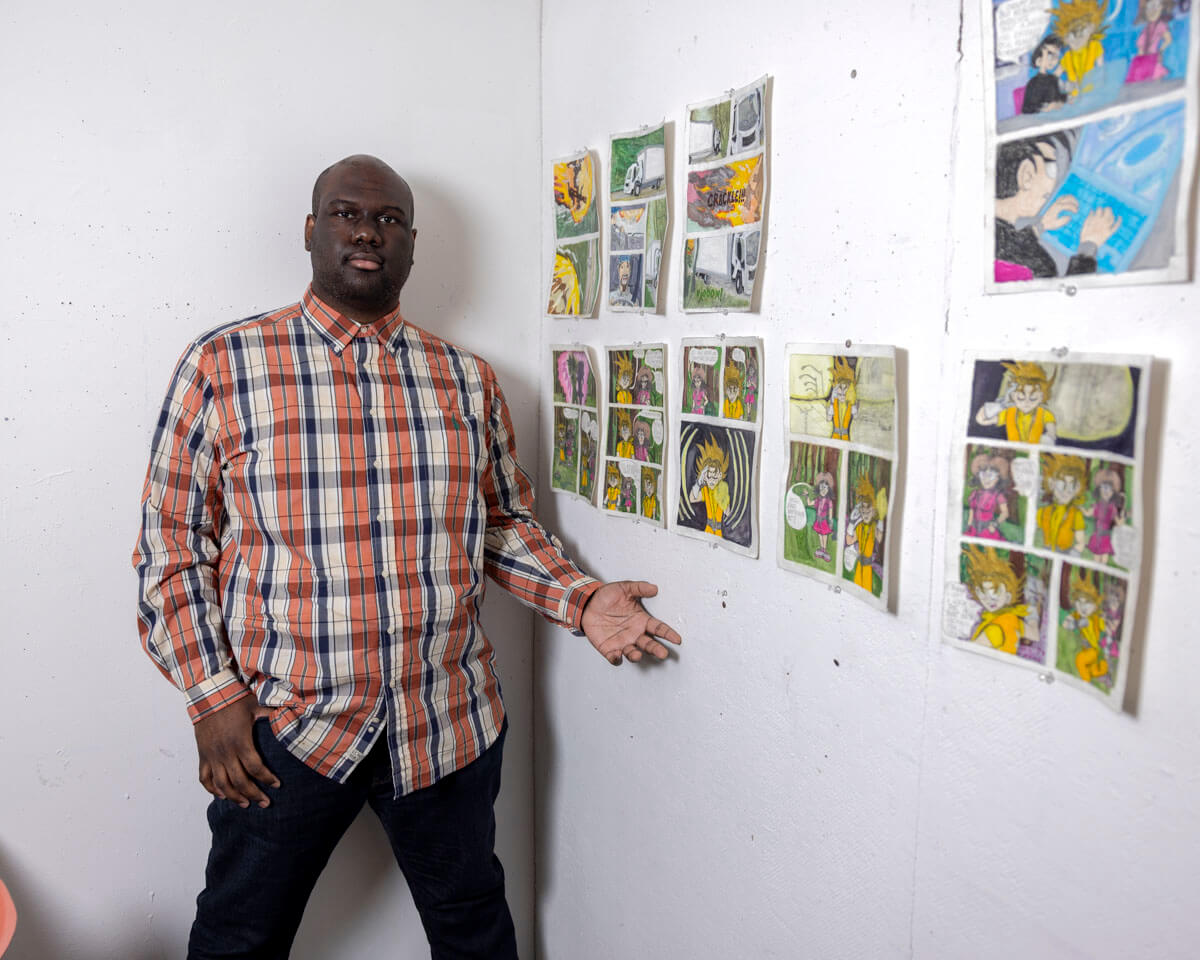
Maliq Ruffin
The work that is being created is a comic book project idea. What sparked this idea was my motivation for drawing fictional characters. This is due to my fondness for animation as it has always inspired me to do art. Originally, I thought about becoming an animator and I would always draw fictional characters from existing media that I liked growing up.
The materials used for this project involve watercolor paint and pencils, mixed media paper, graphite pencils, stumps, color pencils, markers, and sometimes crayons. The process of this project involved cutting out the mixed media paper as evenly as possible, creating smaller pages. The scaling for the pages is approximately 9 inches by 12 inches, but the comic panels are each different in size. I would try to cut the mixed media paper as best as possible to make each page equivalently within the same size.
This comic book idea is solely based around my original characters. During my spare free time, I like to draw these characters and put them in different scenarios. The story for my project mostly focuses on two main characters named Z (full name: Zaquary) and Q (full name: Quebella), who are the male and female protagonists of the story. Both characters will be working together to save one of their planets from an up-and-coming threat, but will also be expecting assistance from an unexpected adversary. A villainous character will be teaming up with them after his own planet is taken over by the same monstrous threat that is attacking one of Z’s and Q’s worlds. This universe has two Earths, with one being the original and the other planet under a different name.
In regards to the different settings throughout the story, I would use still-life images from online as references for my work, in order to convey some realistic expectations when it came to incorporating trees, vehicles, roadways, and other elements into backgrounds.
Many of the color choices for certain backgrounds were sometimes based off of the image references that I used. However, in terms of the characters of the project, most of the color choices and designs of them are based on my original ideals.
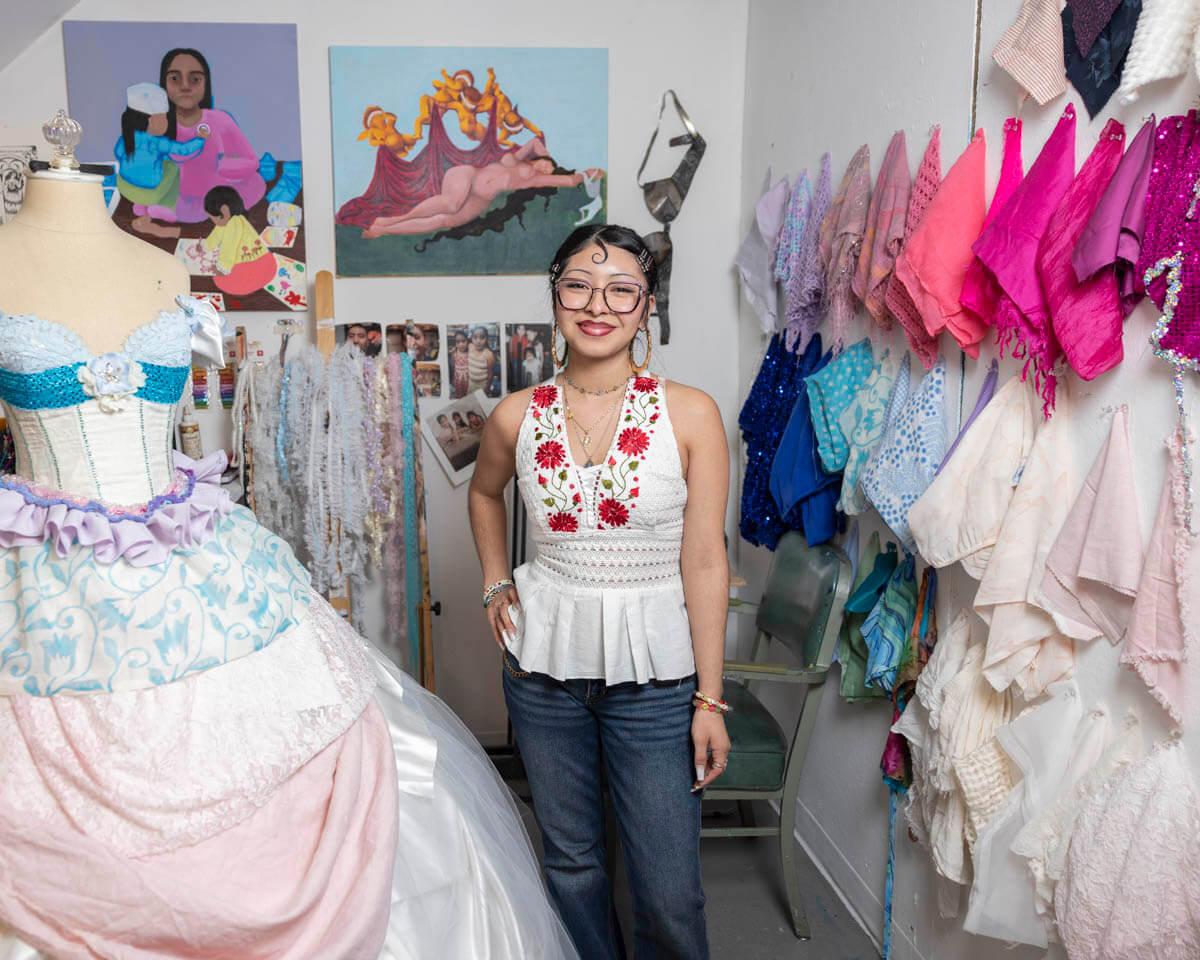
Melissa Sanchez Cabanas
As a multidisciplinary artist, I create my artwork using various mediums, ranging across painting, screen printing, ceramics, fabric, and textile manipulation to create sculptural pieces. In the process of making my work, I use recycled fabric and materials to keep it sustainable and encourage this practice among others, communicating that art is accessible and relatable. Using anything, including old T-shirts, knitted scarfs, bed sheets, lace, sequin fabric, and discarded clothing scraps, I arrange my work to create a balance between texture and colors that complement each other, enhancing the properties of the material. Staying within the bounds of my Mexican culture, color is a prominent aspect that I focus on and portray in my work. The use of bright and striking colors in my choices of textiles also translates within my other mediums of work.
These selective mediums allow me to be and feel connected to my artwork, creating and using my hands to bring my ideas and emotions to life. Preferably working on a larger scale, I want my pieces to be relatable and to captivate viewers. Each piece created represents a part of myself and my community as a first-generation Mexican-American artist.
For my series, my parents are my biggest inspiration in my creation of art. They inspire me to pursue my abilities and raised me to grow and love my Mexican culture. Along with the beauty of the culture, there is pain and suffering deeply rooted in many generations. I wanted to highlight not only the struggles my parents faced but the dreams and experiences they have missed out on growing up—emphasizing their dreams and aspirations from a young age that have been put off and sacrificed in order to provide themselves and their children with a better life, a selfless act of love many parents wouldn’t hesitate to make.
Using textile to create a quince dress my mother never experienced and making sculptural representations of the shoes my father wore when crossing the border to the United States are some works that emotionally resonate with the majority of the Hispanic immigrant population. Bringing forward tribute to all those parents, and that thanks to their humble sacrifice and dedication to their kids, brought a new generation of grateful, hardworking, and generous people.
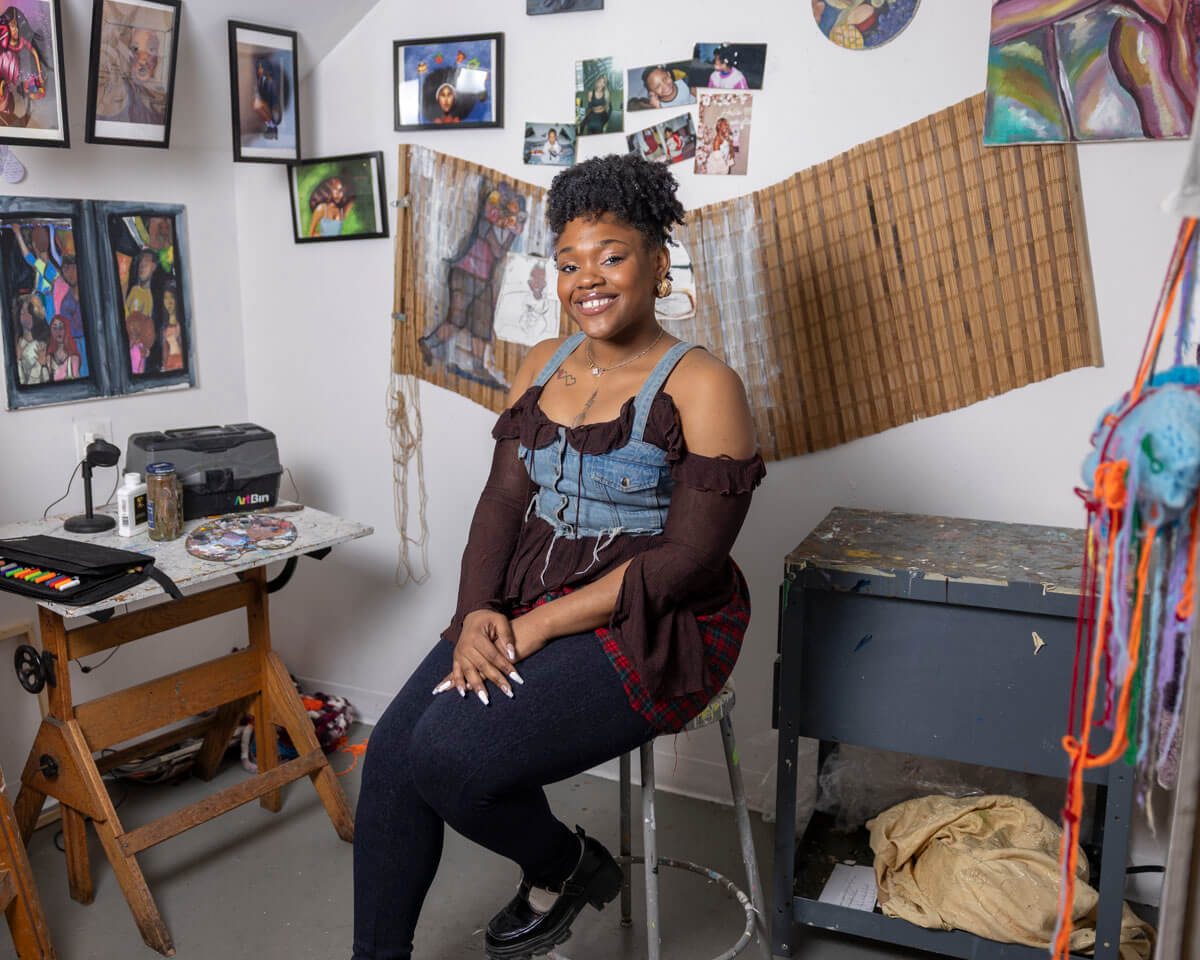
Elizabeth Sanni
I am a Haitian–Nigerian American artist born and raised in Brooklyn, New York. Growing up in an immigrant household, I was given responsibilities at a young age: caring for my younger siblings, taking them to and from school, and managing tasks such as cooking and cleaning. While these duties are often normalized within Caribbean and African households, they shaped my early understanding of care, duty, and self. As the oldest daughter in a family of five siblings, my work emerges from the lived experience of becoming what I call the Haitian–Nigerian American parentified adult, a role shaped by responsibility, cultural expectation, and emotional translation. If I were to connect a film to the experience of my family and upbringing, I would reference Crooklyn. Like the film, my work reflects the rhythms of a large, tightly knit family growing up in Brooklyn, where responsibility, humor, and care coexist. This influence appears in my work through layered compositions, interconnected forms, and multiple figures that echo sibling dynamics and shared space.
Working across oil painting, digital art, and textiles, I create layered compositions where color and form carry emotional weight. Thread-like lines bind forms across the surface, symbolizing relationships, care, and responsibility. Influenced by the vibrancy of Haitian and Yoruba visual culture, I use saturated color, patterned surfaces, and layered materials to reflect memory and cultural heritage. In one work, I reference The Breakfast Club, reimagining its iconic composition as a moment of emotional release and connection. The piece reflects vulnerability, identity, and the shared experience of being seen by those you love. In another, a wood panel painting depicts my childhood self transitioning into adulthood, beginning with myself, skateboarding into life. Titled Where Your Flowers Grow, the work explores growth, movement, and the passage of time, capturing the ongoing evolution of self within my environment and family structure.
These threads and connections represent both tension and care. They reflect the bonds within diasporic families, where community and responsibility are deeply intertwined. The act of holding, supporting, and navigating these relationships becomes central to my visual language. Rather than centering trauma, my work focuses on the balance between pressure and softness. Moments of joy, humor, and play emerge within layered compositions, reflecting the childlike energy that persists within responsibility. Ultimately, my work explores how identity is shaped through care and one’s sustainability of self. Within that exchange, something enduring is created: resilience, perspective, and quiet joy. I remain rooted in gratitude despite complexity. I am still here, navigating, becoming whole, and that is enough.
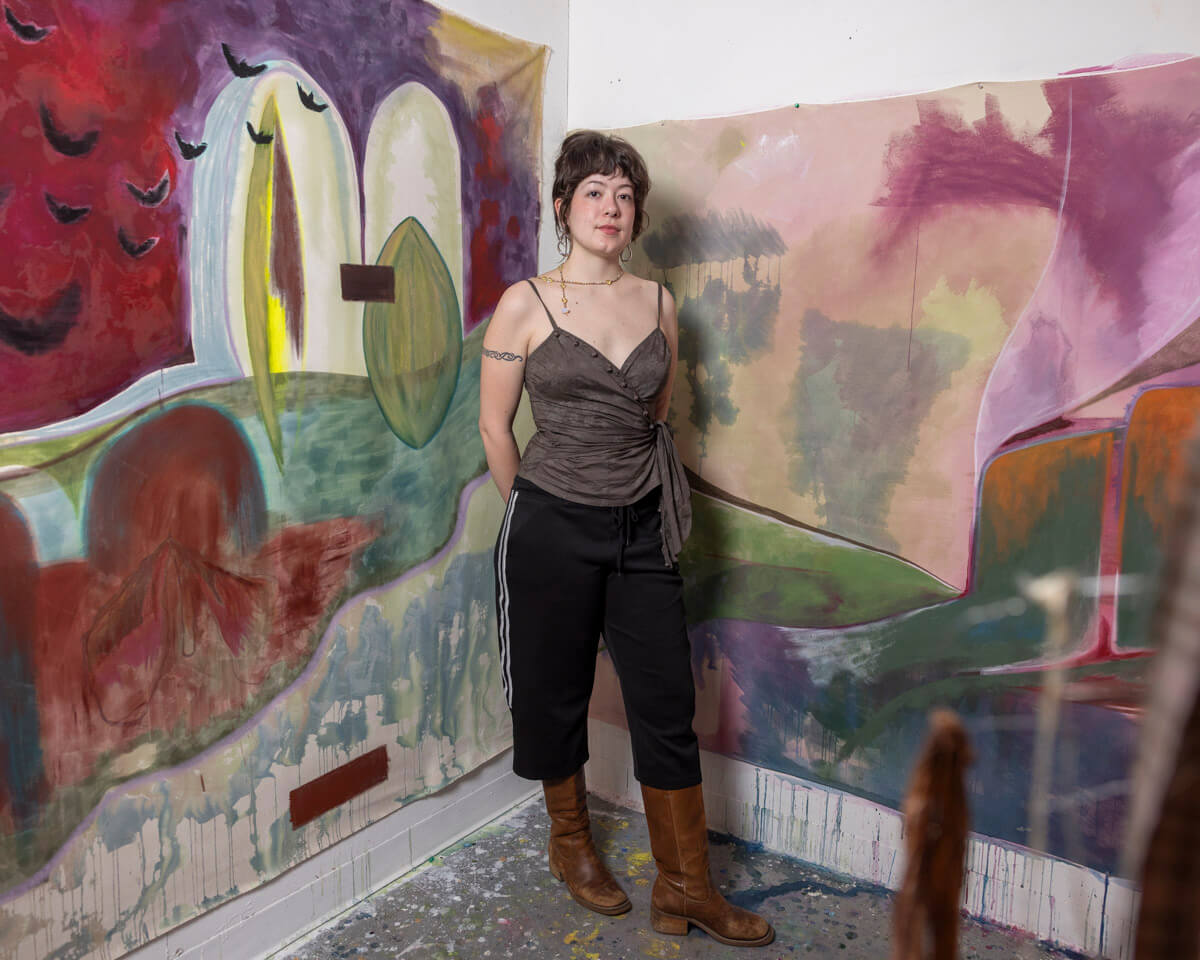
Adelaide Snow
Dreamlike, playful, and abstracted works are created between written word and multimedia. These various landscapes explore emotionality and interior experiences. Working quickly is a tool to express emotionality, as the process is as important as the final project for me, with painting feeling instinctual. Starting from a phrase or even a simple word, I express how this idea makes me feel, and the images it creates. The paintings become “word-scapes,” abstracted with new formal qualities, quiet expressions of interior and loved experiences.
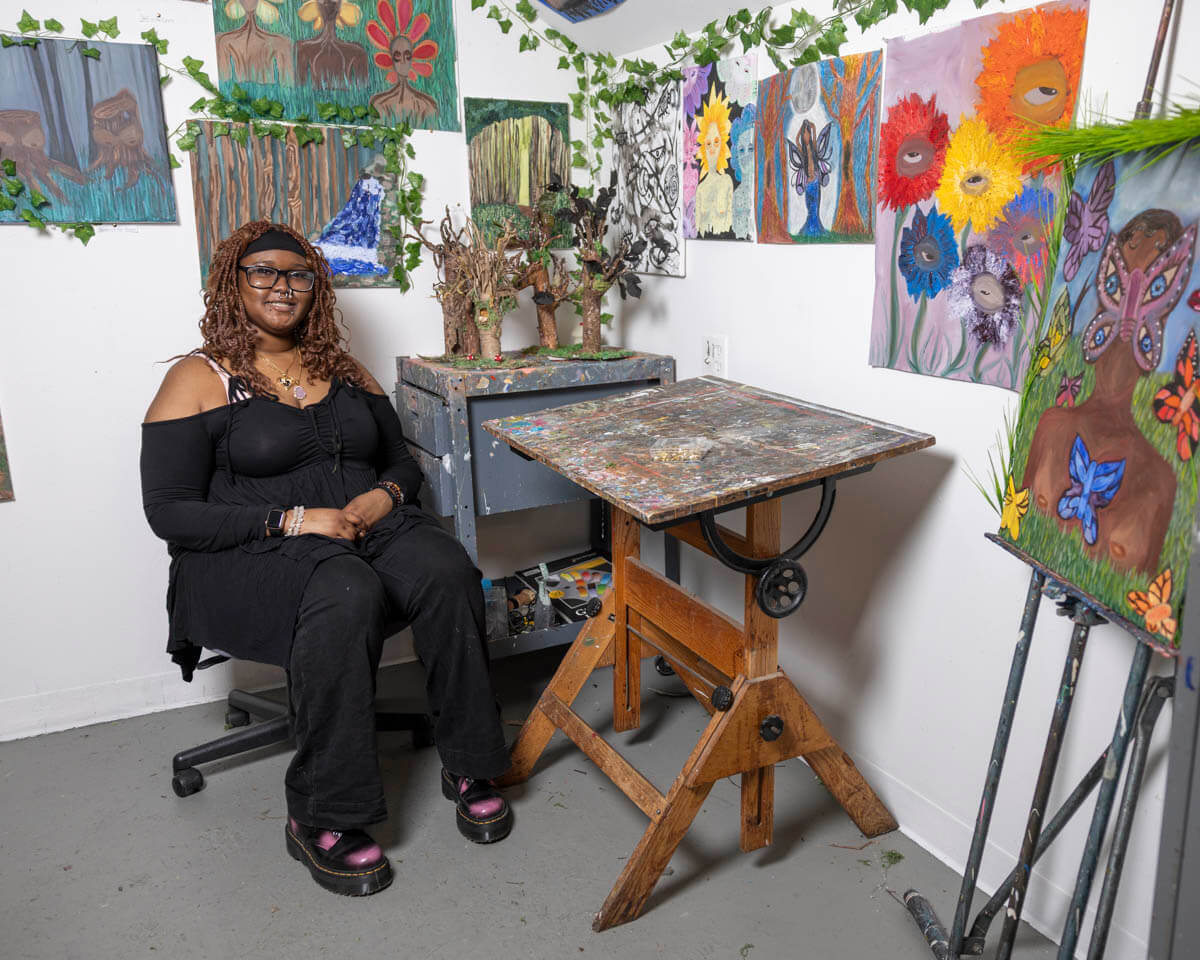
Tia Turner
My work is about the deeper meaning and view of fantasy. I created my project based on Dark Fantasy for reality. Many people may say nature is beautiful and fulfilling, but I say it gets darker than that. My view of nature goes both ways; it’s like life, there are expectations and reality. One minute you’re living life to the fullest, then one wrong move can change everything. It’s like trees: when staring at them for too long, you start to see something else. For my world, I incorporated materials such as cardboard, aluminum foil, and faux plants to create a fantasy place no one would imagine. Creating art has always been scary for me because not everyone will agree with or like what you make, since it’s not something they would make themselves or even buy. I told myself that you were not born to please other people, but to show them what you can do. The theme of Dark Fantasy is for me a place to put my version of thoughts about what I believe really happened.
I want to showcase how it feels to be in my world—starting with large trees on each side that should give you a dark, eerie feeling, as if someone or something is watching. I do want my audience to have their own meanings and views about my work, but I still want them to understand the original story behind it. Adding bright colors to the world of darkness still shows the beauty within it; that’s why I fused it, because yes, it can be scary at times, but try to explore and see the beauty through it.
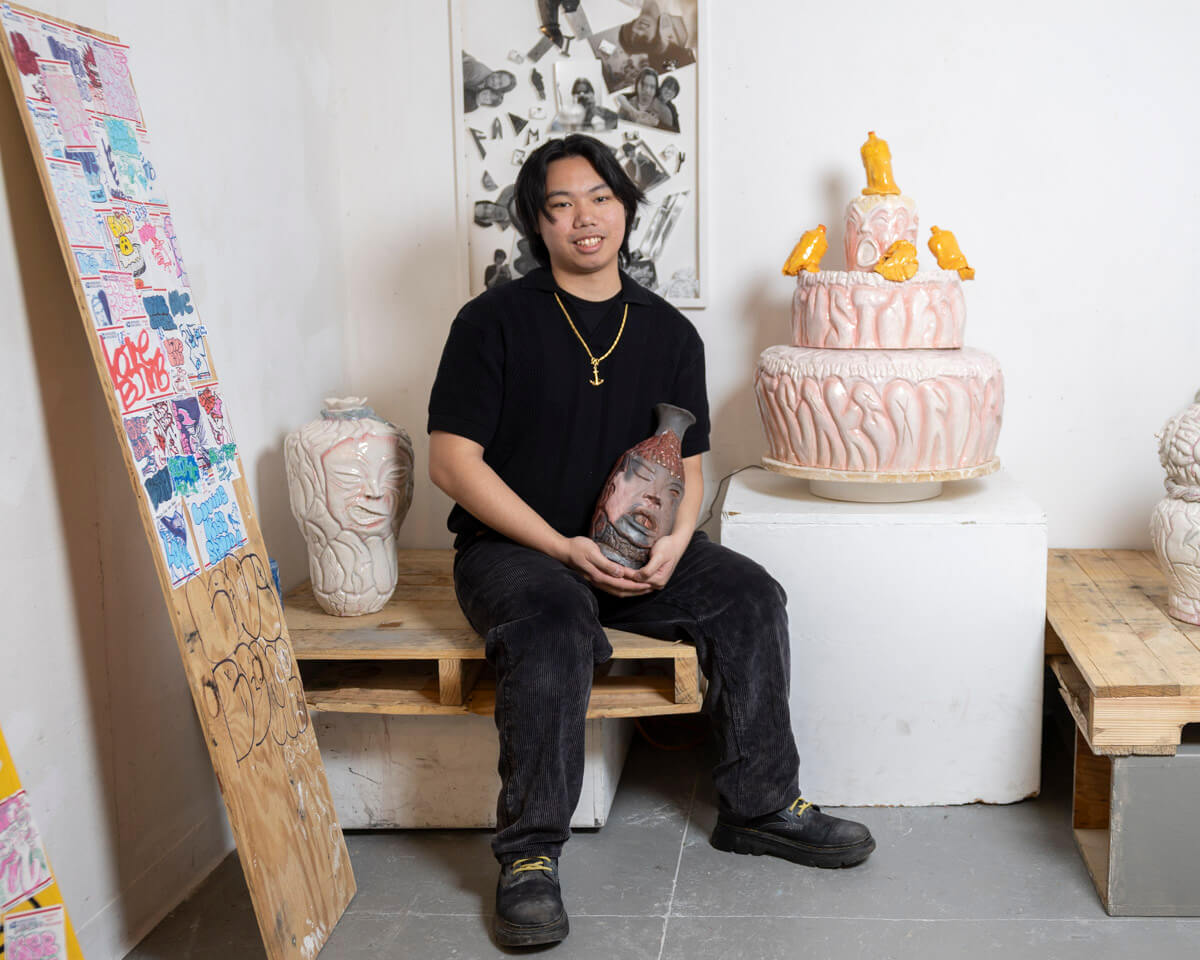
Khan Vongjalorn
My art tackles and creates a space for me to express myself, similar to street and graffiti artists, who claim spaces through their art. I create and carve ceramic figurative sculptures using the visual language of graffiti. Common motifs in my works are faces, sea creatures, and phrases that express my emotions.
Despite being born and raised in Guam, and growing up Filipino and Thai, I’ve always lacked the space and voice to truly express myself within these communities. I use ceramic sculptures to claim and create a space for other people who feel rejected by their community. I point to the human figure in my sculptures through expressive faces to convey a multitude of emotions. I use animals from my homeland to create a parallel between their relationships within their ecosystems and my experiences within my society.
The significance of graffiti in my work is to assert my presence, to express my desire to belong. I use various graffiti styles as a means of conveying emotions that come with not being granted space in my community. I choose forms based on the sense of placement they evoke. Although they may seem random or out of place, that very feeling reflects where I belong.
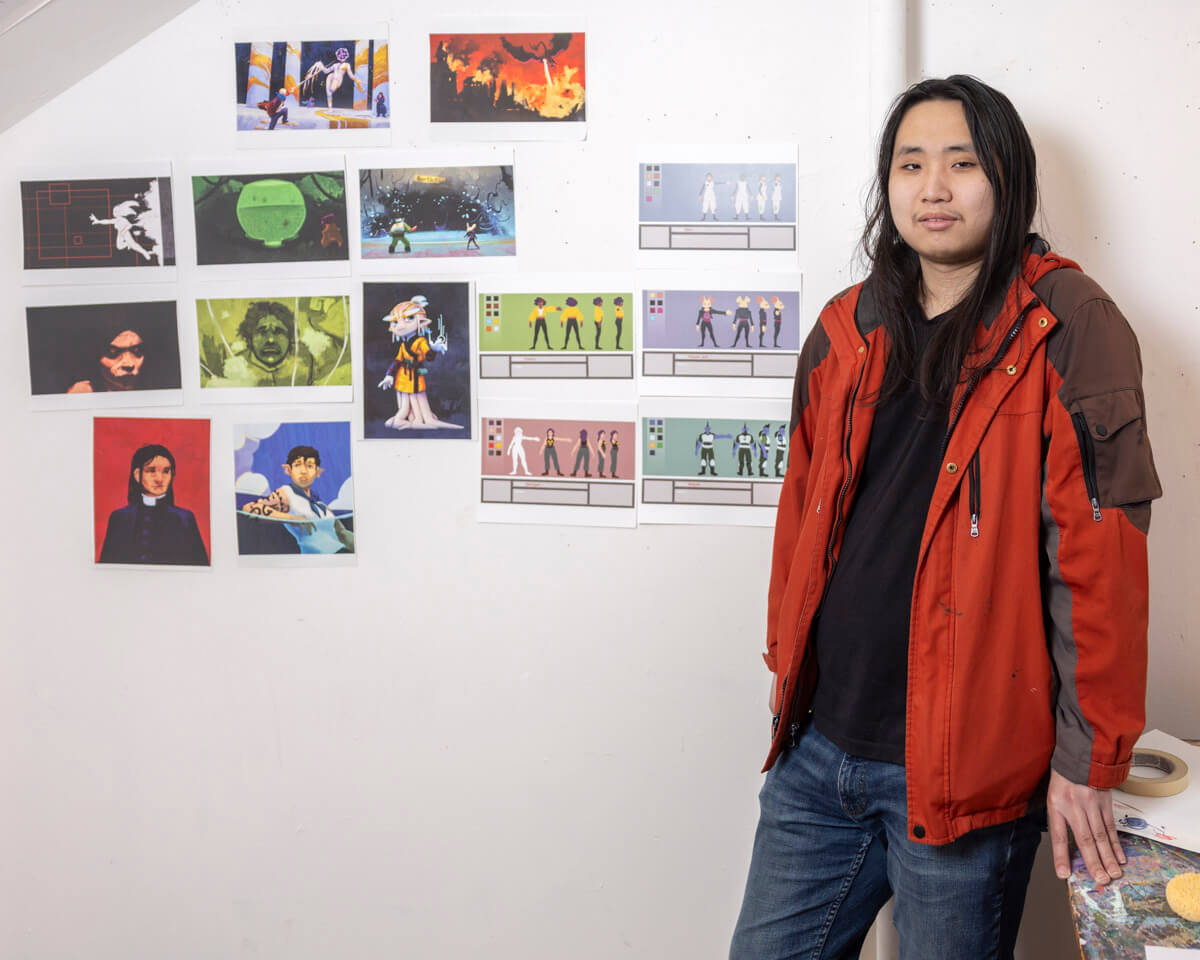
Anthony Zhang
I am a visual artist who works primarily with digital illustrations with an appreciation for animation. My passion for art is largely in part thanks to the support from my peers and I think my art is a reflection of my admiration for them. My goal is to pursue the feeling of excitement and gratification from the pieces I make; its process and the steps it takes towards improvement. Self-reflection is not something I’m interested in exploring, as I don’t consciously use my art as an outlet for deep or thoughtful contemplations; I just want to draw, improve, and learn. I think at the end of the day, I just want to say to myself that I’m happy with what I drew.
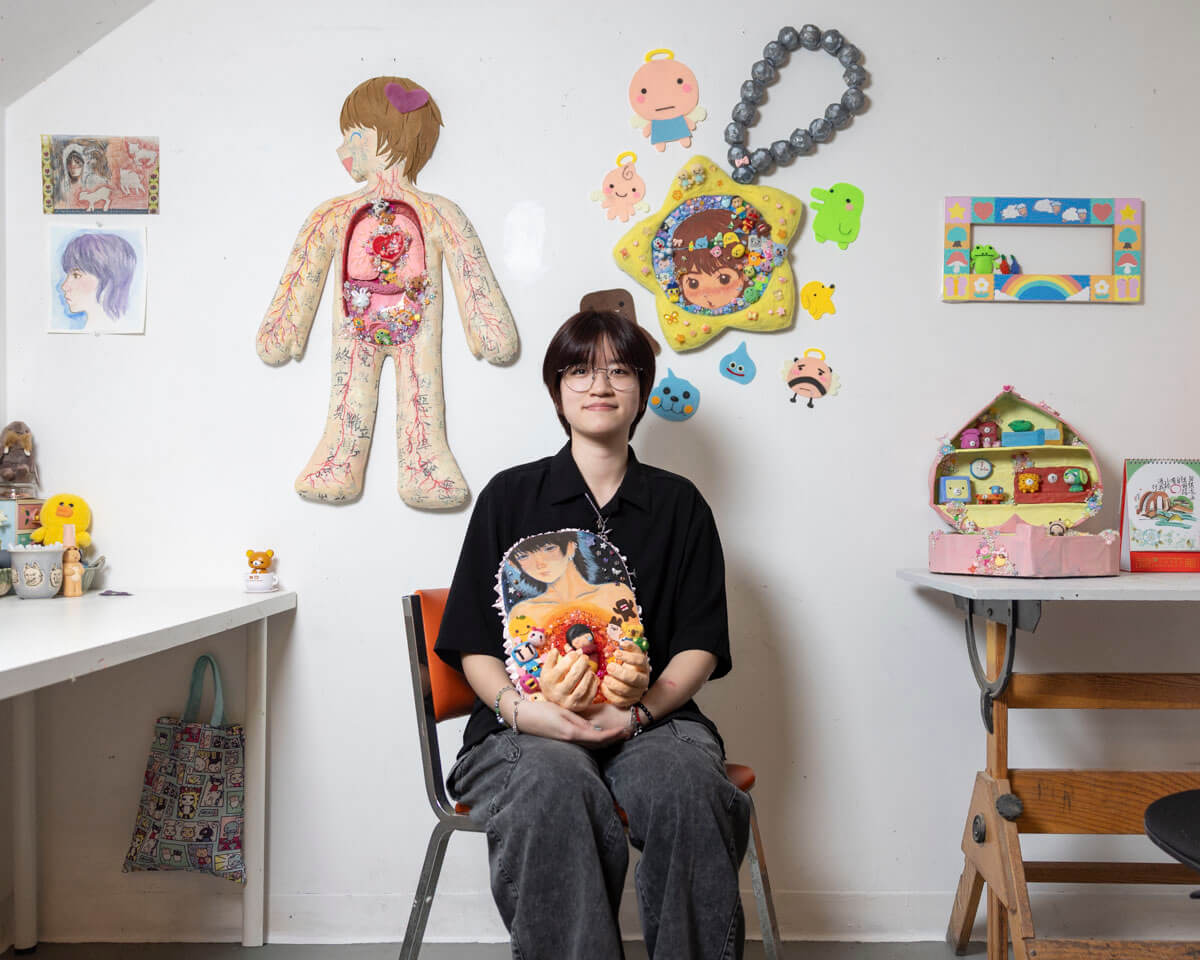
Li Zhi Zheng
I am a mixed-media artist who uses soft sculptures to explore nostalgia and hoarding. My works revolve around self-portraits placed in a sea of recreated childhood toys. I believe that each piece holds a treasured childhood memory and connects with my inner child.
These sculptures are made of various types of felt, such as needle and paper, as well as papier-mâché and beads. Felt is a big representation in my sculptures because I want them to feel soft and look dreamy. In contrast with trinkets, which are usually made of plastic, I want to show how comforting they are to me in my personal space. They are a reflection of myself and how I visualize nostalgia. I embed clustered beads as a symbol of fragmented memories in my mind. As a whole, I created a space for how my memories are stored and memorialized. My art seeks those who resonate with their childhood memories the same way.
Encountering certain toys, I reminisce about memories of my siblings, who collected and shared them with me. I often envision a time when I had no struggles or worried about my future. These are the feelings I get when I collect; they become a fresh breath of air that clears my mind for a moment. I would purchase them in hopes of filling my room with memories of others.
Coming from an East Asian immigrant household, collecting and hoarding becomes a blurred line. My family would hoard due to low income and the fear of losing everything. Growing up, I have become adapted to a dad lifestyle where everything is a necessity. Although hoarding is often perceived negatively, I see it as a way to fill myself with happiness and an internal connection.
To this day, I still collect a lot of trinkets, which shows in a way there’s a part of me that travels back to my inner child. The desire and obsession to have a peaceful place to go back to, to rest from adult life, and to cheer myself up.