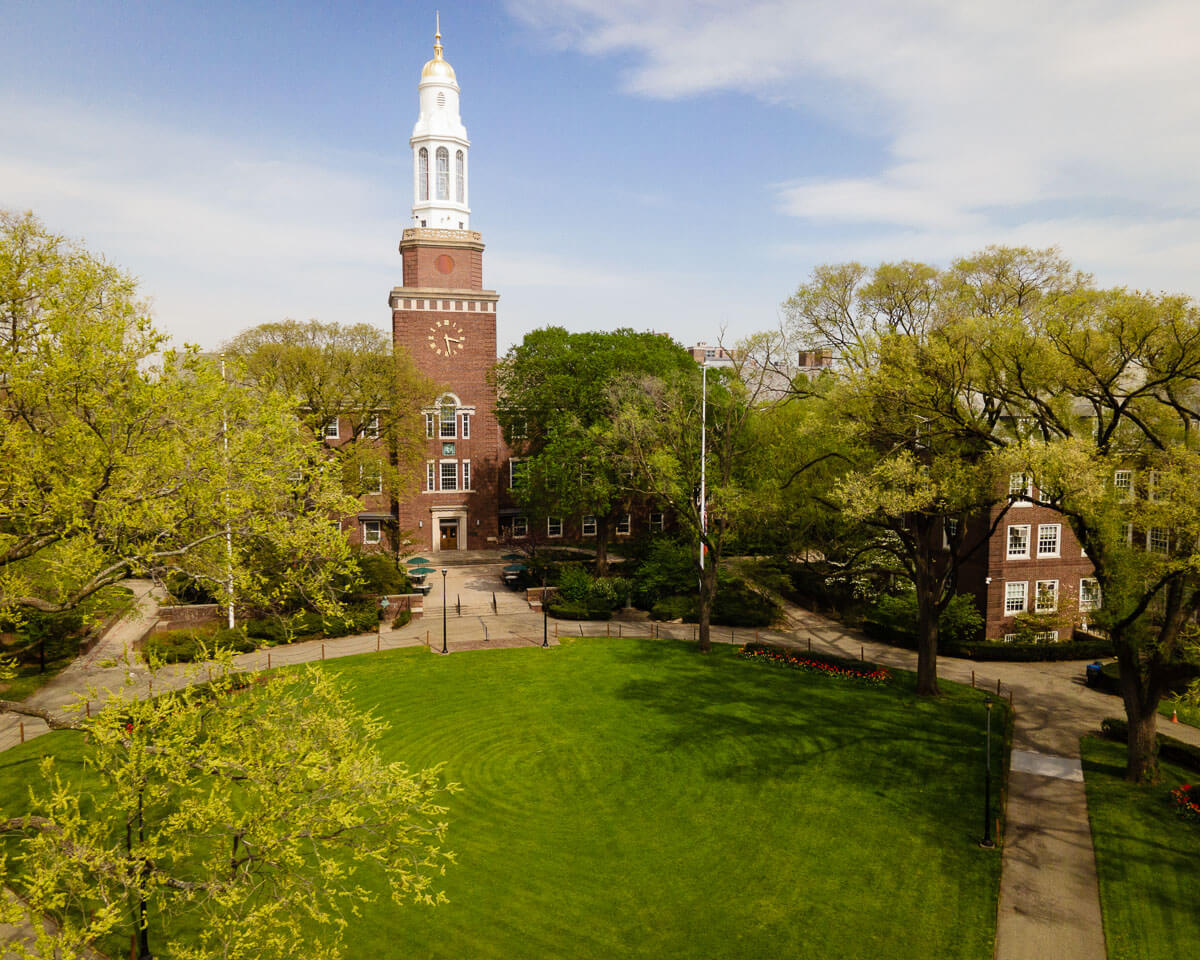
Earth and Environmental Sciences, M.S.
School of Natural and Behavioral Sciences
Program Overview
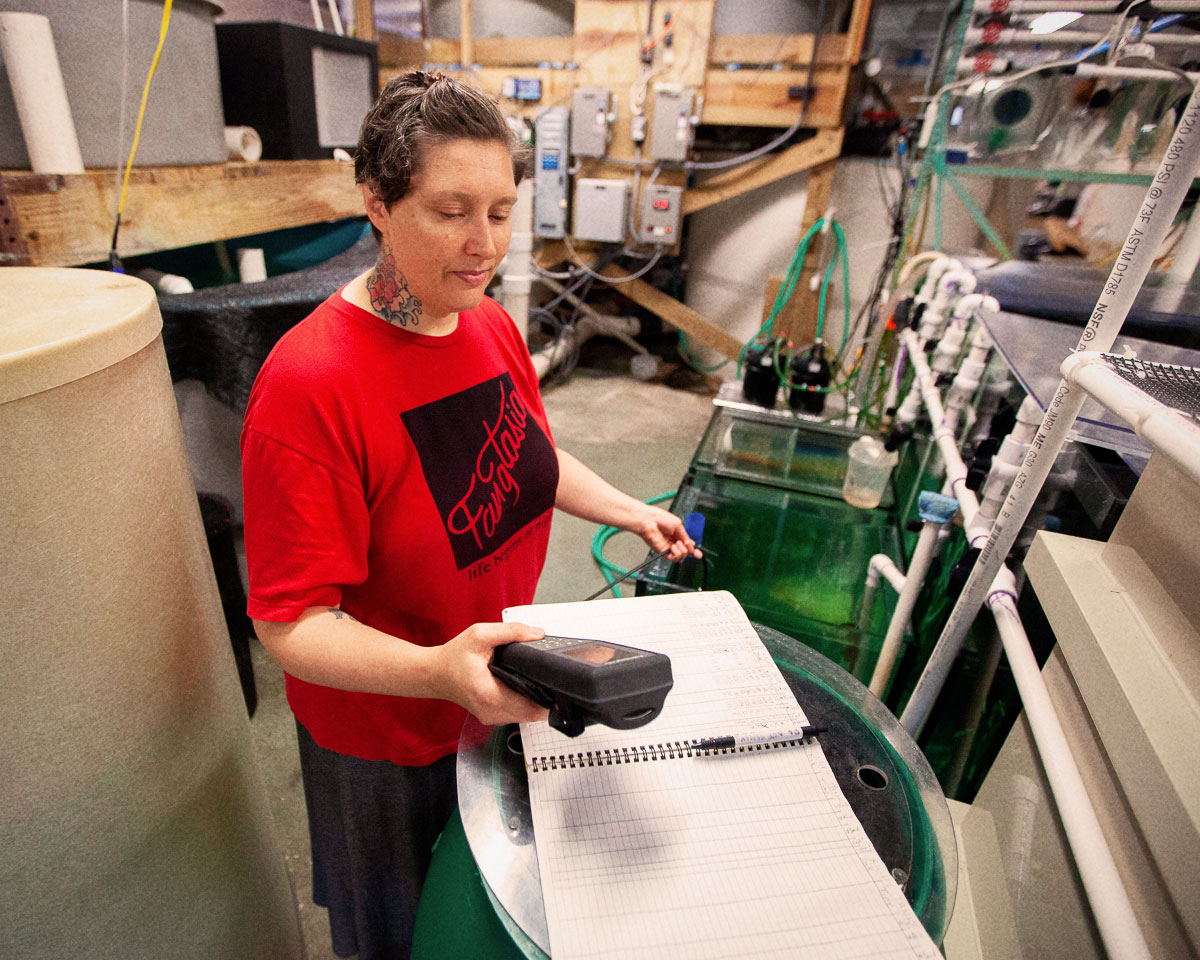
The master’s program in earth and environmental sciences explores earth’s dynamic processes while teaching how the environment affects humans and how, in turn, human activities have impacted our environment. You will work toward solutions for offsetting these environmental impacts as you develop marketable skills such as sampling procedures, quantitative analysis, chemical analytical techniques, and Geographic Information Systems (GIS) analysis.
Program Details
The program information listed here reflects the approved curriculum for the 2026–27 academic year per the Brooklyn College Bulletin. Bulletins from past academic years can be found here.
Program Description
NYSED Program Code: 36028
The M.S. degree program in earth and environmental sciences has two specializations. The research in earth and environmental science specialization of the M.S. degree in earth and environmental sciences is a thesis-based degree emphasizing research and independent work. This specialization prepares students to pursue a doctoral degree at the CUNY Graduate Center or at another university of their choice, and to conduct research at the college and university level, or in industrial, governmental and survey agencies.
Alternatively, the urban environmental science specialization of the M.S. degree in earth and environmental sciences offers advanced instruction that addresses skills and knowledge areas required for careers in the environmental sciences. Depending on the interests of the student, the degree program can include lectures, laboratory work, field work, and seminars. This specialization prepares students for employment in municipal, state and federal agencies, nongovernmental organizations, and consulting in the environmental, geological and urban planning sectors as well as university-based laboratories.
Matriculation Requirements
Applicants must offer an undergraduate major in geology, environmental science, or a related field, completed with a grade point average of 3.00 (B) or higher. General matriculation and admission requirements of graduate studies are in the Bulletin section “Admission.”
Program Requirements (30 Credits)
Thirty credits in courses in earth and environmental sciences are required for the M.S. degree, in one of two specializations: research in earth and environmental science, or urban environmental science. Courses in the Earth and Environmental Sciences Department offered toward the M.S. degree must be numbered 7100 or above.
Accelerated Master’s
The courses EESC 7521G, 7911G, 7335G, 7680G, 7690G, 7522G, 7600G, 7730G, 7500G, 7515G, 7913G, 7151G, 7914G, 7429G, 7214G and 7771G, taken while as an EES undergraduate major, up to 12 credits may count for both the student’s undergraduate degree and the subsequent M.S. degree in Earth and Environmental Sciences at Brooklyn College.
Student Learning Outcomes
Students will be:
- able to conduct research or address environmental challenges using appropriate analytical, quantitative, and geo-referencing methodologies;
- able to communicate effectively within a professional context; and
- competitive in doctoral applications or job markets.
Admissions Requirements
- Fall Application Deadline—August 1. Applications after this date may be accepted on a rolling basis until all places are filled
- Spring Application Deadline—January 15. Applications after this date may be accepted on a rolling basis until all places are filled.
Supporting Documents for Matriculation
Submit the following documents to the Office of Graduate Admissions:
- Transcripts from all colleges and universities attended. Applicants who earned a bachelor’s degree outside the United States need to submit a Course by Course International Transcript Evaluation. See Graduate Admissions for more information.
- Two letters of recommendation
Required Tests
- F-1 or J-1 international students must submit English Proficiency Exam. TOEFL—79, IELTS—6.5, PTE—58–63, Duolingo—105–160.
I-20 Submission Deadlines
F-1 students who are not currently in the country should submit their I-20 by the following dates to allow sufficient time for visa processing and to meet the semester start date.
- July 15 for fall admission
- December 5 for spring admission
More Information
Refer to the instructions at Graduate Admissions.
Contact
Rebecca Boger
4151 Ingersoll Hall
E:
P: 718.951.5000 ext. 2159
Or contact:
Office of Graduate Admissions
222 West Quad Center
2900 Bedford Avenue, Brooklyn, NY 11210
E:
P: 718.951.4536
Office Hours
Mondays–Fridays, 9 a.m.–5 p.m.
Schedule an appointment with a graduate admissions counselor.
Specializations
Research in Earth and Environmental Science
Required courses:
- EESC 7150G Research Proposal
- EESC 7151G Communicating Earth and Environmental Science
- EESC 7155G Professional Portfolios for Earth and Environmental Scientists
- One course numbered 7521 Lab and Field Techniques Using Geospatial Technologies or 7522 Advanced GIS and Remote Sensing (or other GIS-based course approved by the graduate deputy)
- EESC 7771G Geostatistics (or other quantitative/analytical course approved by the graduate deputy)
- EESC 7902G Earth and Environmental Colloquium
- Three to six credits of Thesis Research (EESC 7951G Thesis Research, 7952G Thesis Research, or 7953G Thesis Research).
Pertinent courses in other disciplines may be included in the 30 credits with permission of the graduate deputy and the thesis adviser. Students with advanced preparation may substitute other courses for required courses with the permission of the graduate deputy.
Students must complete the thesis proposal course EESC 7150G Research Proposal with a grade of B+ or higher, and defend their thesis proposal to a Thesis Committee consisting of three members, the thesis adviser, one other faculty member from the Department of Earth and environmental Science, and a third Ph.D.-holding member of open affiliation. The membership of the Thesis Committee must be approved by the graduate deputy. Students may enroll in Thesis Research credits only after the thesis proposal is defended and approved.
Information about requirements for the thesis is in the Bulletin section “Academic Regulations and Procedures.”
Urban Environmental Science
Required skill-focused courses:
- EESC 7151G Communicating Earth and Environmental Science
- EESC 7155G Professional Portfolios for Earth and Environmental Scientists
- Either EESC 7521G Lab and Field Techniques Using Geospatial Technologies or EESC 7522G Advanced GIS and Remote Sensing (or other GIS-based course approved by the graduate deputy)
- EESC 7771G Geostatistics (or other quantitative/analytical course approved by the graduate deputy)
Required science-content courses:
- EESC 7500G Principles of Urban Water Dynamics
- EESC 7680G Soils in the Landscape
- EESC 7911G Terrestrial and Aquatic Environmental System Dynamics
- A two-semester sequence of the capstone course EESC 7916 Case Studies in Urban Systems
Pertinent courses in other disciplines may be included in the 30 credits with permission of the graduate deputy. Students with advanced preparation may substitute other courses for required courses with the permission of the graduate deputy.
The Support You’ll Find
Brooklyn College is an integral part of the cultural and artistic energy of New York City. Our faculty members in the Department of Earth and Environmental Sciences offer incomparable expertise and tremendous talent, and each brings a unique perspective to their teaching and mentoring in and out of the classroom.




Internships and Employers
Through job fairs, the internship database, and internship panels, the Magner Career Center gives students in the earth and environmental studies M.S. program access to internships at a variety of companies.
Brooklyn College earth and environmental studies alumni have found employment with many organizations, including:
- American Red Cross
- Athenica Environmental Services
- CivicPlus
- Gateway National Recreation Area
- Grand Staircase-Escalante National Monument
- LifeSci NYC
- Memory and Cognition Lab
- Mount Sinai Hospital
- National Parks Conservation Association
- New York City Department of Environmental Protection
- New York City Department of Health and Mental Hygiene
- New York Methodist Hospital
- North American Youth Parliament for Water
- Prospect Park Zoo
- SUNY Downstate Medical Center